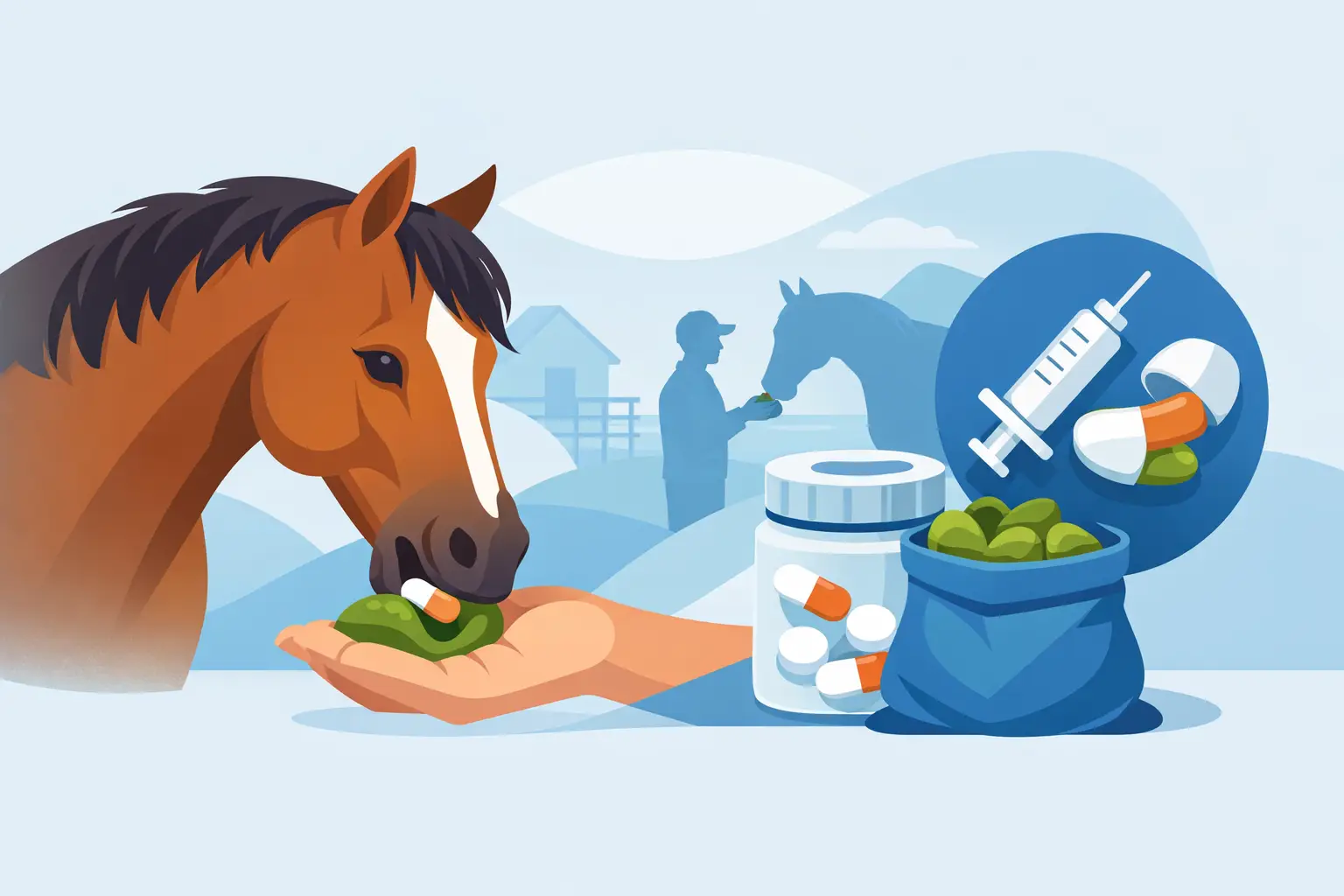
A tablet balanced on the tongue, a syringe of wormer held at the ready, and suddenly the sweetest horse on the yard has opinions. That familiar moment is exactly why the question "why use horse medi pockets?" is worth asking. A well-made medication treat can turn a tense negotiation into a small, reassuring ritual - one that feels kinder for your horse and far more manageable for you.
For many owners, giving medication is not difficult because they are careless or their horse is awkward. It is difficult because horses are clever, sensitive and wonderfully suspicious when something smells, tastes or feels different. A medication-friendly treat offers a practical way to conceal a prescribed tablet or capsule while still giving your horse something genuinely enjoyable.
Why use horse medi pockets in a daily routine?
The simplest answer is that they make an unpleasant job feel less confrontational. Rather than trying to persuade your horse to accept a bitter tablet on its own, you can place it inside a soft, palatable pocket and offer it as a familiar reward. The aim is not to trick a horse carelessly. It is to make necessary care easier to deliver with calm, consistency and as little fuss as possible.
That matters on busy mornings, when you are squeezing in a visit before work, and on dark winter evenings when your horse has already decided that supper is the priority. It also matters when someone else at the yard needs to help. A clear, simple routine is easier to repeat than a complicated process involving crushed tablets, sticky feeds and crossed fingers.
There is an emotional benefit, too. Horses quickly associate certain objects, buckets and handling routines with things they dislike. When medication is offered in a special treat, the experience can feel less intrusive. It will not make every medicine delicious, and it will not suit every horse, but it can remove a great deal of unnecessary drama from essential care.
A treat with a practical purpose
A good medi pocket needs to do more than smell appealing. It should be soft enough to shape around a tablet or capsule, yet firm enough to hold its form in your hand and remain intact until your horse takes it. That balance is particularly useful for owners dealing with different tablet sizes, awkward capsule shapes or a horse that tends to inspect every offering before committing.
Mint is a natural choice for many horses because it is familiar, fresh and enticing. At Highland Horse Sweets, Mint Medi-Pockets are designed as a luxurious little solution to a very ordinary yard problem: helping tablets, capsules and wormer paste go down with less protest. They are made for the horse you love, with the same care given to every handcrafted equine indulgence.
The texture matters as much as the flavour. A pliable pocket lets you press a tablet into the centre, close the opening fully and gently roll the treat back into shape. This is much neater than trying to bury medication in a large feed, where a horse may leave the final, medicated mouthful behind. It also gives you a better chance of seeing that the whole treat has been eaten.
Less stress does not mean less care
A medi pocket is a useful aid, not a replacement for proper medication guidance. Always follow your vet's instructions and the medicine label, particularly where timing, feeding restrictions, dosage or storage are concerned. Some medicines should not be crushed, split, mixed with feed or handled without care. If you are unsure whether a tablet or capsule can be concealed in a treat, ask your vet or pharmacist before trying.
It is equally important to make sure your horse receives the complete dose. Stay with them while they eat the pocket, rather than tossing it over the stable door and assuming all is well. Horses can be astonishingly skilled at chewing around a tablet, dropping it into bedding or depositing it neatly in the corner of a feed bowl.
For a horse that is especially wary, start with one or two empty pockets first. Offer them at a relaxed moment, perhaps after grooming or as part of your usual reward routine, so the scent and texture become familiar. Then introduce the medicated version. Some owners find it helpful to offer an unmedicated pocket, then the medicated one, followed quickly by another plain pocket. This can encourage a horse to swallow rather than pause to investigate.
With wormer paste, the approach depends on the product and your horse. Some horses accept paste more readily when it is placed inside a suitable treat, while others are best managed with the syringe as directed. Check the product instructions before changing how it is given. Accuracy matters, especially where weight-based dosing is involved.
When a medi pocket may be the better choice than feed
Putting medication in a feed can work beautifully for horses with a healthy appetite and a small, reliably finished meal. But it has drawbacks. A horse may eat around the medication, lose interest halfway through or share feed with a stable companion. Strong-smelling medicines can also put a horse off a favourite chaff or balancer, creating a new feeding battle for the days ahead.
A small, purpose-made pocket keeps the task separate. You are not relying on a whole bucket being cleared, and you are not turning every evening feed into a guessing game. For horses on restricted diets, it can also be easier to account for one small treat than to add extra feeds simply to disguise a tablet. That said, suitability always depends on your horse's individual diet, health needs and veterinary advice.
The same is true for horses with conditions that require careful management of sugar, starch or calories. Premium does not mean suitable for every horse in every circumstance. Read the ingredients, consider the portion size and speak to your vet or qualified nutritionist if your horse has metabolic concerns, laminitis history or a tightly controlled ration.
Making the routine work at the yard
Preparation makes a noticeable difference. Have the medication ready, make sure your hands are dry, and shape the pocket before you approach your horse. Press the tablet deeply into the centre, pinch the edges together and check there are no visible corners. If the tablet is large, avoid overfilling the pocket. A bulky treat can encourage chewing and give an alert horse more opportunity to find what is inside.
Offer the pocket from an open palm if that is how your horse normally takes treats. Keep your manner ordinary and unhurried. Hovering, hesitating or repeatedly presenting the treat can signal that something unusual is happening. If your horse refuses it, do not keep pushing. Remove it calmly, consider whether the medicine has an obvious odour, and seek advice if medication is becoming difficult to administer.
Consistency is often more valuable than cleverness. The best method is the one you can repeat safely, accurately and without turning care time into a contest. For some horses, that will be a minty medi pocket. For others, a syringe, a small feed or veterinary support may be the right answer.
Medication days may never become your horse's favourite part of the week, but they do not have to unravel the trust built in all the ordinary moments of care. A thoughtfully chosen treat can bring a little softness to a necessary task - and leave more room for the rewarding parts of life together.