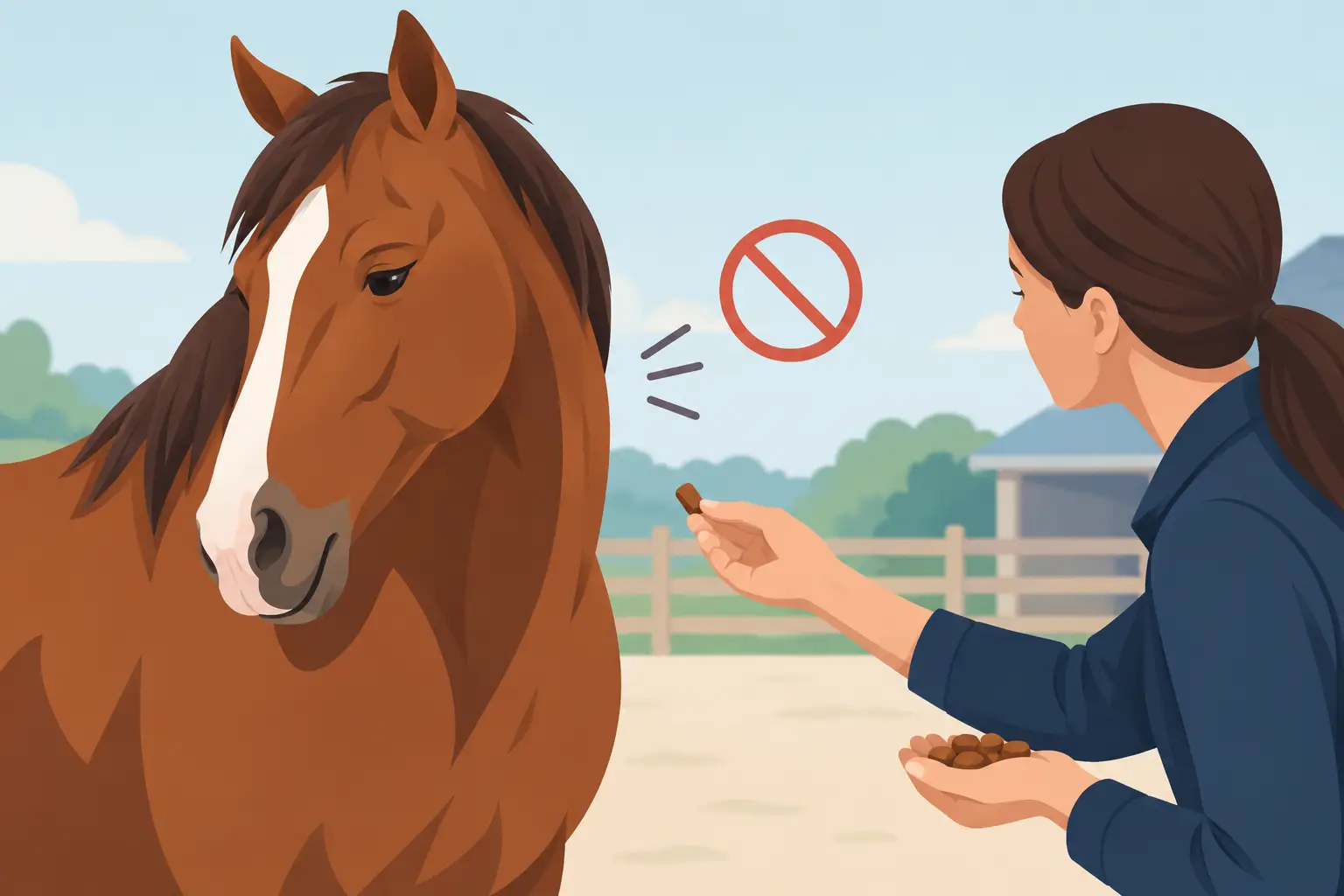
A horse takes one sniff, turns away and leaves a perfectly good treat in your palm. It can feel oddly personal, particularly when you have chosen something special for the horse you love. Yet why horses reject some treats is rarely as simple as them being difficult. Their response can reveal a preference, a past experience, a change in routine or, occasionally, something worth discussing with your vet.
Horses are wonderfully individual. One will search your pockets for a mint; another will inspect the same offering as though it has arrived from another planet. The aim is not to persuade every horse to like every flavour. It is to understand what sits behind the refusal, then make rewarding, bonding and everyday care feel genuinely enjoyable.
Why horses reject some treats: scent comes first
Before a horse tastes a treat, they smell it. Their sense of smell is highly developed, and a new aroma can be enough to make a cautious horse hesitate. Molasses, mint, fruit, herbs and richer ingredients all carry their own scent profile. What smells deliciously indulgent to us may be unfamiliar to a horse who has only ever been offered plain, dry feed rewards.
This is especially common with horses that are naturally suspicious of changes. Some are enthusiastic food detectives, while others prefer the reassurance of the familiar. A new rug, a different feed bucket or an unusual treat can all earn the same raised-head, narrowed-nostril response.
Give a new treat without expectation. Offer one small piece by hand, then place it in a clean feed bowl if your horse is unsure. Avoid mixing several new flavours together at once. A simple introduction lets you discover whether they dislike the flavour itself or merely need time to decide that it is safe.
Texture can matter as much as taste
Not every horse enjoys a hard, crunchy reward. Others dislike anything soft, sticky or strongly flavoured in the mouth. Texture preferences can be surprisingly firm, particularly in older horses or those with a history of dental sensitivity.
A horse that mouths a treat, drops it and walks away may not be rejecting the taste at all. They may find the texture awkward to chew. Similarly, a horse who usually loves treats but suddenly becomes selective deserves a closer look. Difficulty chewing, slower eating, quidding, bad breath, weight loss or an aversion to hard feed can point towards dental discomfort.
Regular dental checks are part of thoughtful horse care, not just a response to a problem. If you suspect pain, stop experimenting with treats and speak to your vet or qualified equine dental technician. No luxury equine indulgence should be expected to overcome a sore mouth.
A full horse may simply not be interested
Horses are designed to graze little and often. If your horse has just come in from good grass, finished their forage or had a substantial bucket feed, a treat may hold very little appeal. This is not fussiness. It is often just timing.
A reward offered after a schooling session can also fall flat if your horse is hot, tired or busy watching what is happening around the arena. At a show, some horses will accept a familiar treat happily while others are too alert to eat much at all. The same horse may be wildly keen at home and politely uninterested away from the yard.
Try offering rewards when your horse is settled and relaxed. Keep portions small, especially for good doers and horses on carefully managed diets. The value of a treat lies in the moment and the association, not in the size of the serving.
Routine, trust and past experiences shape preferences
Horses remember. If a particular flavour was once hidden in a medication, or a treat was offered during an unsettling moment, they can become wary of it later. This does not mean the treat is poor quality. It means your horse has made a very sensible connection.
The same applies to hand-feeding. Some horses have been taught not to take food from hands, while others become over-eager and nippy when treats appear. For these horses, placing a reward in a bucket, feed bowl or open palm with clear boundaries can make the experience calmer for everyone.
Consistency helps. Use a chosen reward in positive, low-pressure moments: after standing quietly for the farrier, loading politely, giving a hoof or simply greeting you at the gate. Over time, the scent and flavour become part of a reassuring routine rather than a source of uncertainty.
When rejecting treats could signal a health concern
A single declined treat is not usually a cause for alarm. A sudden change in appetite, however, should never be brushed aside as a horse being fussy. Horses can mask discomfort remarkably well, and a refusal of favourite foods may be an early clue that something is not right.
Contact your vet promptly if treat refusal comes with reduced forage intake, changes in droppings, lethargy, pawing, looking at the flank, signs of choke, nasal discharge, difficulty swallowing or any behaviour that concerns you. If your horse is on medication, follow veterinary advice carefully rather than repeatedly disguising a dose in foods they have begun to distrust.
Medication can be particularly tricky because horses are quick to notice a changed smell or taste. When a vet has confirmed that a tablet, capsule or paste can be given in a treat, a purpose-made option can reduce the drama. Highland Horse Sweets Mint Medi-Pockets are designed to hold medication within a soft, appealing treat, helping make necessary care feel less confrontational for horse and owner alike. Always check suitability with your vet or pharmacist first, as not every medicine should be crushed, split or mixed with food.
How to find the right treat for your horse
The best treat is not necessarily the sweetest-smelling or the most elaborately presented. It is the one your individual horse enjoys, can eat comfortably and receives in sensible amounts. Ingredient quality matters, but so do freshness, texture and your horse’s own preferences.
Start with one flavour at a time and offer it on three separate, relaxed occasions. A horse who declines once may accept it later, while a horse who repeatedly turns away has given you a clear answer. There is no prize for persistence when a horse has politely said no.
It can help to keep a quiet mental note of what works. Perhaps your pony prefers mint after clipping, a fruitier centre after a hack, or a plainer reward in busy environments. This small attention to detail is part of the pleasure of caring for them well. It turns treat time from an automatic habit into a tiny, personal ritual.
Be mindful of diet and individual needs
For horses with metabolic conditions, laminitis risk, obesity, allergies or digestive sensitivities, treats should be chosen with extra care. A premium treat is still a treat, and even naturally made ingredients need to fit within the horse’s overall ration. Your vet or equine nutritionist can help you decide what is appropriate if your horse has specific dietary requirements.
For some horses, the finest reward is not edible at all. A wither scratch, a rest break, a chance to look around or a release of pressure can be more meaningful in the right training moment. Food rewards are useful, but they work best as one part of a considerate relationship.
The pleasure is in paying attention
A rejected treat is not a failed gesture. More often, it is your horse communicating a preference in the clearest way they can. Listen to it, stay curious and keep the experience low-pressure. The right little indulgence should feel like a moment of trust - thoughtfully chosen, warmly offered and enjoyed on their terms.