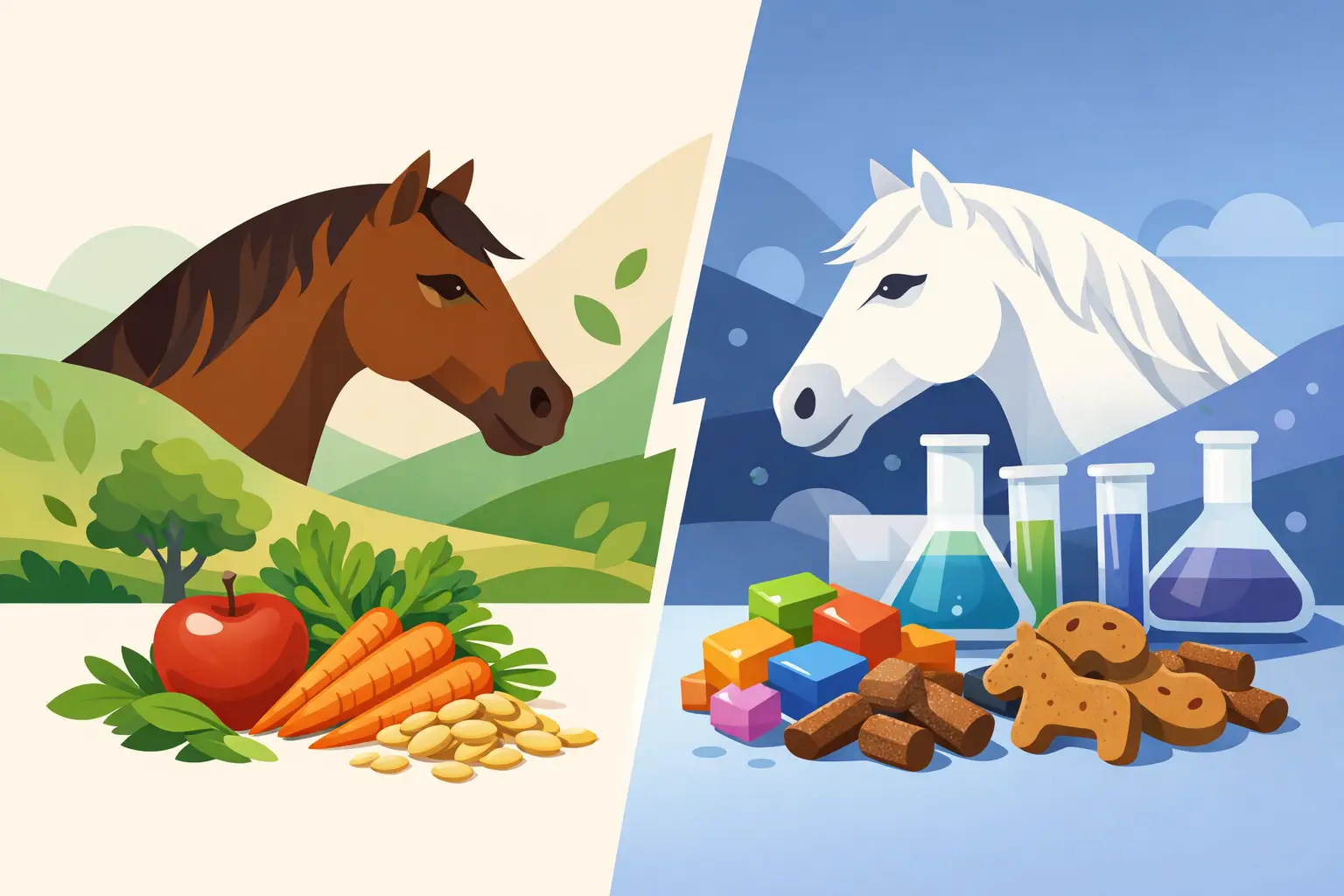
A horse can hear a treat packet rustle from the far end of the yard, yet what sits inside that packet deserves more thought than the excited nicker it inspires. When weighing up natural horse treats vs artificial options, the best choice is not simply the one with the prettiest wrapper or strongest smell. It is the one that suits your horse, respects their daily diet and makes every reward feel considered.
For many owners, treats are part of the little rituals that make horse care special: a quiet thank-you after clipping, a confidence-builder at the mounting block or a welcome distraction when medication is due. A beautifully made treat can turn a practical moment into genuine equine indulgence. But ingredient quality still matters.
What does “natural” really mean in a horse treat?
Natural is a useful starting point, not a guarantee of perfection. In the world of horse treats, it generally refers to recipes made with recognisable ingredients and without artificial colours, artificial flavours or synthetic preservatives. Think herbs, fruit, vegetables, grains, seeds, molasses and naturally aromatic ingredients, rather than a long list of unfamiliar additives.
That simplicity has real appeal. You can look at the ingredients and understand the flavour story behind the treat. Apple should smell gently of apple. Mint should be fresh and bright. A natural treat need not be dull, either. Carefully chosen ingredients can create a memorable aroma and flavour without relying on an electric-looking colour or a manufactured fragrance.
Freshness is part of the picture too. Small-batch, made-to-order treats can feel more like a proper gift for the horse you love than a commodity snack that has spent months on a shelf. That does not make every natural recipe suitable for every horse, but it gives owners more clarity about what they are offering.
Natural horse treats vs artificial: the meaningful differences
The distinction is most obvious in four areas: ingredients, appearance, shelf life and purpose.
Artificial colours are often used to make treats look vivid and uniform. They may be visually striking to us, but horses do not need bright purple, green or red rewards to enjoy them. Their interest is more likely to come from scent, texture and taste. A treat with a naturally warm, rustic appearance can be every bit as tempting at the stable door.
Artificial flavourings can produce a very strong, highly consistent aroma. That may help a treat appeal to some horses, especially fussy ones, but it can also make the product feel disconnected from its ingredients. Natural flavourful components such as peppermint, apple or carrot bring their own character, often with a gentler scent that feels more at home in a horse’s feed room.
Preservatives are more nuanced. They are used for a practical reason: to extend shelf life and protect products during storage. A preservative-free treat may have a shorter best-before period and need more careful storage, particularly in a warm tack room or damp feed area. That is a trade-off, not a flaw. If you prefer fresh, natural ingredients, buy quantities you will use comfortably, keep treats sealed and dry, and follow the storage guidance on the pack.
Finally, consider what the treat is there to do. A small reward during groundwork has different requirements from a special birthday truffle, and both are different from a medication treat designed to hold a tablet or paste securely. The right format can matter as much as the ingredient list.
A short ingredient list is useful, but context matters
It is tempting to assume that fewer ingredients always means a healthier treat. Often, a clear and concise list is reassuring. It makes it easier to spot ingredients your horse may not tolerate and to choose flavours they already enjoy. Yet a short list alone does not tell you about the amount fed, the nutritional balance or whether a recipe is right for an individual horse.
Molasses, for example, is a familiar and much-loved ingredient that gives treats their rich aroma and satisfying finish. Used thoughtfully and fed in modest quantities, it can make a reward feel truly special. But for a horse or pony on a restricted diet, or one with a history of metabolic concerns, even an all-natural treat must be factored into the wider feeding plan.
The same applies to fruit-based ingredients, herbs and grains. Natural does not automatically mean low in sugar, low in starch or suitable for unlimited feeding. A horse prone to weight gain, laminitis or digestive sensitivity deserves an especially careful approach. If you are unsure, speak to your vet or a qualified equine nutritionist before introducing a new treat.
Why artificial-free treats appeal to discerning owners
Horse owners are increasingly thoughtful about everyday care. We read feed labels, consider forage quality and notice the small changes in our horses’ energy, coat and comfort. It is natural to bring that same care to the treats offered by hand.
Choosing artificial-free treats is often about confidence as much as ingredients. You know the reward is made with a clear purpose, rather than designed solely for a long shelf life or a louder-looking display. It is also about making the small moments count. Your horse does not need a treat after every ask, but a well-timed reward can support positive handling, reinforce calm behaviour and strengthen the bond between you.
For the horse that already has a carefully managed diet, a premium treat can be reserved for moments that truly warrant it. One after standing beautifully for the farrier. One after loading quietly. One after a brave first step through a new obstacle. Quality encourages moderation, and moderation keeps a treat feeling like a treat.
The practical side: treats for training and medication
A reward has to work in real yard life. If you are holding a lead rope, wearing gloves and trying to keep a young horse focused, a crumbly biscuit may not be ideal. If your horse has learnt to detect a hidden tablet with forensic precision, a treat also needs to be soft, appealing and suitably shaped for the job.
Medication-friendly treats can be especially helpful when they are designed to conceal tablets, capsules or wormer paste without turning the process into a daily battle. The goal is not to disguise poor management or rush a horse into accepting something unfamiliar. It is to make essential care calmer and kinder for both of you.
Introduce any new medication treat on an ordinary day, before you need it in earnest. Let your horse enjoy the flavour first. Then practise with an empty pocket or a harmless small substitute, so the texture does not suddenly signal that something unusual is coming. If medication has a strong taste or your horse is particularly suspicious, ask your vet for guidance rather than risking an incomplete dose.
How to choose a treat with care
Start with your horse, not the marketing. Consider their age, workload, weight, dental comfort and usual ration. A good treat should fit around forage and balanced feed, not compete with them. Check the feeding recommendation, keep portions small and remember that several people at the yard may be offering rewards throughout the day.
Then look for clear ingredient information and sensible storage guidance. Avoid treating a long shelf life as the only sign of quality. Equally, do not assume a short shelf life is automatically superior. What matters is whether the product has been made carefully, stored correctly and used while fresh.
It is also worth paying attention to your horse’s response. Do they chew comfortably? Do they remain settled afterwards? Are you seeing any signs of sensitivity, such as changes in droppings, skin or behaviour? One new treat at a time makes it easier to notice what agrees with them.
At Highland Horse Sweets, the idea is simple: handcrafted equine indulgence should still feel thoughtful. A molasses shell with a flavoured centre offers a more special reward than an ordinary pellet, while natural ingredients and fresh production keep the focus where it belongs - on the horse enjoying it.
The best treat is one you can give with confidence
Artificial ingredients are not the only factor that determines whether a horse treat is suitable, and natural ingredients are not a free pass for generous handfuls. The better question is whether the recipe is transparent, the portion is appropriate and the occasion calls for a reward.
Choose treats that feel worthy of your horse’s eager ears and soft muzzle. Keep them for moments of connection, use them thoughtfully when care becomes challenging, and let a little luxury remain exactly that: a small, well-earned pleasure.