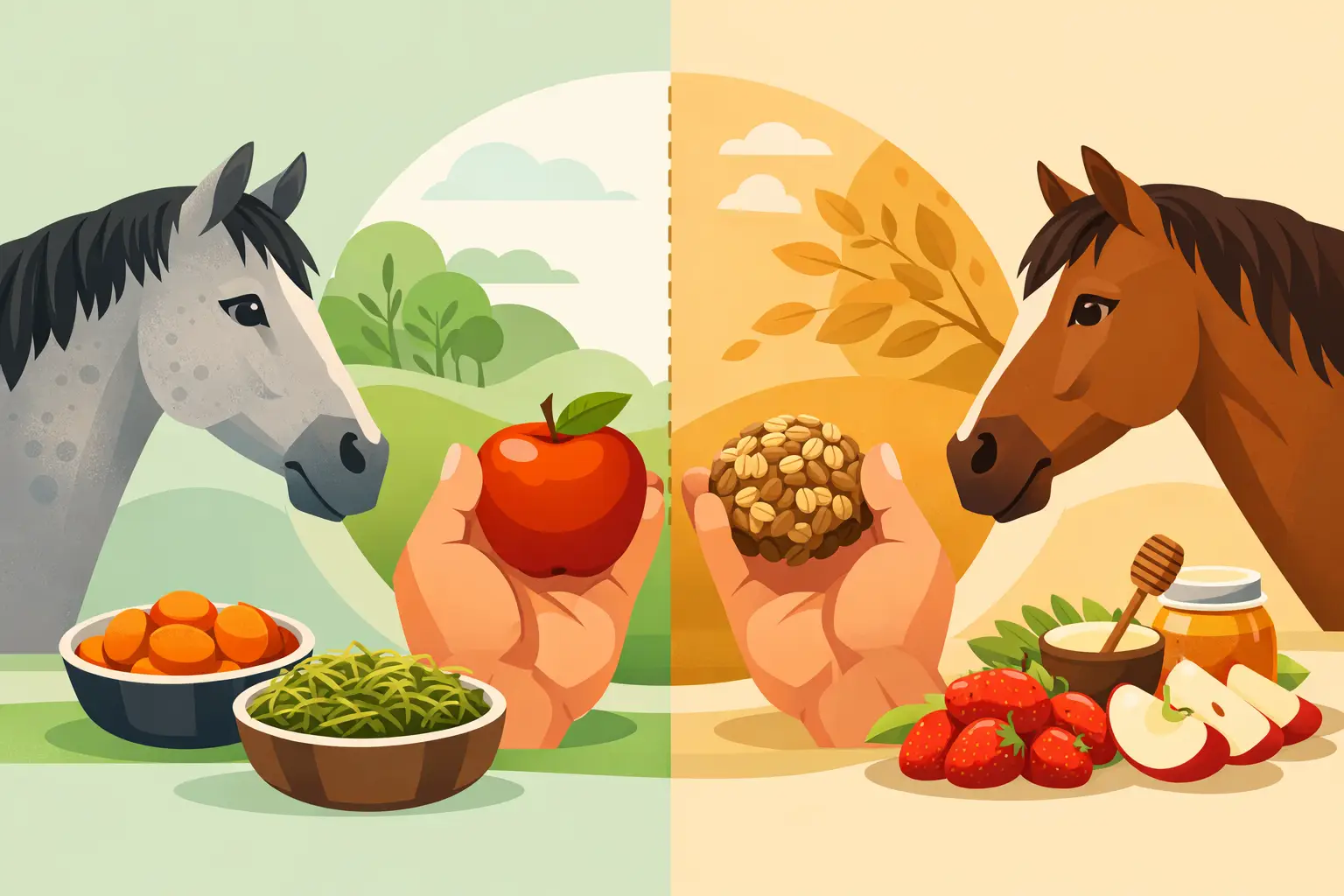
A good natural horse treats comparison starts in the feed room, not with the prettiest packet on the shelf. When you know your horse’s preferences, routine and dietary needs, it becomes much easier to choose a reward that feels properly special without becoming an afterthought in their overall management.
For many of us, treats are part of the language we share with our horses: the little reward after a patient stand at the mounting block, a welcome pocketful at the gate, or reassurance after a difficult tablet. The best choice is rarely about finding one treat that suits every horse. It is about finding the right kind of indulgence for the moment.
What “natural” should mean in a horse treat
Natural is a useful starting point, but it is not a complete nutritional promise. It can describe ingredients that are recognisable and minimally processed, yet it does not automatically mean a treat is low in sugar, suitable for every condition or sensible to feed without limits.
Look beyond the word on the front. A thoughtful natural treat should make it easy to understand what you are offering: familiar ingredients, clear flavouring sources and no unnecessary artificial colours, flavours or preservatives. For owners who care deeply about ingredient integrity, that clarity matters. You are not trying to turn a reward into a ration balancer. You simply want to know what is in the hand that reaches into the feed bucket.
Freshness deserves attention too. Small-batch, made-to-order treats may have a shorter shelf life than heavily preserved alternatives, but that is often part of their appeal. They are crafted to be enjoyed rather than designed to sit unnoticed at the back of a cupboard for years.
A natural horse treats comparison by type
Different treat styles earn their place for different reasons. Comparing them by texture, convenience and purpose is far more useful than assuming one format is automatically better.
Everyday pieces and simple snacks
Carrot, apple and other familiar produce can be a lovely, uncomplicated reward. They are easy to find, well loved by many horses and feel wonderfully traditional. They also bring practical limitations: they are bulky to carry, can spoil quickly and do not suit every dietary plan in generous quantities.
Dried fruit or vegetable snacks are tidier for the tack room and often have a satisfying crunch. However, drying concentrates flavour and can concentrate sugars too. Treat them as treats, rather than being persuaded by the word “fruit” into handing out more than you intended.
Pellets and baked bites
Pelleted treats are usually clean to handle, easy to portion and useful when you need plenty of small rewards for groundwork, loading practice or clicker training. Their simple, consistent shape is a genuine advantage when timing matters.
The trade-off is experience. A small pellet may be ideal for repetition, but it is not always the treat that feels most celebratory after a long hack, a successful competition day or a brave first clip. Baked bites can offer more character in texture and aroma, although ingredient lists and storage guidance still deserve a close look.
Soft treats, pockets and truffles
Soft treats bring a different kind of value. A pliable texture can make them easier to divide, more enticing for fussier horses and particularly useful when medication needs to disappear discreetly into something delicious.
This is where flavour and craftsmanship can turn a practical job into a calmer ritual. A molasses shell with a fragrant centre, for example, offers a more indulgent reward than a standard pellet while giving the horse something genuinely appealing to investigate. Highland Horse Sweets’ Mint Medi-Pockets are designed with exactly that real-life purpose in mind: helping owners conceal tablets, capsules and wormer paste with less drama at medicine time.
Soft, luxury-style treats are not necessarily the answer for every training session. They can be richer, stickier and less convenient in a warm show-day pocket. But for a high-value reward, a gift for a horse you adore, or a medication routine that needs a little more cooperation, they can be worth their place.
Ingredients, sugar and the horse in front of you
The most useful question is not, “Is this treat natural?” It is, “Is this appropriate for my horse, in this amount, as part of this diet?” A fit horse in regular work, an easy keeper, a veteran with dental considerations and a pony on a carefully controlled grazing plan should not all be treated as though their needs are identical.
Molasses, fruit and herbs can all have a place in a treat cupboard, provided they are fed thoughtfully. Molasses brings the deep, familiar sweetness many horses adore, and it helps create a beautifully tactile shell in handcrafted truffles. Yet sweetness is still sweetness. Portion size and frequency matter, especially for horses with metabolic concerns or those prone to laminitis.
If your horse has Equine Metabolic Syndrome, insulin dysregulation, PPID, a history of laminitis, allergies, dental difficulty or any condition affecting their diet, ask your vet or qualified equine nutritionist before introducing new treats. The same care applies when a horse is on restricted forage or a weight-management plan. A natural ingredient list does not override individual veterinary advice.
For healthy horses, the sensible approach is delightfully unglamorous: keep portions modest, account for treats in the wider diet and save the most indulgent options for moments that deserve them. The horse who receives a luxurious truffle occasionally may value it far more than one who expects a steady stream of snacks.
Texture is more than a finishing touch
Texture influences safety, enjoyment and usefulness. Crunchy treats suit some horses beautifully, while others prefer something softer, particularly if they are older or have dental wear. Any treat should be offered in an appropriate size and fed calmly, ideally from an open hand only if your horse has impeccable manners. A feed bowl is the better choice for greedy mouths and excitable youngsters.
Texture also determines whether a treat works for your intended task. Tiny, dry pieces are practical for frequent rewards. A substantial, aromatic truffle has more ceremony to it. A soft pocket that moulds around a tablet has a clear job that a crunchy biscuit cannot reliably perform.
When comparing products, ask whether the format matches the use. That small shift prevents a common disappointment: buying a treat that sounds lovely, only to discover it crumbles in your pocket, is too large for training, or cannot disguise the medicine your horse has already learnt to detect.
Freshness, storage and buying with intention
Premium natural treats are often best bought with a plan. Check the use-by guidance, keep them cool and dry, and avoid ordering more than your horse can enjoy while they are at their best. If treats become soft when they should be crisp, dry when they should be supple, or develop an unusual smell, it is time to dispose of them.
This is also where subscriptions and seasonal selections can be a pleasure rather than a novelty. Rotating flavours can keep rewards interesting, while a regular delivery helps avoid the last-minute dash for something suitable before a show, clinic or holiday. Still, novelty should never come before consistency if your horse has a sensitive digestion. Introduce one new flavour or format at a time and watch how they respond.
Choosing the treat that earns its place
The best natural horse treat is the one that suits your horse’s diet, earns an enthusiastic nicker and performs the job you bought it for. For everyday training, you may favour small, easily portioned pieces. For a special occasion, a handcrafted equine indulgence feels more fitting. For medication, softness and concealment may matter above everything else.
A treat can be luxurious without being careless, practical without feeling plain, and natural without making exaggerated promises. Choose with clear eyes, feed with a light hand, and let those small moments of reward remain what they should be: a thoughtful pleasure for the horse you love.