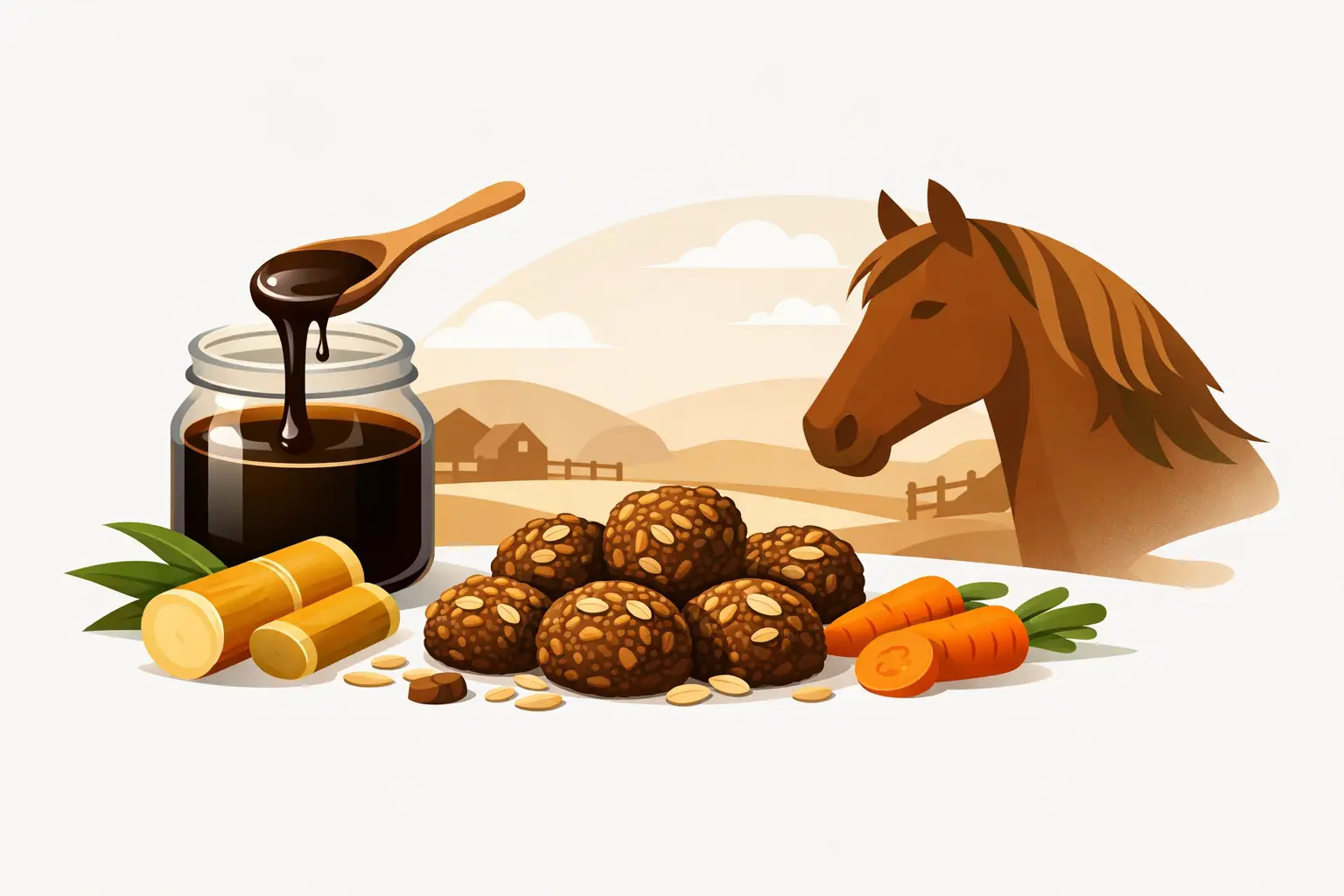
The moment a horse hears a pocket rustle and swings round with that hopeful look, you know a treat is never just a treat. It is reward, routine, reassurance and, sometimes, the easiest way to turn a small daily task into a pleasant ritual. That is exactly why molasses horse treats remain so popular. They bring aroma, taste and a touch of indulgence, but the quality of the treat matters far more than many owners realise.
Why molasses horse treats appeal to horses
Molasses has a rich, familiar sweetness that many horses find immediately tempting. For fussy horses, that can make all the difference. A treat that smells inviting and tastes rewarding is often more effective in the real world than one that is technically acceptable but left half-chewed in the feed room corner.
There is also a practical reason owners keep coming back to molasses-based treats. Palatability helps with consistency. If you are rewarding quietly during groundwork, reinforcing manners at the mounting block or simply offering a small token after clipping or loading practice, you want something your horse is genuinely pleased to receive.
That does not mean every horse should have endless sweet treats, nor that all molasses-based products are equal. It means a well-made treat can have a proper place in thoughtful equine care.
Not all molasses horse treats are made the same
The phrase molasses horse treats covers a surprisingly wide range. Some are dry, hard and functional. Others are softer, fresher and designed to feel more special. Some rely on molasses simply to bind low-grade ingredients together. Others use it as part of a more considered recipe, balanced with natural ingredients and made in small batches.
That difference shows up in several ways. Texture matters, especially for horses that are older, picky or inclined to bolt their treats. Aroma matters too. A stale, dusty smell is never going to feel premium, however nice the packaging may be. Then there is ingredient integrity. Many owners are reading labels more closely now, and rightly so. Artificial colours, artificial flavours and a long list of preservatives do little to inspire confidence when you are feeding the horse you love.
A better treat feels intentional. It smells fresh, breaks cleanly or bites neatly, and looks like something made with care rather than churned out without much thought.
The difference between everyday and indulgent
There is room in most tack rooms for both. An everyday reward might be a simple, useful option for quick repetition during training. An indulgent treat is different. It is the one you reach for after a good outing, for a birthday, for a horse recovering confidence, or simply because ownership is built on small acts of affection as much as discipline and routine.
Luxury in horse treats is not about fuss for the sake of it. It is about freshness, craftsmanship and the feeling that your horse is being given something chosen with care.
What to look for in a quality treat
If you are comparing options, start with the ingredient list and then trust your senses. A shorter list with recognisable ingredients is usually a reassuring sign. Natural flavour profiles tend to feel cleaner and more honest than overly perfumed formulas. If a treat claims to be premium, it should earn that position through quality, not just branding.
Texture is another important point. A treat should be satisfying without being awkward to feed. If it is rock hard, crumbly or sticky in an unhelpful way, the experience quickly becomes more trouble than it is worth. Owners often overlook storage as well. Freshly made, small-batch treats can feel far superior, but they may also need a little more care in how they are kept. That is not a drawback so much as proof that the product has not been built around shelf life alone.
Presentation matters too, especially when treats are bought as gifts or kept for special moments. Equine indulgence can still be practical, but it should also feel pleasing to open and easy to share.
When molasses horse treats make the most sense
Used well, molasses horse treats fit beautifully into everyday management. They are particularly useful when you need enthusiasm on your side. A horse that is suspicious of new routines, unsettled by travel or bored by repetition may respond far better to a reward that feels genuinely desirable.
For many owners, this becomes most obvious during handling and bonding moments. Catching in the field, standing for the farrier, waiting quietly on the yard and loading calmly all improve when the reward has real value. Timing still matters, of course. A premium treat does not replace good handling, but it can support it very nicely.
There is also the emotional side of ownership, which should not be dismissed. Offering a beautifully made treat is part of how many people express care. Horses may not understand luxury branding, but they do understand anticipation, pleasure and routine.
Training, rewards and routine
The best reward is one your horse wants, but not one that sends manners out the window. That balance depends on the individual horse. Some will stay perfectly polite for an indulgent treat. Others become rather too enthusiastic and do better with smaller portions or more structured feeding moments.
If you use treats in training, consistency is key. Keep rewards predictable, ask for manners before the treat appears and avoid feeding in ways that encourage mugging. A lovely treat should support good behaviour, not create a new problem at your shoulder.
The sugar question - and why context matters
Any honest conversation about molasses has to include sugar. Some horses can enjoy molasses-based treats perfectly well in moderation. Others need a more cautious approach, especially if they are prone to metabolic issues, laminitis or significant weight gain. This is where blanket advice becomes unhelpful.
For a healthy horse in regular work, a small, well-chosen treat may be entirely reasonable as part of a balanced routine. For a horse on a restricted diet, the answer may be different. Quantity, frequency and the horse’s wider management all matter. A tiny treat given occasionally is not the same as handfuls fed absent-mindedly throughout the day.
Owners know their horses best, and if there is any medical concern, it is sensible to follow veterinary or nutrition advice. Quality still matters in every case. If you are going to feed a treat, it should justify its place.
Why shape and design matter more than people think
A treat’s structure affects more than appearance. Horses do not all take treats neatly, and owners are often feeding in less-than-perfect conditions - by the stable door, at the trailer, in gloves, with a lead rope in one hand and a distracted horse in the other. A treat that is easy to hold, easy to portion and pleasant to feed has a genuine practical advantage.
This becomes even more valuable when a treat is designed with a purpose beyond reward. A molasses shell with a flavoured centre, for example, creates a more layered eating experience while also offering useful concealment. That can turn a treat from a luxury extra into a very handy part of daily care.
A smarter option for medication
This is where thoughtful craftsmanship really shows itself. Giving tablets, capsules or wormer can test even the most patient owner. Horses are remarkably good at identifying anything suspicious tucked into feed, and many become wise to the usual tricks.
A well-designed, palatable treat can make medication less stressful for both horse and handler. The flavour helps, but so does the structure. If the treat is made to conceal medication properly, rather than simply hoping the horse will overlook it, the routine becomes cleaner and more reliable. That is one reason specialised products from brands such as Highland Horse Sweets have found such a loyal following among owners who want something that feels indulgent yet works hard.
Choosing treats that match your values
Many British horse owners are becoming more selective, and not only about feed. They want to know where products are made, how fresh they are and whether they reflect the standard of care they expect for their horses. Mass-produced convenience still has a market, but there is growing appreciation for small-batch treats that feel crafted rather than processed.
That shift makes sense. We notice the difference in our own food, and horses often do too. Better ingredients, fresher production and more considered flavour combinations create a product that feels both premium and purposeful.
Molasses horse treats are at their best when they respect that balance. Sweet enough to tempt. Well made enough to trust. Special enough to feel worth giving.
If you are choosing treats for the horse you love, look beyond the label and ask a simple question: does this feel like a thoughtful reward, or just a sugary filler? Your horse’s answer is usually written all over their face.