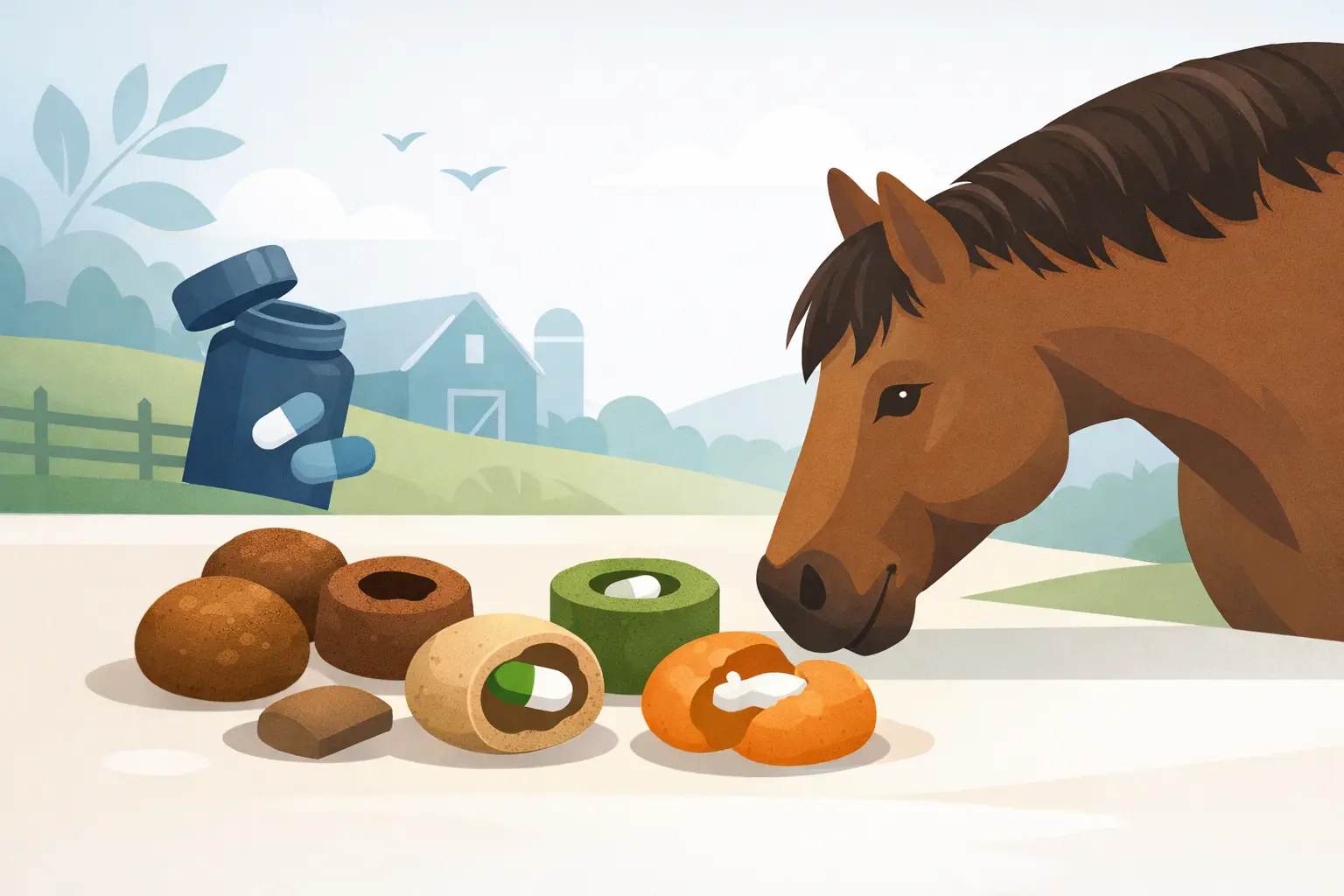
A horse can spot a hidden tablet with astonishing precision. It may be tucked into an apple, pressed into a handful of feed or disguised beneath a favourite treat, yet somehow it is the only thing left behind in the bottom of the bowl. This medication hiding treats review looks at what makes a concealment treat genuinely useful, and whether a purpose-made pocket can make daily dosing feel less like a negotiation.
For many owners, medication time arrives when a horse is already uncomfortable, anxious or off its usual routine. The aim is not to turn treatment into a battle. It is to offer a small, familiar reward that protects the relationship you have worked hard to build, while helping the prescribed medicine reach the horse who needs it.
What a good medication hiding treat needs to do
A medication treat has a more demanding job than an ordinary reward. It needs to be soft enough to shape around a tablet or capsule, firm enough to hold together in a pocket or coat pocket, and appealing enough that the horse eats it without careful investigation. If it crumbles in cold weather, turns sticky in a grooming bag or leaves medicine exposed, it has not solved the problem.
Taste matters, but texture matters just as much. Horses are often suspicious of a hard edge or powdery residue, particularly when they have had medication hidden in feed before. A pliable treat allows the tablet to sit within the centre rather than merely being stuck to the outside. That small detail can make a considerable difference.
The best option will also suit the medication itself. Small tablets and capsules are usually straightforward to conceal. Larger tablets may need a more generous portion, while pastes require a different approach. A treat can help disguise the flavour of a carefully measured dose, but it cannot make an unsuitable medicine safe to feed, nor can it guarantee that every horse will accept it.
Medication hiding treats review: Mint Medi-Pockets
Mint Medi-Pockets from Highland Horse Sweets are made for the practical reality of giving tablets, capsules and wormer paste to horses who are not impressed by either. They have a soft, mouldable structure, with a molasses shell and a mint-flavoured centre, so medication can be pressed inside and the opening gently closed before offering.
The first strength is their purpose. These are not standard treats being asked to do an awkward extra job. Their pocketed format gives owners a clear place for medicine, helping keep it covered rather than visible on the surface. The molasses exterior adds a familiar, rewarding sweetness, while mint gives the treat a fresh, distinctive note that many horses readily recognise as a treat rather than a dose.
Fresh, small-batch production also suits a product where texture is central to performance. A concealment treat needs to feel workable in the hand, not dry and brittle. The supple consistency of a well-kept Medi-Pocket makes it easier to accommodate different tablet shapes without splitting the treat apart.
There is a lovely practical luxury to this approach. It is still a useful yard essential, but it feels more considered than crushing a tablet into a random handful of feed and hoping for the best. For the horse you love, that is a meaningful difference on a difficult day.
Where they work particularly well
Medi-Pockets are especially useful for horses that take a regular tablet, such as a short course prescribed by the vet, or for those who become wary when something unfamiliar appears in their bucket. They are also handy for keeping medication administration consistent between different people at the yard. Instead of explaining a complicated feed routine, you can prepare the dose in a single, recognisable treat.
They are best offered when the horse is calm and not distracted by a full feed. Some owners find that giving one plain treat first, followed by the medicated one and then another plain treat, helps preserve confidence. This is not a trick to rush through. It is a gentle routine that lets the horse stay relaxed and keeps the medicated treat from becoming a suspicious one-off.
For paste medication, use only the amount advised by your veterinary surgeon and make sure the horse consumes the whole portion. A small amount of paste can be hidden inside a pocket, but a full syringe dose may be too much for any single treat. In that case, direct administration may remain the most reliable route.
The trade-offs to consider
No medication hiding treat is a universal answer. Some horses dislike mint, some are exceptionally skilled at chewing around hidden tablets, and some medications have a strong flavour that even a generous treat cannot entirely disguise. A horse with dietary restrictions, insulin dysregulation, laminitis concerns or a veterinary-directed feeding plan may need a different solution altogether.
Molasses-based treats are designed as treats, not as a replacement for a carefully managed diet. If your horse requires strict sugar and starch control, ask your vet or equine nutritionist whether a medication pocket is appropriate before adding it to the routine. The same care applies to allergies, sensitivities and any medication with specific feeding instructions.
It is also sensible to check whether the medicine can be given with food. Certain tablets should be administered at a particular time, on an empty stomach or without being split or crushed. Always follow the label and your veterinary surgeon's direction. Hiding medicine should make dosing easier, never alter how the medicine is meant to work.
How to use a medication pocket without creating suspicion
Preparation is the quiet part of success. Wash and dry your hands before handling the medicine so strong-smelling products do not transfer to the outside of the treat. Press the tablet or capsule into the centre, then close the opening well so there is no visible edge. If a tablet is large, divide it only if your vet has confirmed that it is safe to do so.
Keep the treat in a clean, dry container until it is needed. Avoid making up several doses far in advance unless storage instructions allow it, as medication can affect texture and a fresh pocket is usually easier to shape. If you are using paste, avoid overfilling it. A smaller, fully eaten amount is more useful than a generous pocket that leaks or is dropped.
Watch the horse finish the treat. This sounds obvious, but it is the most important part of any medication routine. If a horse chews slowly, offer the dose by hand only when it is safe to do so, or place it in a separate small bowl where you can see it has been eaten. Do not assume an empty-looking feed bucket means the tablet has gone.
If your horse rejects the pocket, resist the temptation to keep offering the same medicated treat repeatedly. Take a pause, speak to your vet if the dose is urgent, and consider whether the issue is taste, texture, timing or discomfort. A horse that suddenly refuses treats may be telling you something beyond simple pickiness.
Is a premium treat worth it for medication time?
That depends on how often you are giving medication and how much stress the current method creates. For an easy horse taking a tiny tablet once, a simple feed-based approach may be perfectly adequate. For a suspicious horse, a nervous owner, or a course of medicine that must be given reliably every day, a purpose-made pocket can be worth far more than its place in the treat tin.
The value is in the calm it can preserve. Less chasing around the stable, less wrestling with a syringe, less worry that a costly tablet has been spat into the bedding. It is a small piece of thoughtful horse care, made to turn an unavoidable task into a softer moment of trust.
Start with patience, keep your vet's instructions close, and choose the method your individual horse will genuinely finish. When the dose is safely taken and your horse still comes forward for the next treat, you know the routine is working.