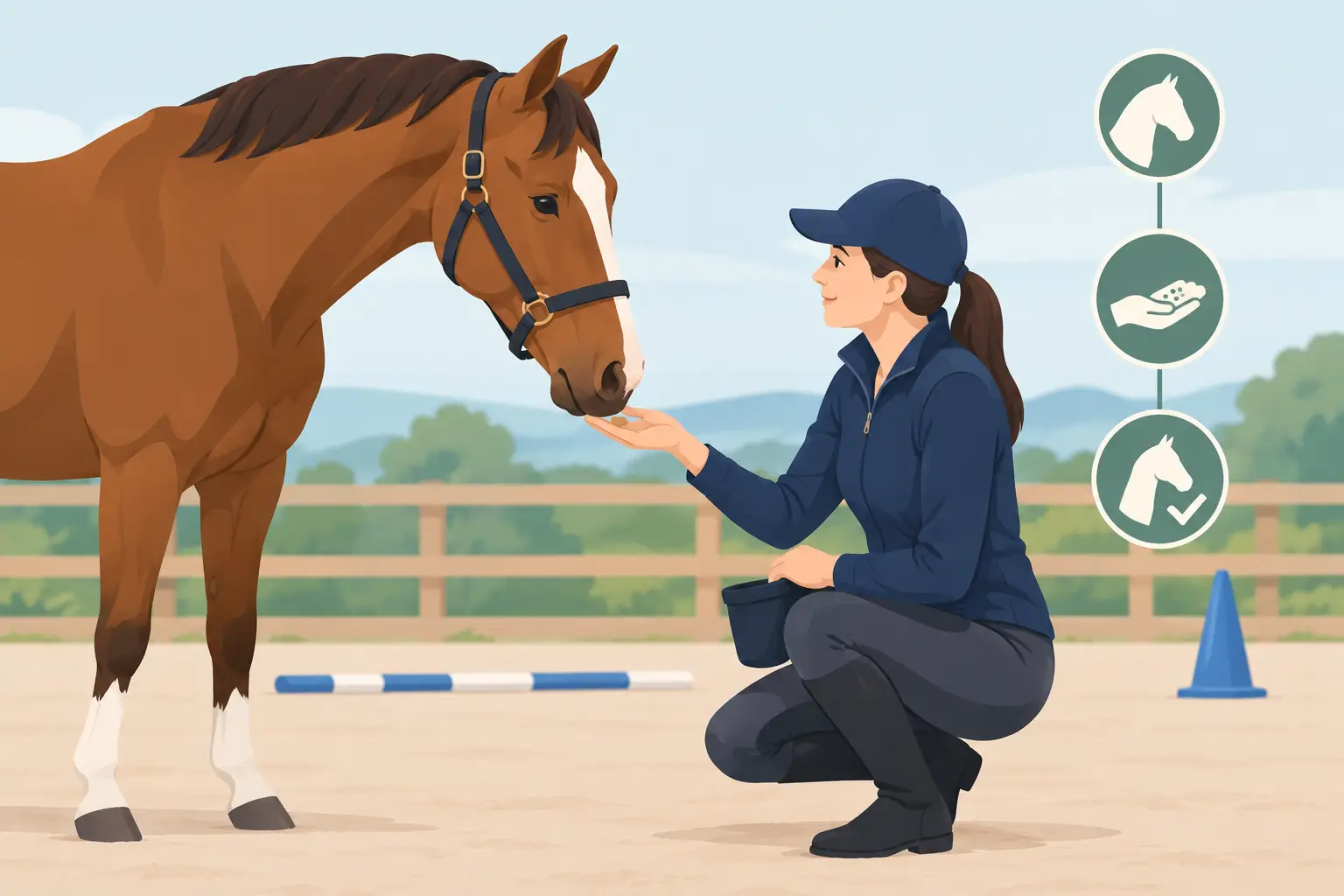
A reward given at exactly the right moment can turn one soft step of understanding into a habit your horse offers with confidence. To introduce rewards during horse training well, think beyond handing over a favourite treat after a session. The real value lies in timing, clarity and choosing something your horse genuinely enjoys.
For the horse you love, training should feel fair. A thoughtful reward can make unfamiliar exercises, routine handling and everyday care feel more positive - while helping your horse understand precisely which choice earned it.
Why rewards work in horse training
Horses repeat behaviours that have a good outcome. This is not about bribery or letting treats replace good horsemanship. It is about clear communication. If your horse takes a quiet step towards the mounting block, stands patiently for the farrier, or softens into a new groundwork exercise, a well-timed reward tells them, “Yes, that was the answer.”
This is particularly useful for horses that find certain situations worrying, confusing or simply dull. A youngster learning to be led away from the yard may benefit from small, frequent reassurance. An experienced horse who fidgets while being clipped may begin to associate standing still with something pleasant. Even a horse that knows its job can enjoy a little more enthusiasm for the small manners that make daily life safer and kinder.
Rewards do not need to be food every time. A pause, a release of pressure, a scratch in a cherished spot or a few moments to look around can all matter. Food rewards, however, are wonderfully precise. They allow you to mark a good decision quickly and can create a positive connection with training that carries into future sessions.
When to introduce rewards during horse training
Start early, but start simply. Rewards are most effective when your horse can easily understand what earned them. Ask for one uncomplicated behaviour, reward it promptly, then allow a moment to process. At first, you may reward a horse for standing quietly beside you for two seconds. Later, those two seconds become five, then ten, then the whole grooming routine.
The crucial detail is timing. Offer the reward within a second or two of the behaviour you want to see again. If your horse steps back politely, then swings their quarters, then receives a truffle, they may not connect the reward with the step back. A short, consistent marker word such as “good” can bridge that tiny gap, especially when your hands are busy with a lead rope, reins or grooming kit.
Use rewards while a behaviour is still easy
Many owners wait until a horse has performed an entire exercise perfectly. That can be too much, particularly when teaching something new. Break the task into small, achievable pieces and reward the first glimmer of the right response.
For example, if you are teaching a horse to stand at the mounting block, reward first for approaching it calmly. Then reward for standing alongside it. Next, reward for remaining still as you put weight in the stirrup. Each stage builds towards the finished picture without asking the horse to guess.
The same approach helps with practical care. A horse learning to accept fly spray might first be rewarded for sniffing the bottle, then for standing near it, then for tolerating one quiet spray. This gradual method is more patient than forcing the issue, and usually far more productive.
Reward calmness, not just movement
It is easy to reward the obvious: a lifted hoof, a step sideways, a loaded lorry. Yet calmness is often the behaviour worth celebrating most. Look for the lowered head, the soft eye, the still feet and the relaxed exhale.
If a horse is worried, avoid pushing them past their threshold merely to get the job done. Rewarding a moment of composure before anxiety grows gives you something solid to build on. This may mean ending a session after a small success rather than insisting on one more attempt. That is not lowering the standard. It is protecting the horse’s confidence for tomorrow.
Choose a reward worth working for
Not every horse is motivated by the same thing. Some will work happily for a small fibre-based morsel, while others reserve their full attention for something more fragrant and indulgent. The best training treat is one your horse finds special enough to notice, but small enough to offer often without upsetting their normal diet.
Consider the setting, too. In a quiet stable, a modest reward may be plenty. At a busy showground or beside a lorry with horses coming and going, you may need a more appealing option to compete with the distractions. Save the most exciting rewards for the exercises that ask the most of your horse, such as calm loading, standing for veterinary attention or settling in an unfamiliar environment.
Handcrafted horse truffles can make those moments feel especially rewarding. At Highland Horse Sweets, a molasses shell and flavourful centre create a little equine indulgence with a sense of occasion - ideal for the horse who deserves more than an ordinary pellet. As with any treat, feed sensibly, account for it within the overall ration and follow the guidance for your individual horse.
Keep treat training polite and safe
Food rewards should make your horse more mannerly, never pushy. Establish the rule from the beginning: the treat arrives when the horse is calm, facing forward or standing at a respectful distance, rather than searching pockets or nudging hands.
If your horse becomes over-eager, do not punish the interest. Simply reset. Put the treat away, wait for quiet manners, then try again with a clearer routine. Some horses do better receiving treats from a small bucket or feed bowl rather than from the hand, particularly if they have learned to mouth sleeves or crowd their handler.
Be mindful of where you train. Offering food in a shared field can create tension between horses, and rewarding from the saddle may be unsuitable for a horse that becomes impatient or distracted. A treat is only useful if it supports safety for both horse and handler.
Move from frequent treats to lasting habits
At the beginning, reward often. A horse learning a new concept needs plenty of feedback. Once they understand, gradually vary when the treat appears. You might reward the first lovely halt, then the third, then the best halt at the end of the session.
This does not mean becoming stingy. Continue using praise, rest and the occasional treat generously enough that the horse remains engaged. The aim is for your horse to perform the behaviour because it has become clear, comfortable and well practised - with a lovely surprise sometimes waiting at the end.
Think of this as moving from teaching to maintaining. The horse that once needed a reward for every lifted foot may eventually need one after the whole farrier practice session. The horse that learned to load one step at a time may later receive their treat once they are standing quietly inside, ready to travel.
Common mistakes that blur the message
The most common problem is rewarding too late. If you cannot deliver a treat quickly, use your marker word at the exact moment, then offer the reward immediately afterwards. Consistency matters more than perfection.
Another mistake is asking for too much too soon. When training stalls, make the next request easier rather than repeating it with more pressure. Horses learn best when they can succeed repeatedly.
Finally, avoid using treats to distract from pain, fear or an ill-fitting arrangement. If a usually willing horse suddenly objects to saddling, hoof handling, loading or being touched in a particular area, investigate the cause. Rewards are a training tool, not a way to cover up discomfort.
A beautifully timed treat is a small gesture, but it can say a great deal: I noticed your effort, you are safe to try, and we can work this out together. Used with patience and good feel, it turns ordinary training moments into trust that your horse can carry far beyond the yard gate.