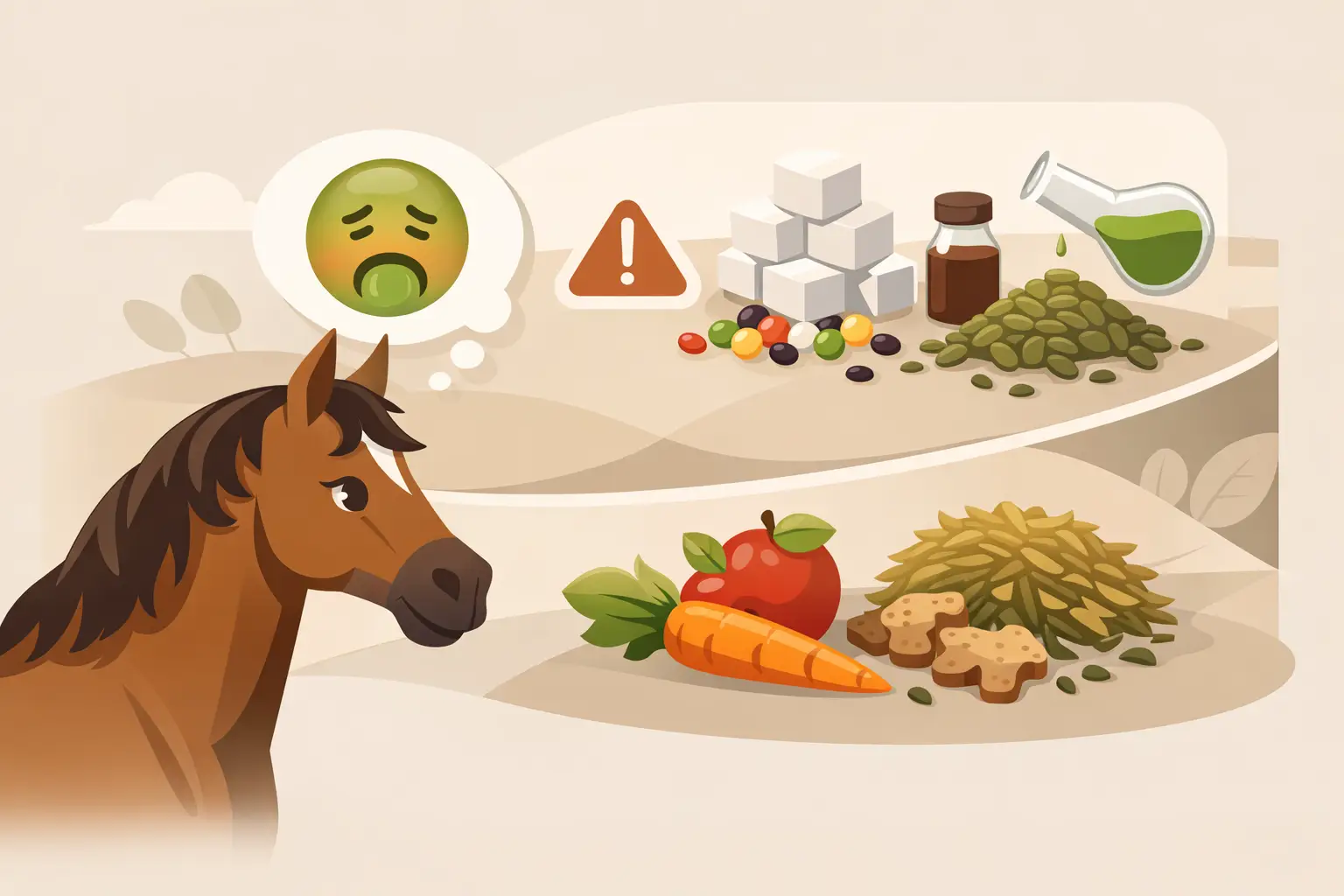
A treat that is left in the bottom of a feed bowl tells you something useful. Horses can be wonderfully decisive about flavour, aroma and texture, and the ingredients horses avoid in treats are not always the same as the ingredients that should be avoided for health reasons. Knowing the difference helps you choose a reward your horse will genuinely enjoy, without compromising the thoughtful care behind every mouthful.
For most horses, a little treat is about more than taste. It is a moment of connection after a good ride, a welcome distraction from a clattering farrier’s van, or a practical helping hand when medicine is needed. That is why the ingredient list deserves as much attention as the tempting smell when the packet is opened.
Ingredients horses avoid in treats: taste and texture
Like us, horses have individual preferences. One may nicker at the sound of a treat tub opening, while another turns away from exactly the same offering. Still, a few flavour profiles are more commonly met with suspicion.
Strongly bitter ingredients are often the first culprit. Excessively bitter herbs, concentrated botanical extracts and certain medicinal-tasting powders can overwhelm a horse’s palate. A little herb may be perfectly acceptable, but strength matters. A treat created to hide a tablet should not compete with the tablet’s bitterness.
Sharp, sour flavours can also be divisive. Some horses enjoy apple-like notes, while others reject particularly acidic or intensely citrusy ingredients. The same applies to heavily perfumed flavours. Horses rely greatly on scent when deciding whether food is safe and familiar, so an artificial or overpowering aroma can put even a food-motivated horse off before they have taken a bite.
Texture is just as influential. Treats that are excessively dry, dusty, hard or sticky may be less appealing, particularly for older horses or those with dental concerns. A quality treat should be easy to break down and pleasant to chew, rather than something a horse has to wrestle with. If a horse drops treats, chews very slowly or suddenly loses interest in food, speak to your vet or equine dental technician rather than simply trying a different flavour.
Ingredients that do not belong in horse treats
A horse refusing a treat is one thing. An ingredient that is unsuitable or potentially harmful is another. Treats should be a small, considered addition to a forage-led diet, not a place for unnecessary extras.
Chocolate, cocoa and caffeine are clear no-go ingredients. They contain compounds that are not appropriate for horses and have no place in equine indulgence, however tempting a chocolate-inspired flavour might sound to us.
Xylitol is another ingredient to avoid. It is used as a sweetener in some human foods and sugar-free products, but horse treats do not need it. It is sensible to keep human confectionery, chewing gum and sugar-free baked goods well out of reach in the tack room and feed area.
Artificial colours, flavours and preservatives add little for the horse you love. Brightly coloured treats may catch a person’s eye, but horses do not need their reward dyed a vivid shade. Likewise, artificial flavourings can produce a scent or taste that feels unfamiliar, while preservatives may be unnecessary in carefully made, fresh small-batch treats with appropriate storage and shelf-life guidance.
Be cautious with ingredients designed for human novelty rather than equine wellbeing. Alcohol-based flavourings, very salty snack ingredients, highly processed syrups and confectionery-style inclusions are not a thoughtful fit for a horse’s diet. Raisins, grapes and other dried fruits are also best left out of the treat jar. Their safety in horses is not as clearly established as it is in some other animals, and there are plenty of more suitable choices.
Garlic deserves a measured approach too. It appears in some equine feeds and supplements, but more is not better. Large or prolonged amounts can be problematic, so it should never be casually added to homemade treats for flavour. If your horse is on supplements, check the whole daily ration so ingredients are not duplicated without thought.
Beware of hidden extras in homemade rewards
Homemade horse treats can be lovely, especially for a birthday or a yard gathering, but recipes borrowed from human baking are not always horse-friendly. Avoid reaching for chocolate powder, sugar-free sweeteners, salty spreads or flavour extracts without checking what they contain.
Even perfectly ordinary ingredients can become less suitable when used generously. Molasses, fruit and honey are naturally appealing and can make a treat wonderfully tempting, but they still contribute sugar. For a healthy horse in sensible portions, that may be fine. For a horse or pony with insulin dysregulation, equine metabolic syndrome, laminitis concerns or a carefully managed diet, the treat choice needs to be far more specific.
Natural does not automatically mean suitable
“Natural” is a useful starting point, but it is not a free pass. Some natural plants are toxic to horses, and some herbs can interact with medicines or be unsuitable for pregnant mares, competing horses or individuals with particular health conditions.
This is where a short, recognisable ingredient list earns its place. You should be able to see what gives the treat its flavour, what holds it together and why it is included. A supplier should also be clear about feeding guidance, storage and any dietary considerations.
There is a trade-off worth acknowledging. A very simple treat with no artificial preservatives may have a shorter shelf life than a heavily processed alternative. That is not a flaw when freshness is part of the craftsmanship. It simply means buying an appropriate quantity, storing it as directed and enjoying it while it is at its best.
Choosing treats for a fussy horse
If your horse is selective, resist the temptation to keep offering handful after handful of new treats. Start with one small piece in a calm setting, away from a busy showground or the excitement of supper time. Let the horse sniff it first. A refusal may be about the unfamiliar setting, not the recipe.
Choose flavours based on foods your horse already enjoys. If they love mint, apple or carrot in their everyday diet, those notes are often a sensible place to begin. A layered treat can be especially useful here: an inviting outer shell and a soft, flavourful centre offer a more interesting experience than a plain pellet, without relying on artificial intensity.
For medication, palatability is only part of the picture. The treat must hold the tablet, capsule or paste securely, be easy to portion and be tempting enough that your horse takes it without suspicion. Introduce a medication-friendly treat empty first, if possible. Once it becomes a familiar reward, it is less likely to raise eyebrows when there is something hidden inside.
Treats for horses on restricted diets
For horses prone to laminitis or managing metabolic conditions, do not assume that a small treat is automatically insignificant. The right amount depends on the individual horse, their total diet, body condition, workload and veterinary advice. Some will need very limited treats; others may need a product specifically formulated around their dietary needs.
Read the feeding recommendation, consider the ingredients alongside the rest of the ration and ask your vet or qualified equine nutritionist if you are uncertain. This is especially worthwhile if your horse is on prescribed medication, has a history of digestive upset or is undergoing a change in management.
A premium treat should feel like a pleasure, not a puzzle. Highland Horse Sweets are handcrafted with a focus on natural ingredients and familiar, horse-friendly flavour, so reward time can feel special while staying grounded in the practical realities of horse care.
The best choice is rarely the loudest packet or the sweetest smell. It is the treat your horse takes eagerly, chews comfortably and suits their individual needs - a small moment of care, made with the same good judgement you bring to every part of their day.