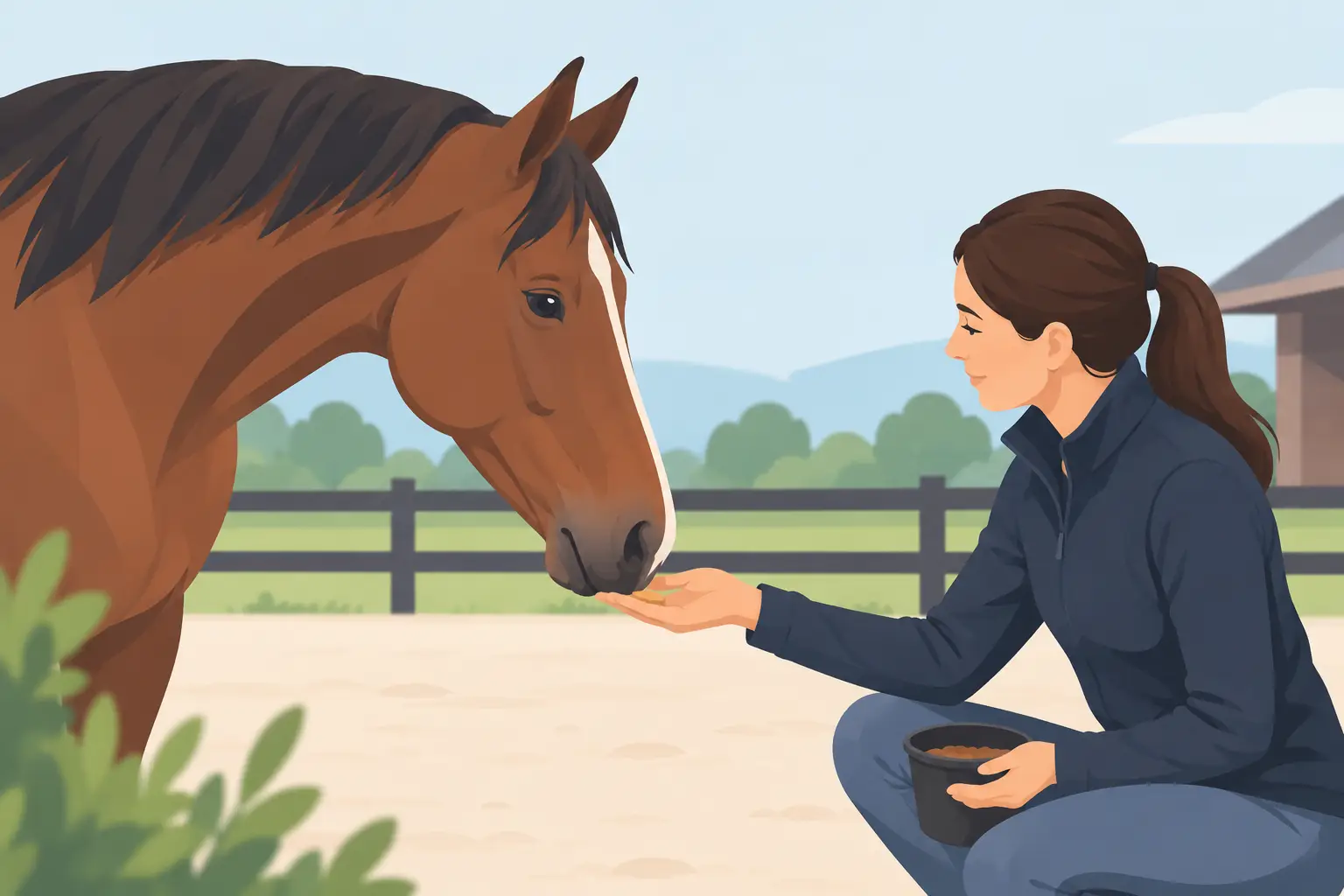
A nervous horse does not need more excitement when they finally stand quietly at the mounting block, step into the lorry, or allow a new person to approach. They need to understand that they have made a good choice. Learning how to reward nervous horses is less about finding the biggest or sweetest treat and more about making every reward feel calm, clear and safe.
For the horse you love, that distinction matters. A thoughtful reward can turn an uncertain moment into a familiar ritual. Given too late, too generously or when a horse is already overwhelmed, it can add pressure rather than reassurance.
How to reward nervous horses with good timing
The most valuable reward is the one your horse can connect to their behaviour. Offer it immediately after the small response you wanted: a soft exhale, one step towards the scary object, a relaxed halt, or a moment of standing still while you do up a rug.
Do not wait for perfection. Nervous horses often find a task difficult long before it looks difficult to us. If your mare pauses at the arena gate but then takes one willing step forward, acknowledge that step. If your gelding sniffs the loading ramp rather than rushing backwards, that is progress worth noticing.
Keep your own body language quiet. Turn slightly side-on, soften your hands and avoid leaning into the horse’s space with a treat held high. A reward should arrive as an uncomplicated consequence, not as another thing they must manage. For some horses, placing a small treat in a bucket or feed bowl is gentler than hand-feeding, especially if they become mouthy or anxious around hands.
Timing is also about knowing when not to reward. If a horse is trembling, spinning, barging or unable to take in their surroundings, they are probably over threshold. Food may not register, and asking them to eat can be unfair. Create more distance from the concern, wait for a tiny return to calm, then reward that calmer moment.
Make the reward worth choosing
Not every horse values the same thing. Some will work happily for a small piece of forage or a familiar fibre-based feed, while others reserve their full attention for something more delicious. The best reward is safe for that individual horse, easy to give in tiny portions and special enough to stand apart from the everyday.
For many owners, a premium treat becomes a useful part of the routine because it is consistent. The scent, flavour and moment of receiving it can become a reassuring signal: you are safe, you know this exercise, and you have done well. Handcrafted horse truffles can make those moments feel genuinely special, particularly for horses who have become bored by ordinary rewards. At Highland Horse Sweets, every small-batch sweet is made for that sense of equine indulgence, with a molasses shell and flavourful centre designed to feel far more considered than a standard pellet.
Still, richness is not the same as quantity. Break treats into very small pieces where appropriate, and use fewer than you think you need. A nervous horse benefits from frequent clarity, not a stream of snacks. This also helps protect daily calorie intake and prevents a reward from becoming an unwanted distraction.
If your horse is prone to laminitis, has insulin dysregulation, requires a restricted diet or has a history of digestive sensitivity, speak with your vet or qualified equine nutritionist before adding treats to a training plan. A reward can be a scratch in a favourite place, a pause to graze where safe, or simply release from pressure. Food is useful, but it is not the only language horses understand.
Build tiny wins into everyday handling
The most effective confidence work rarely looks dramatic. It happens in the ordinary moments: catching in the field, lifting feet, accepting fly spray, walking through a puddle, standing for the farrier or waiting calmly outside the stable.
Choose one behaviour at a time and make the exercise easy enough that your horse can succeed. For example, if clipping makes them worried, begin with the clippers switched off at a comfortable distance. Reward a relaxed glance towards them. On another day, reward standing quietly while you hold the clippers nearby. Gradual steps may feel slow, but they protect trust.
This is especially helpful with loading. Instead of saving rewards for the moment all four feet are inside the lorry, reward the stages along the way: looking at the ramp, placing a foot on it, taking a breath, standing without backing away. If the horse retreats, resist the urge to turn it into a battle. Reset at a simpler stage they can manage.
Short sessions usually suit worried horses better than long ones. End after a genuine success, even if that success seems modest. Repeating a positive experience tomorrow is more valuable than drilling a horse until their confidence runs out.
Pair treats with release and reassurance
Treats work best as one part of a wider conversation. Pressure and release remain central to clear, kind handling. Ask lightly, release the instant your horse tries, then add a reward if that helps them understand the answer was right.
Imagine asking a tense horse to take a step sideways away from the gate. The moment they shift their weight and move one foot, soften the lead rope or rein pressure first. Then, once they are standing quietly, offer the treat. The release tells them what changed; the treat adds warmth and value to the experience.
This order matters. A horse should never feel they must snatch at food while still being held in uncomfortable pressure. Nor should a treat be used to lure them into a situation they are frightened to leave. Luring can occasionally help introduce an object, but it does not replace patient training. If the horse walks towards something only because the food is there, then panics once it has gone, the lesson was too big.
Keep a reward routine predictable
Nervous horses often relax when the pattern is familiar. Use the same quiet marker word, such as “good”, in a low voice. Follow it with the reward in the same way each time. Over time, the word itself can become comforting, even when food is not practical.
This is useful at shows, clinics and new yards, where a horse may be more alert than usual. Practise the routine at home first. Reward a calm stand by the trailer, a polite wait while another horse passes, or a soft response to your leg in the arena. Then take those small rituals on the road.
There is a trade-off here. Some horses become too focused on pockets and treats, particularly if rewards appear every few seconds. If your horse starts nudging, searching or becoming impatient, make the reward less visible and space it out. Ask for a simple behaviour, reward it, then return to a few moments of ordinary calm before the next repetition.
Notice what the nerves are telling you
A reward plan cannot fix pain, poor saddle fit, ulcers, vision problems or a workload that is beyond a horse’s current fitness and education. If anxiety is new, worsening or out of character, investigate the cause rather than assuming your horse needs firmer handling or tastier treats.
Watch for patterns. Is your horse only worried when mounting? Does the tension appear near one corner of the school, when travelling alone, or when a certain leg is handled? Details give your vet, trainer, saddle fitter or behaviour professional something useful to work with.
A qualified, sympathetic trainer can also help you spot whether you are accidentally rewarding tension, asking too much too soon, or missing the subtle signs that your horse is about to tip into panic. Getting support is not a failure of confidence. It is good horsemanship.
The loveliest rewards are not reserved for flawless performances. They belong in the quiet, brave choices that a nervous horse makes every day. Meet those choices with patience, a clear release and a little something special, and you give your horse a reason to believe the next small step may be safe too.