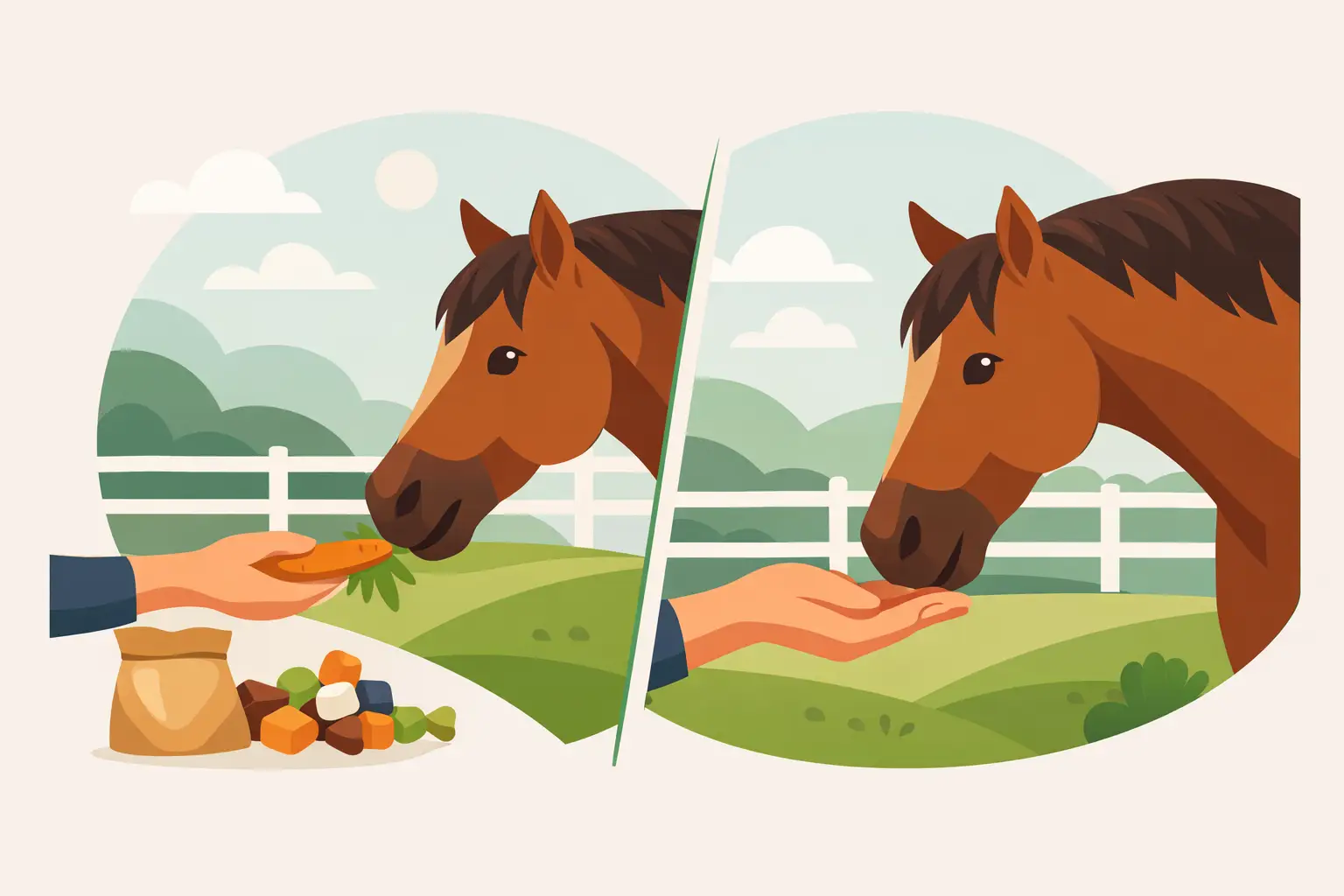
The moment your horse gives you that softer halt, steps bravely towards the mounting block, or patiently accepts a tablet, they deserve to know they have got it right. Learning how to reward a horse is not simply about offering a treat after a good effort. It is about making your message clear, protecting their health, and building the kind of trust that carries from the stable to the school, the hack and beyond.
For the horse you love, a reward should feel like a small moment of recognition. Chosen well and given at the right time, it can make training more enjoyable, everyday care calmer and your partnership even stronger.
Reward the right moment, not just the right idea
Timing is what turns a pleasant gesture into useful communication. Horses live very much in the present, so the reward needs to arrive immediately after the behaviour you want to encourage. If you ask for a polite stand at the gate, reward while they are still standing quietly. If they offer a calm step into the lorry, offer praise or a treat once they are safely in position, rather than several minutes later when they are thinking about something else entirely.
Aim for a reward within a second or two of the desired response, particularly when teaching something new. A marker word can help bridge that tiny gap. A cheerful, consistent “good” spoken at the exact moment tells your horse they have made the right choice, then the treat follows. Over time, that word becomes rewarding in its own right.
Be precise about what you are rewarding. If your horse nudges your pocket, paws the ground, then finally stands still and receives a treat, they may decide that the pawing was part of the process. Wait for the quiet, mannerly behaviour you want to see again. Clarity is kinder than accidental mixed messages.
How to reward a horse with food treats
A food reward is wonderfully motivating for many horses, especially when it has genuine scent, flavour and a little sense of occasion. Yet more is not always better. Treats are an addition to the ration, not a replacement for balanced forage and feed, and the best amount depends on the individual horse.
For a healthy horse in suitable work, a small, horse-safe treat can be an effective training reward. For good doers, ponies, horses with metabolic concerns, a history of laminitis, dental issues or a tightly managed diet, speak to your vet or equine nutrition professional before introducing new treats or feeding them frequently. Even natural ingredients need to suit the horse in front of you.
Keep portions genuinely small. A reward should be a taste, not a second supper. Breaking training into short sessions also prevents a pocketful of treats becoming the main event. Often, two or three beautifully timed rewards are more valuable than handing out handfuls throughout the day.
Choose treats made with care, clear ingredients and no unnecessary artificial colours, flavours or preservatives. A premium treat has its place when it is used thoughtfully: a special reward for loading, standing for the farrier, trying a new exercise or simply being a very good horse after a difficult day. Highland Horse Sweets’ handcrafted truffles, with their molasses shell and flavoured centre, are made for those little moments of equine indulgence.
Always feed safely. Offer treats from a flat hand with fingers together, or use a small feed bowl if your horse is over-eager. Do not reward pushing, snatching or crowding. If your horse becomes too enthusiastic around food, pause the treat-based work and return to calm personal-space manners before continuing.
Not every reward belongs in your pocket
The most useful rewards are the ones your horse genuinely values. Food is only one option, and some horses respond just as warmly to a scratch in the right place, a release of pressure, a rest break or the chance to return to their stablemate.
A well-timed release is especially powerful in ridden and groundwork training. When your horse yields softly to the rein, moves away from leg or steps forwards from a quiet aid, soften your own pressure straight away. That release says, “yes, that was it”, in a language horses understand clearly.
Many horses relish a scratch at the wither, neck or chest. Watch their expression rather than assuming: a lowered head, relaxed eye, stretched neck or a gentle lean can tell you that you have found a favourite spot. Others would rather be left alone after concentrating, so a quiet pause and a loose rein may be more rewarding than fuss.
Rest also has real value. After a brave effort over a new pole, a calm visit to the wash bay or a few good transitions, allow a moment to breathe and process. Training does not have to feel like a stream of demands. A short pause makes a good answer feel worthwhile.
Match the reward to the job
The reward that works beautifully in one setting can be unhelpful in another. A food-motivated horse may focus keenly during groundwork, but become distracted if treats appear during a busy lesson. A sensitive horse might find an animated voice overwhelming, while a confident character may need a more meaningful incentive for a task they find difficult.
For routine handling, reward the behaviours that make life safe and pleasant: waiting at the stable door, leading without barging, standing for grooming, lifting feet and accepting rugs without fidgeting. These are not minor achievements. They are the foundations of considerate horse care.
For ridden work, use rewards in natural breaks. After a correct transition, a few balanced strides or a brave response to something unfamiliar, soften, praise and let your horse walk on. If you use a food treat from the saddle, do so only when it is safe, your horse is settled and you can maintain good manners. For many riders, saving the treat for dismounting avoids creating a horse that searches for snacks during the session.
Loading and travelling often call for patience rather than persuasion. Reward each manageable step: looking at the ramp, placing a foot on it, standing quietly, then stepping inside. Do not rush to make the final outcome happen. A horse that feels heard is more likely to load calmly next time.
Use treats to make care feel kinder
Rewards are not only for schooling. They can transform the practical jobs horses understandably find odd, uncomfortable or dull. A small treat after standing quietly for clipping, allowing a cold hose near the legs or wearing a fly mask can help create a better association over repeated sessions.
Medication is one area where thoughtful reward can be especially useful. A horse who has learned to distrust a syringe or tablet may become difficult before you have even opened the cupboard. Where suitable for the medicine and approved by your vet, a palatable medication-friendly treat can make administration feel less confrontational. Introduce any treat holder separately first, without medicine, so it already means something pleasant before it has a practical purpose.
Never use a favourite treat to disguise medication without checking the instructions and your vet’s advice. Some medicines should not be crushed or mixed with food, and a horse that detects an unfamiliar taste may reject that treat in future. The aim is calm cooperation, not a battle of wits.
Avoid turning rewards into demands
A horse should never feel they must mug you for a reward. If treats start to create pocket-searching, nipping, head-tossing or impatience, change the routine. Keep treats out of sight, ask for a respectful distance, reward from a predictable position and vary the reward sometimes with voice, scratches or rest.
It also helps to fade food rewards gradually once a behaviour is well established. You might reward every correct response while teaching a new task, then move to every second or third effort as your horse gains confidence. Continue to praise warmly, but make the occasional treat a welcome surprise rather than an expectation.
This does not mean becoming stingy. It means keeping rewards meaningful. The horse who never knows exactly when a small luxury is coming often stays cheerful and attentive, while still understanding that calm cooperation feels good.
Make praise part of your everyday partnership
The finest reward is not necessarily the fanciest one. It is the one that arrives at the right time, suits your horse’s needs and says clearly, “I noticed that.” Whether it is a soft word, a long rein, a favourite scratch or a handcrafted bite saved for a special success, those moments add up.
Pay attention to what makes your own horse’s ears tip forwards and their expression soften. Their preferences may change with the task, the day and their confidence. Reward with care, keep your boundaries kind and consistent, and every ordinary piece of good behaviour can become another reason for your horse to trust you.