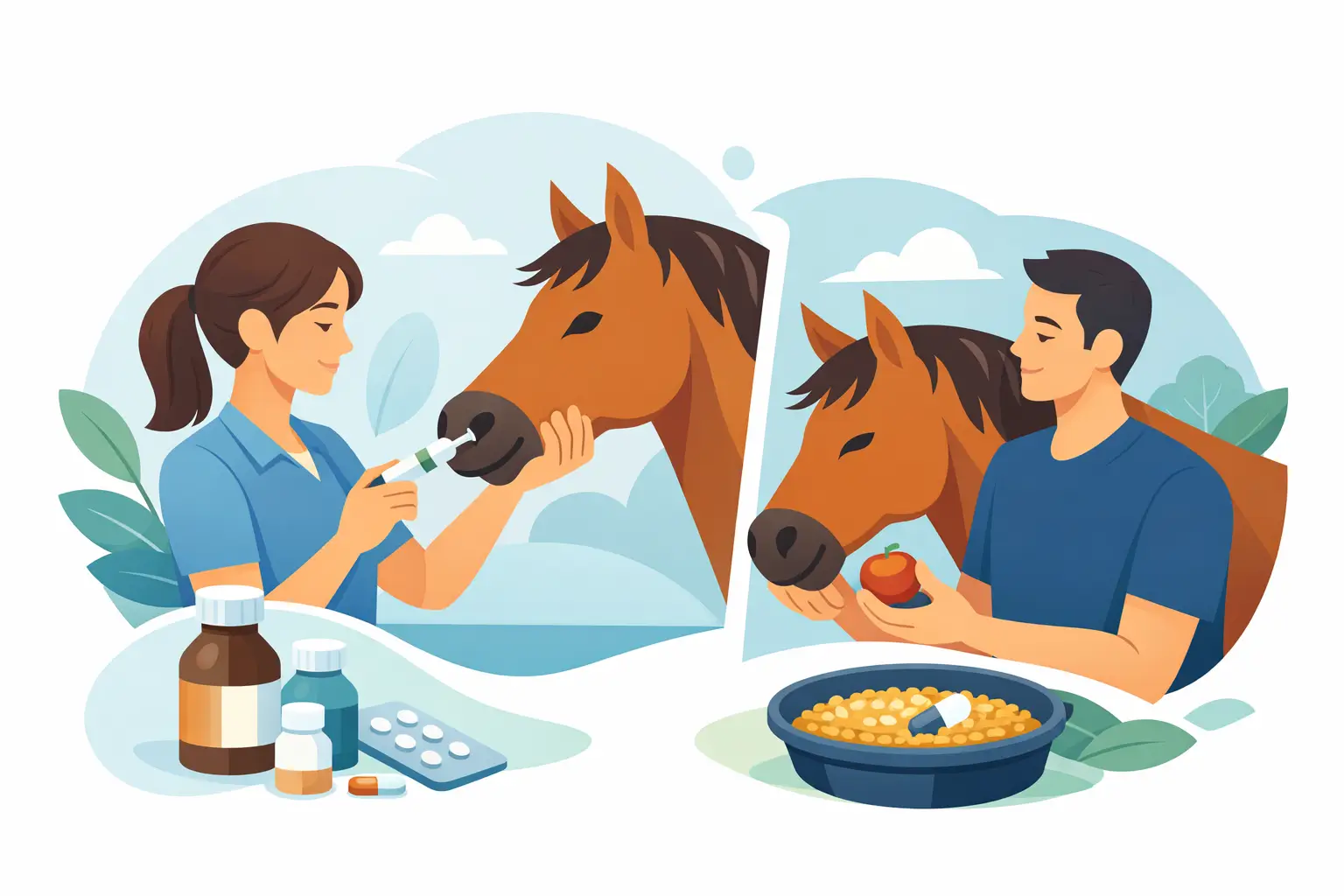
A horse can detect one suspicious tablet in a full feed bowl with almost insulting accuracy. One sniff, one sideways look, and suddenly the entire stable routine feels far more complicated than it should. If you are working out how to medicate a horse, the real challenge is rarely just the medicine itself. It is the horse’s memory, preferences, timing, and tolerance for anything unfamiliar.
The good news is that most medication battles can be made easier with a calmer approach, a little preparation, and the right method for the type of medicine you are giving. Some horses will take almost anything in feed. Others need a more thoughtful disguise. And some are best managed with steady handling, clear routine, and a quick, confident hand.
How to medicate a horse starts with the medicine itself
Before you hide, mix, crush, or syringe anything, check exactly what you have been prescribed and how it should be given. Not every medication can be altered. Some tablets should not be crushed, some powders lose their appeal when mixed into a full ration, and some pastes are far easier to give when the horse has not just eaten.
This is the point where a quick conversation with your vet matters. Ask whether the medication can go in feed, whether it needs to be given on an empty stomach, whether it can be split or crushed, and whether flavour tends to be an issue. That small bit of guidance can save days of wasted doses and growing suspicion from your horse.
It also helps to think about your horse as an individual. A greedy cob, a sharp competition horse, and an older pony with a fussy appetite will not all respond to the same tactic. The best method is the one your horse accepts reliably, not the one that looks easiest on paper.
The easiest way is often the least dramatic
For many owners, the simplest route is still medication hidden in something genuinely tempting. That only works if the disguise is small enough to be eaten in one go and tasty enough to hold attention. If you hide a tablet in a large bucket feed, you risk the horse eating around it or refusing the whole thing. If you use too much feed, you also make it harder to know whether the full dose has been taken.
A small, high-value treat usually works better than a full meal for tablets and capsules. Something soft and mouldable is ideal because it allows the medicine to be fully enclosed rather than half exposed. That matters more than many owners realise. Horses are remarkably good at sorting textures with their lips and tongue.
Medication-friendly treats are especially useful here because they are designed for exactly this problem. A soft outer shell with an appealing centre can turn a daily argument into a much tidier routine. Highland Horse Sweets Mint Medi-Pockets, for example, are made for concealing tablets, capsules, and wormer paste while keeping the experience quick, calm, and far more agreeable for the horse you love.
Giving tablets to a horse without creating feed aversion
Tablets are often the first thing horses learn to detect, particularly if they have been dropped into a usual ration without much thought. If your horse starts associating their normal feed with unpleasant taste or smell, you can create a longer-term fussiness that outlasts the medication.
That is why it is worth separating medicine from the main bucket where possible. Offer the medicated treat first, then follow with a favourite reward or the regular feed once the tablet is safely swallowed. It keeps the main ration feeling normal and reduces the risk of your horse approaching meals with suspicion.
If your vet confirms the tablets can be crushed, that may help with very large tablets or horses that reject unusual shapes. But crushed medication can also spread bitterness more evenly, which makes disguise harder rather than easier. It depends on the medicine. Sometimes a whole tablet hidden neatly is better accepted than a crushed one mixed through feed.
When using any concealed treat, keep your manner casual. Horses read hesitation. If you hover, fuss, or present the medicated bite differently from every other reward, many will notice before they even chew.
How to medicate a horse with paste or oral syringe medication
Paste brings its own challenges. Even horses that are perfectly happy with treats may throw their heads up the moment a syringe appears. In those cases, handling matters as much as flavour.
Stand quietly to the side of the horse’s head, not directly in front. Slip the syringe into the corner of the mouth where there is a natural gap between the front and back teeth, then direct it over the tongue towards the back of the mouth. Give the dose steadily, not too fast, and keep the horse’s head level for a moment so they have time to swallow.
If your horse fights the syringe itself, practise first with an empty syringe or one filled with something pleasant your vet says is safe to use for training. That can reduce the association of every syringe with an unpleasant taste. For some horses, wormer or paste hidden inside a purpose-made treat is also easier than direct dosing, provided the full amount can be taken cleanly and your vet or product guidance supports that method.
The trade-off is speed versus certainty. Syringing directly is often the most certain way to know the full dose has gone in. Hiding paste can feel gentler and less confrontational, but only if your horse consumes every bit.
Powders in feed can work, but only if the portion is small
Powdered medication tempts owners to stir it through a full dinner and hope for the best. Sometimes that works. Quite often, it leaves an expensive layer of untouched feed in the bottom of the bucket.
A better approach is to use the smallest possible amount of highly palatable feed first. Think of it as a starter portion rather than the full meal. Once that has been completely eaten, you can offer the rest of the ration. This gives you a much clearer view of whether the full dose has actually gone in.
Texture can help here. Slightly dampening the feed may stop powder settling at the bottom, but too much moisture can intensify smells and make rejection more likely. Again, it depends on the horse. Some prefer a dry handful with the powder clinging to chopped fibre. Others accept it more readily in a soft mash.
What tends not to work well is constant experimentation mid-dose. If you change carrier feed every day, your horse gets repeated opportunities to become wary. Once you find a method they accept, stick to it.
Safety matters more than speed
Even the sweetest horse can become reactive when they feel restrained or surprised. Medication time should be calm, not rushed between chores. Tie up only if your horse is accustomed to it and remains settled. Otherwise, a quiet handler in a familiar space is often safer.
Avoid putting your fingers deep into the mouth to place tablets by hand. It is not worth the risk. Use a proper dosing syringe, a medicating treat, or another vet-approved method instead. If a horse throws its head, barges, or becomes distressed, step back and reassess. A forceful struggle can quickly make the next dose harder.
Consistency is useful, but so is honesty about what is not working. If you are missing doses, losing half the paste, or finding tablets on the stable floor, the plan needs changing. There is no prize for sticking with a method your horse has already outsmarted.
When a horse refuses everything
Some horses become medication detectives after one or two bad experiences. If that sounds familiar, strip the process back. Use a neutral tone, keep the dose separate from the main feed, and avoid presenting six failed disguises in a row. Too much trial and error can teach the horse to inspect every treat you offer.
This is also where routine can be your ally. Horses often accept medication more readily when it appears at the same time, in the same place, and in the same way each day. Predictability reduces tension. So does a worthwhile follow-up, whether that is a favourite scratch, turnout, or an unmedicated treat.
If refusal continues, speak to your vet sooner rather than later. There may be another formulation available, such as liquid instead of tablets, or a different schedule that is easier to manage. Some medications are simply more bitter than others, and no amount of culinary creativity will fully hide them.
Learning how to medicate a horse is part practical skill, part patience, and part knowing when to stop making life harder than it needs to be. The kindest approach is usually the one that keeps the full dose reliable while preserving trust, appetite, and peace in the yard.