Worming day can turn even the sweetest horse into a skilled escape artist. If you are wondering how to give horse wormer paste without the battle, the answer is usually less about force and more about timing, handling, and making the experience feel brief, calm, and predictable.
For many horses, the issue is not the paste itself so much as the sudden feel of a syringe in the mouth, the unfamiliar taste, or a handler who is already braced for an argument. Horses read that tension quickly. A quieter approach often gives you a far better result, especially with sharp, sensitive, or clever types who have learned exactly what the wormer tube means.
How to give horse wormer paste with less fuss
Start by reading the dosing instructions fully before you bring your horse in. That sounds obvious, but fumbling with the plunger while your horse lifts its head is how half the paste ends up on the stable door. Check the dose against your horse's weight, set the syringe correctly, and have everything ready in your hand before you begin.
Choose a calm moment rather than trying to do it in the middle of a busy yard rush. Some horses are better after exercise when they are settled and attentive. Others prefer a quiet moment in the stable with no audience. It depends on the horse. If yours tends to plant, throw its head, or back away, a familiar space with minimal distractions usually helps.
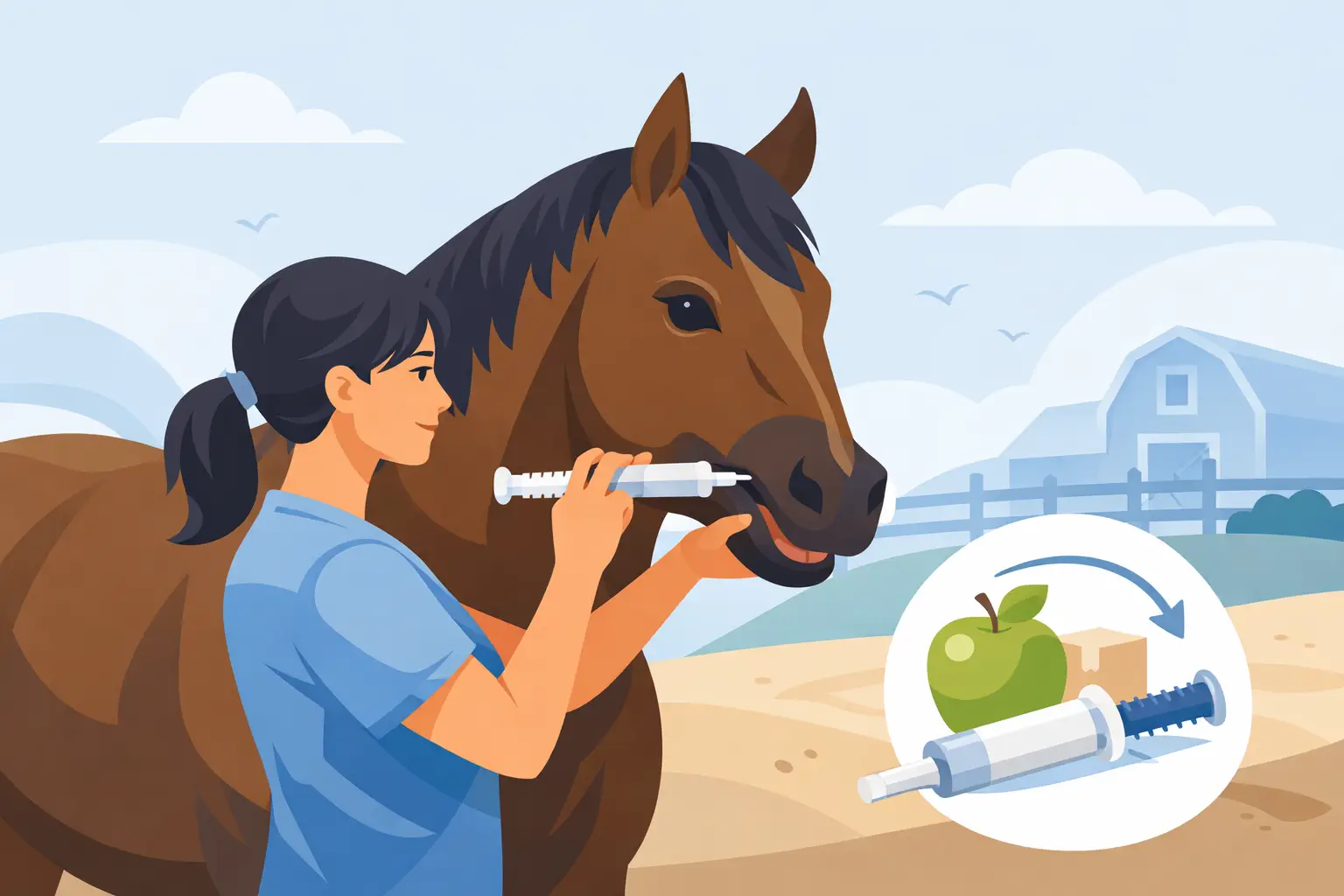
Stand to the side of the head, not directly in front. Keep one hand gently on the nose or headcollar, and with the other, slide the syringe into the side of the mouth where there is a gap between the front and back teeth. This gap is your friend. Aim the nozzle over the back of the tongue, depress the plunger steadily, then lift the head only slightly for a moment so your horse has time to swallow. Too much head lifting can create more resistance, not less.
The goal is smooth and matter-of-fact. If you hesitate halfway through, many horses will seize the opportunity to spit, fling, or clamp down. A clean, confident movement is kinder than repeated attempts.
Why some horses fight wormer paste
A horse that objects to wormer paste is not necessarily being difficult. Taste plays a part, but memory often plays a bigger one. If a horse has previously been jabbed in the mouth, restrained roughly, or surprised by a paste syringe, it may anticipate discomfort before you even remove the cap.
There is also a practical issue with oral sensitivity. Some horses dislike having their lips handled or react strongly to anything placed on the tongue. Younger horses and those with less handling can be especially suspicious. On the other hand, older campaigners can be just as opinionated because they know exactly what is coming.
This is where preparation matters. If your horse only ever sees a syringe when medication is involved, it learns to avoid the entire routine. If you spend a few days beforehand touching the lips, slipping a finger into the side of the mouth gently, or introducing an empty syringe with a pleasant reward afterwards, the actual worming day can feel far less confrontational.
Set yourself up properly first
Before you give the paste, make sure your horse has not just eaten a large feed. A mouth full of chaff can make it harder to place the syringe accurately, and some horses are more inclined to spit when they are already chewing. A short gap after food is often helpful.
It is also worth wiping away excess saliva or feed around the lips if your horse is messy. A dry, clear grip gives you better control. If you wear gloves, choose ones that still let you feel what you are doing. Thick gloves can make delicate handling clumsy.
If possible, have an experienced second person nearby, especially with a horse that is known to react. That does not mean crowding the horse. It simply means calm support if needed. In many cases one quiet handler is enough, but safety comes first.
The technique that usually works best
Approach as if this is routine, because for your horse, routine feels safer than drama. Hold the syringe in your dominant hand. With your other hand, gently steady the head. Insert the nozzle at the corner of the mouth, turning it inwards through the interdental space. Once it is in, angle it towards the back of the tongue and press the plunger in one controlled motion.
After dosing, keep the head level or only slightly raised for a second or two. Watch for swallowing. Some horses will chew, lick, or work the tongue as they process the paste. That is perfectly normal. Resist the urge to fuss too much immediately afterwards. Quiet praise is ideal.
If your horse spits out a small amount, do not panic. The key question is how much was actually lost. A tiny smear is not the same as half the dose landing on your sleeve. If a substantial amount comes back out, contact your vet or prescriber for guidance rather than guessing and redosing.
For horses that absolutely refuse
Some horses object so strongly that standard technique is not enough. In that case, slowing down the training beforehand is often more effective than escalating pressure on the day. Practise handling the mouth without medication. Introduce a clean syringe with something pleasant if appropriate for your horse's diet and management. Reward calm acceptance. Build the pattern first, then use the wormer when the horse is less suspicious.
For genuinely difficult horses, a medication-friendly treat can make a useful difference, particularly when it is designed to help with oral dosing rather than simply trying to disguise the issue. A well-made pocketed treat can support a calmer routine for horses that become defensive the moment a tube appears. At Highland Horse Sweets, this practical side of care sits alongside indulgence because for the horse you love, ease matters just as much as flavour.
That said, not every wormer paste or every horse will suit the same workaround. Some horses chew too quickly. Some detect anything unusual at once. Others are so tube-shy that the real solution is patient retraining and more confident handling, not concealment alone.
Common mistakes when giving horse wormer paste
The biggest mistake is rushing before you are organised. The second is underestimating how quickly a horse can evade you once it senses hesitation. Another common problem is aiming the syringe too shallowly, so the paste sits near the front of the mouth and is easily expelled.
People also tend to grip the head too tightly when they are anxious. That often makes the horse brace and throw upwards. A steadier, lighter contact is usually more effective. Think secure rather than forceful.
Weight estimation can be another weak point. Underdosing is not a detail to gloss over. If you are unsure of your horse's weight, use a weigh tape as a guide and speak to your vet or SQP if you need help choosing the correct amount and product.
When to ask for extra help
If your horse becomes dangerous during worming, do not turn it into a test of determination. A horse that rears, strikes, or flings itself backwards needs a safer plan. Your vet, pharmacist, or suitably qualified prescriber can advise on options, dosing questions, and handling strategies.
You should also ask for help if your horse has mouth injuries, dental pain, or a medical reason that oral dosing may be difficult. Behaviour that looks like stubbornness can sometimes be discomfort. If worming has suddenly become far harder than usual, it is worth considering whether there is an underlying issue.
A calmer routine next time
The best worming routine is not dramatic. It is prepared, quiet, and over quickly. When your horse learns that the process is brief and followed by reassurance, most become easier with time. That does not mean every horse will love it, only that they do not need to dread it.
A little thought goes a long way here. Handle the mouth kindly between doses. Keep your movements neat. Choose calm over speed, but be decisive when the moment comes. For such a small part of the care calendar, wormer paste has a talent for causing disproportionate stress. With the right approach, it does not have to spoil the day for either of you.
For the horse in your care, the aim is simple - effective dosing, minimal upset, and a routine that feels just a little more polished each time.