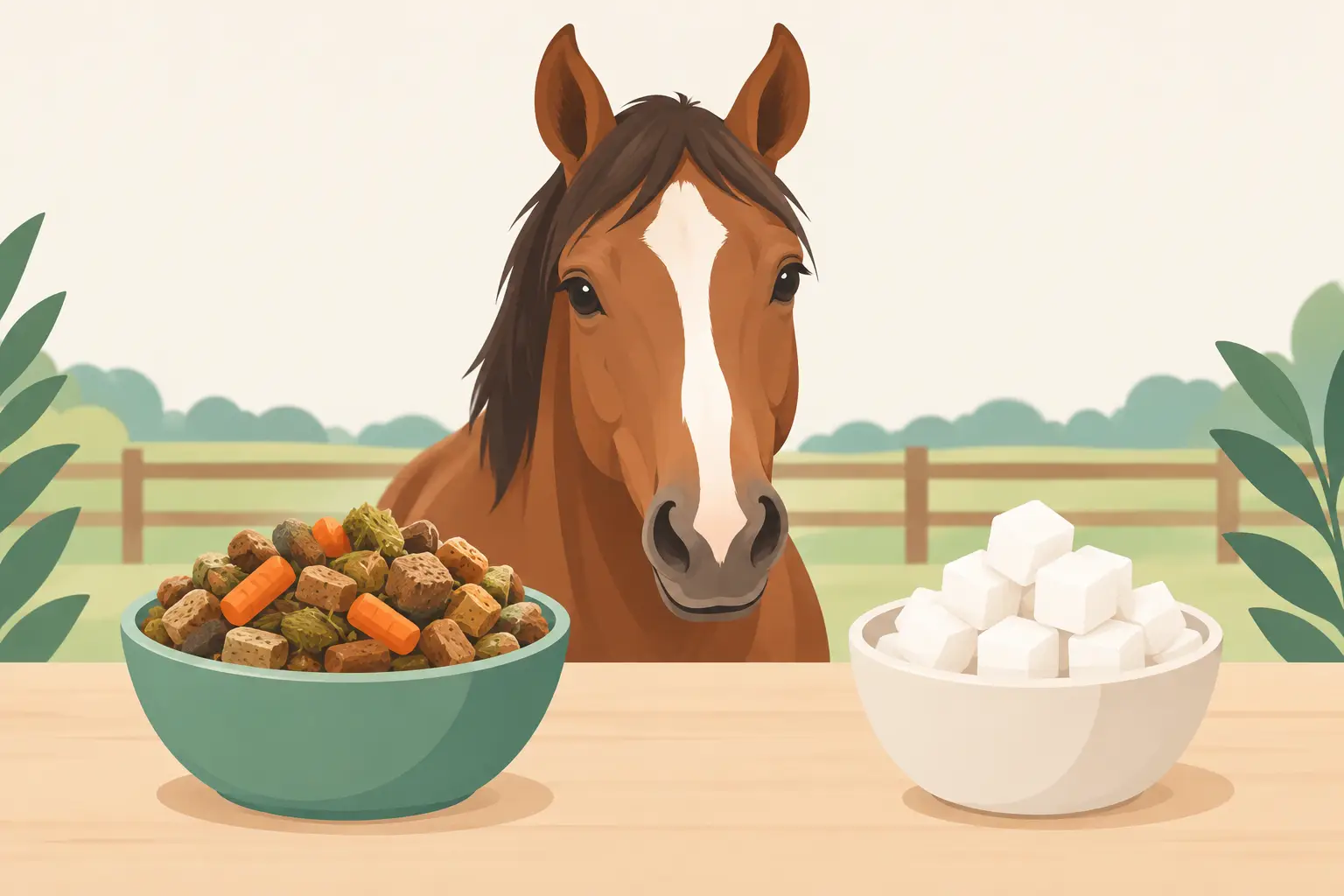
A sugar cube held out in a flat palm is a familiar sight at the stable door. It is cheap, convenient and many horses adore it. But when considering horse treats versus sugar cubes, the better choice is rarely just about what earns the quickest nicker. It is about ingredients, portion size, your horse’s individual needs and the kind of rewarding moment you want to create.
For the horse you love, a treat should feel special without becoming an afterthought in their daily diet. Sometimes a single sugar cube is perfectly reasonable. At other times, particularly for horses with weight, metabolic or dental considerations, it may be the least suitable option in the treat tin.
Horse treats versus sugar cubes: what is the real difference?
A traditional sugar cube is, quite simply, a concentrated portion of sugar. It offers a fast, very sweet flavour with little else in the way of nutritional value. That does not make it inherently dangerous for every horse in every situation, but it does mean the portion matters.
Horse treats vary enormously. Some are little more than compressed cereal-based snacks with added flavourings, while others are made with recognisable ingredients and designed around a particular purpose. A thoughtfully made treat may bring texture, aroma and flavour from ingredients such as molasses, herbs, fruit or mint, rather than relying solely on a hit of refined sweetness.
The key distinction is not that every horse treat is automatically healthier than every sugar cube. Many commercial treats still contain sugar, starch or ingredients that may not suit every horse. The useful question is: what is in this treat, how much will I feed, and is it right for my horse?
The appeal of a sugar cube
Sugar cubes have endured because they are uncomplicated. They are small, portable and easy to count. One cube is one cube, which can make occasional use feel straightforward when you are catching a horse, offering a post-clip thank you or asking for a quiet moment at the mounting block.
For a healthy horse with no dietary restrictions, an occasional cube is unlikely to define the overall quality of their diet. Problems tend to arise when “occasional” becomes several cubes a day, shared by every visitor at the yard, or used without thought for a horse already receiving a sugar-rich ration.
They also offer very little flexibility. A cube cannot be tailored to encourage slower eating, disguise medication, offer a flavour your horse genuinely prefers or make an ordinary care routine more pleasant.
What a premium horse treat can offer
A proper horse treat can be more than a snack. It can be a training reward, a small ritual after a good ride, a welcome distraction during grooming or a practical helper when medication is due. That added purpose is where ingredient quality and design begin to matter.
Handcrafted treats also bring a sense of occasion. A molasses shell with a flavoured centre, for example, gives a horse something aromatic and interesting to enjoy, rather than a bland pellet that vanishes in a second. It is equine indulgence, but it should still be offered with a sensible hand.
At Highland Horse Sweets, small-batch truffles are made as a more considered reward for horses who deserve a little celebration. The pleasure is in the freshness, flavour and thoughtful presentation, while the owner remains in control of how often the treat tin comes out.
Ingredients matter more than the label on the tub
The word “treat” can make owners assume all options are much the same. They are not. Turn the pack over and look beyond the front-of-pack promises. Check the feeding guidance, ingredient list and any stated sugar or starch information where available.
If your horse is prone to laminitis, lives with equine metabolic syndrome, has PPID, is overweight or is on a veterinary-directed diet, treats need the same care as hard feed. A sugar cube may be unsuitable, but so may a sweetened horse biscuit, a large apple slice or a generously fed handful of supposedly natural snacks. Natural does not automatically mean low in sugar.
In these cases, speak to your vet or equine nutritionist before introducing a new reward. They can help you understand what fits within the horse’s total ration and health plan. For some horses, the best reward may be a tiny piece of their usual forage or a low-calorie option approved for their needs.
For horses without those restrictions, ingredients are still worth considering. Avoid treating artificial colours, flavourings and preservatives as a mark of quality simply because the packet is bright and convenient. A shorter, clearer ingredient list and an honest feeding recommendation often make it easier to choose with confidence.
Portion control is where good intentions count
A luxury treat is still a treat. The most beautiful truffle or the neatest sugar cube should sit alongside a balanced forage-led diet, not quietly add hundreds of unnecessary calories over the week.
Keep rewards small and purposeful. If you are training, break treats into suitable pieces where possible, or alternate food rewards with a scratch in a favourite spot, a short pause or a kind word. Horses learn from timing and consistency, not from the size of the prize.
It can help to decide your daily treat allowance before you head to the yard. Put that amount into a pocket or small tub and stop when it is gone. This is especially useful when several people handle the same horse, as treats can otherwise multiply without anyone noticing.
Do not forget that children and well-meaning visitors may offer snacks too. A simple yard rule about what may be fed, and how much, protects horses with special dietary needs and saves awkward conversations at the stable door.
When sugar cubes may be the simpler choice
There is no need to turn one sugar cube into a moral failing. For a healthy horse, used sparingly, it can be a familiar and inexpensive reward. Some owners also appreciate the predictable size and the fact that it contains no long list of mystery ingredients.
A sugar cube may suit a one-off circumstance: a horse that needs encouragement to stand quietly for the farrier, a rare celebratory photo, or an occasional reward from someone who knows the horse well. The point is restraint, rather than routine.
It is less compelling if you want a reward that feels special, if your horse is fussy, or if you need a treat that performs a practical job. Refined sugar has a very narrow role. A well-chosen horse treat can offer more enjoyment and more usefulness in the same small moment.
Treats for training, bonding and everyday care
The best reward is one your horse values and you feel happy to offer. For groundwork or ridden training, choose something small enough to deliver promptly and use it sparingly, so your horse stays attentive rather than muggy. Never feed from your hand if your horse becomes pushy or nippy. A feed bowl, treat pouch or calm placement in a bucket can keep manners clear.
For bonding, presentation has its place. Bringing a carefully chosen treat after a hack, a competition day or a particularly patient clipping session can become a lovely ritual. Horses may not understand the occasion as we do, but they recognise our calm attention, familiar routines and the pleasure of a favourite flavour.
Medication is a different task altogether. Hiding a tablet in an ordinary sweet snack can work once, then fail when a clever horse finds the medicine. A medication-friendly treat designed to hold tablets, capsules or paste can make the process less stressful, but it is wise to practise with an empty treat first. Once medication is involved, follow your vet’s instructions and make sure the full dose has been eaten.
Choosing with your own horse in mind
There is no universal winner in horse treats versus sugar cubes. The right answer depends on your horse’s health, workload, current ration and temperament. A hardy good-doer needs a different approach from a fit competition horse, and a horse on restricted grazing needs more scrutiny than one maintaining weight easily on a balanced diet.
Choose sugar cubes only as an occasional, counted treat for horses that can tolerate them. Choose horse treats by reading the ingredients, respecting the suggested portions and selecting a flavour and format that suit the moment. If your horse needs medication concealed, look for a purpose-made option rather than hoping a cube will do the job.
The loveliest treat is not necessarily the sweetest one. It is the one given thoughtfully: a small, delicious gesture that fits your horse’s care, brings a bright pair of ears to the stable door and keeps their wellbeing at the heart of every reward.