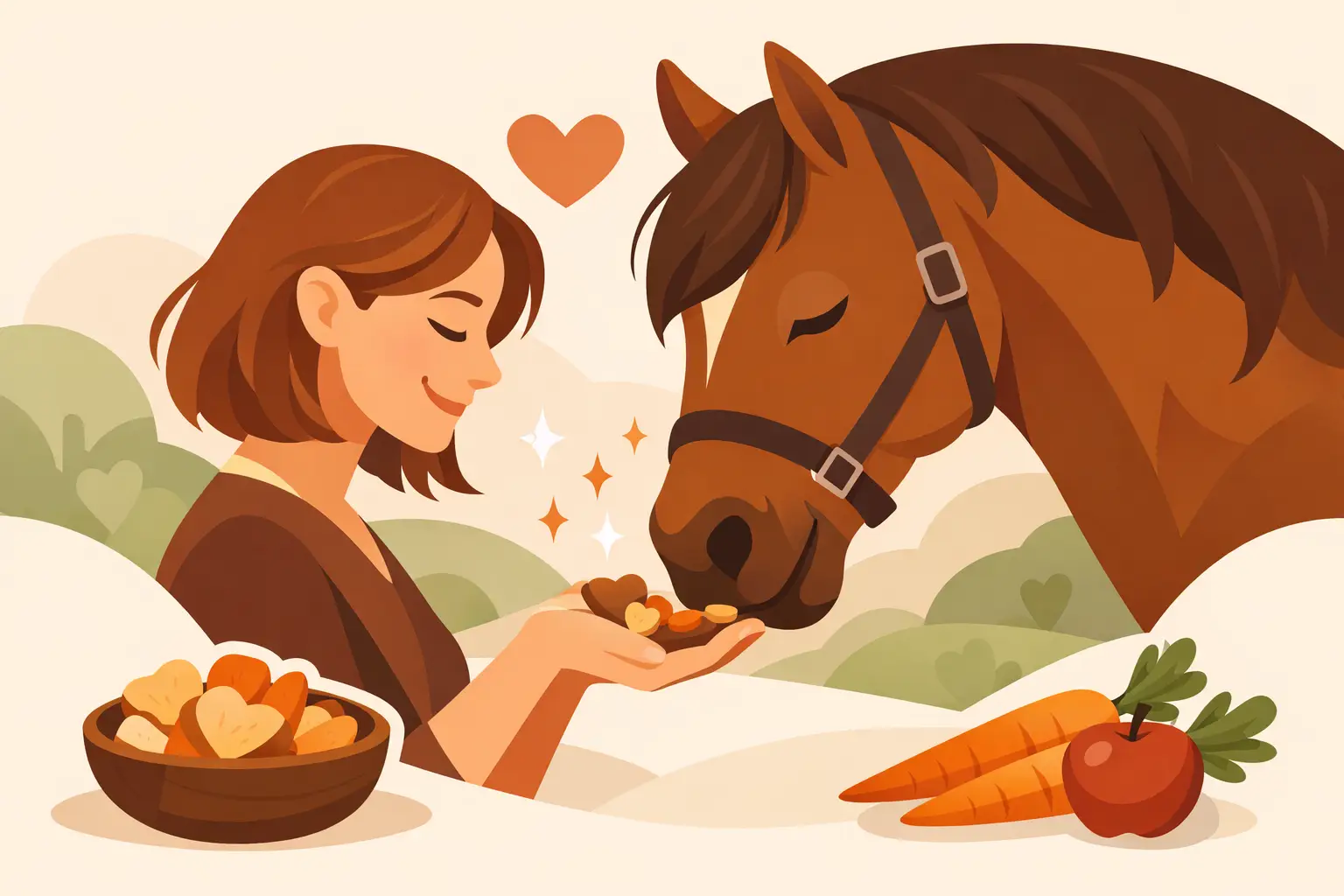
Some horses soften the moment they hear a wrapper. Others need longer, quieter conversations. That is why horse treats for bonding are not really about spoiling your horse. They are about creating small, repeatable moments of trust that your horse can understand, enjoy, and look forward to.
A good treat does more than reward. It marks your presence as positive, your timing as clear, and your handling as considerate. For many owners, that matters just as much in the stable aisle as it does after a lesson, at a showground, or during the less glamorous jobs like clipping, loading, or giving medication.
Why horse treats for bonding work so well
Horses are quick to form associations. If your arrival usually means pressure, routine handling, or work, even a kind horse can become a little guarded. Introduce a thoughtful reward at the right moment, and the picture changes. You become associated not only with care, but with comfort and pleasure.
That does not mean handing out treats constantly. In fact, random or poorly timed feeding can do the opposite. A horse that mugs pockets, barges, or loses patience has not learned connection - he has learned to chase the reward. Bonding happens when the treat supports calm behaviour, not when it overwhelms it.
The most effective owners use treats as part of a wider conversation. A reward after standing politely at the mounting block. A small indulgence once the farrier is finished. A reassuring bite after a wormer dose hidden neatly inside a medication-friendly pocket. These moments tell your horse, quite consistently, that cooperation leads to something pleasant.
What makes the best horse treats for bonding?
The best horse treats for bonding are enjoyable enough to feel meaningful, but sensible enough to fit into everyday care. That balance matters. If a treat feels dull, some horses lose interest. If it is oversized, sticky, artificial, or awkward to feed, it can interrupt the moment you are trying to create.
Texture is often underestimated. Horses tend to appreciate a treat that is easy to take from the hand, satisfying to chew, and not so crumbly that half of it ends up on the yard floor. Aroma matters too. Scent is part of the experience, and naturally appealing flavours often earn a brighter response than bland, generic cubes.
Ingredients deserve attention as well. Many owners looking for a more premium option want to avoid unnecessary colours, preservatives, and harsh artificial flavourings. A handcrafted treat made in small batches has a different feel from a bulk, one-note snack. It feels more considered, and that can shape how often and how happily owners use it.
There is also the emotional side. A beautiful treat transforms a routine reward into a little ritual. That may sound indulgent, but horses live through repeated experiences. If you can make those experiences calmer, more enjoyable, and more positive, the value goes beyond the treat itself.
Bonding is built in ordinary moments
The strongest horse-human relationships are rarely made in grand gestures. They are built while doing the same small things well. Bringing in from the field. Waiting at the gate. Standing on the yard while you brush mud from winter legs. Loading for a lesson. Finishing a stretch of good work and letting your horse know he got it right.
Treats help most when they are woven into these moments with intention. If your horse is anxious to be caught, rewarding the first calm pause can change the whole tone of the interaction. If your horse fidgets while tied up, rewarding stillness for a few seconds, then a little longer, can help him settle. If your horse becomes suspicious the moment he sees a syringe, pairing that routine with a trusted flavour can take the edge off.
This is where premium treats really earn their place. They are not only for celebration. They can become part of your everyday toolkit, especially when they are made to be both appealing and practical.
Timing matters more than quantity
One beautifully timed treat does more for bonding than a handful given absent-mindedly. Horses learn from sequence. If the reward comes the instant your horse relaxes, waits, lowers his head, or accepts handling, you are reinforcing exactly that choice.
Too much fuss can muddy the message. So can feeding when your horse is pushy. Calm timing keeps the interaction clean. Ask, wait, reward. Then let the horse process. That rhythm builds confidence because it feels fair.
Variety can keep interest alive
Some horses are delightfully food-motivated. Others become bored if every reward tastes the same. A little variety can keep your horse engaged, particularly if you are using treats during training blocks or to support confidence in new situations.
Seasonal flavours, special occasion treats, or an occasional richer reward can make familiar routines feel fresher. For owners who enjoy making everyday care feel a touch more luxurious, that variety is part of the charm.
When treats help, and when they do not
Treats are wonderfully useful, but they are not magic. If a horse is frightened, in pain, or confused, no reward will solve the root problem. Bonding requires good handling, consistency, and respect for the horse in front of you.
For some horses, food can create excitement rather than softness. Native types, greedy horses, or those with poor manners may need a little more structure. In those cases, treats still have a place, but the delivery matters. Reward only when the horse is standing back politely. Feed from a flat hand. Keep your body language quiet. If necessary, place the treat into a bucket after the behaviour rather than offering it directly by hand.
Diet also matters. Owners of good doers, veterans, or horses with specific management needs should always consider the full feeding picture. A bonding treat should complement your horse’s routine, not work against it. Smaller portions, cleaner ingredients, and a more thoughtful product design can make that much easier.
Using horse treats for bonding in practical ways
One of the loveliest things about horse treats is how versatile they are. They can support affection, yes, but they can also make care more cooperative.
After ridden work, a small reward can mark the end of a focused session. During groundwork, it can reinforce calm responses without overcomplicating the exercise. On busy show days, a familiar treat can offer reassurance in a noisy environment. For young or sensitive horses, it can help create a sense of predictability.
Then there is medication. This is where many owners see the sharpest difference between a generic snack and a well-designed treat. If a horse has learned to distrust powders, tablets, or wormer pastes, hiding them in something genuinely tempting can preserve goodwill. Instead of turning every dose into a battle, you keep the interaction smoother and kinder.
This practical side of bonding is often overlooked. Trust is not only built in cuddly moments. It is built when your horse discovers that even inconvenient care is handled thoughtfully.
A more considered kind of reward
Not every horse owner wants to reach for the cheapest option on the shelf, especially when treats are used regularly. There is a growing appreciation for equine rewards that feel less mass-produced and more intentional - something crafted with ingredient integrity, made fresh, and designed to be memorable for the horse receiving it.
That is where handcrafted truffles and medication-friendly pockets feel especially relevant. They offer the pleasure of a true treat with the usefulness owners need in real life. For the horse you love, that combination makes sense. It feels elevated, but not frivolous.
At Highland Horse Sweets, that idea sits at the heart of the range: small-batch equine indulgence with a practical purpose. A treat should feel special, but it should also earn its place in the tack room.
Choosing a treat your horse will genuinely value
If you are selecting treats with bonding in mind, watch your horse more than the packaging. Does he take the reward softly? Does he stay interested without becoming frantic? Does the treat suit the moments when you need it most, whether that is after work, during handling, or around medication?
A horse who truly values a treat will tell you. Ears soften. The eye brightens. The interaction becomes easier, lighter, warmer. That does not happen because the reward is flashy. It happens because the horse finds it pleasurable and the owner uses it well.
Bonding with a horse is rarely about grand displays. More often, it is a hand offered quietly, a reward given at the right second, and a horse who begins to recognise that being with you feels good. Choose treats with that standard in mind, and even the smallest moment can become part of something deeper.