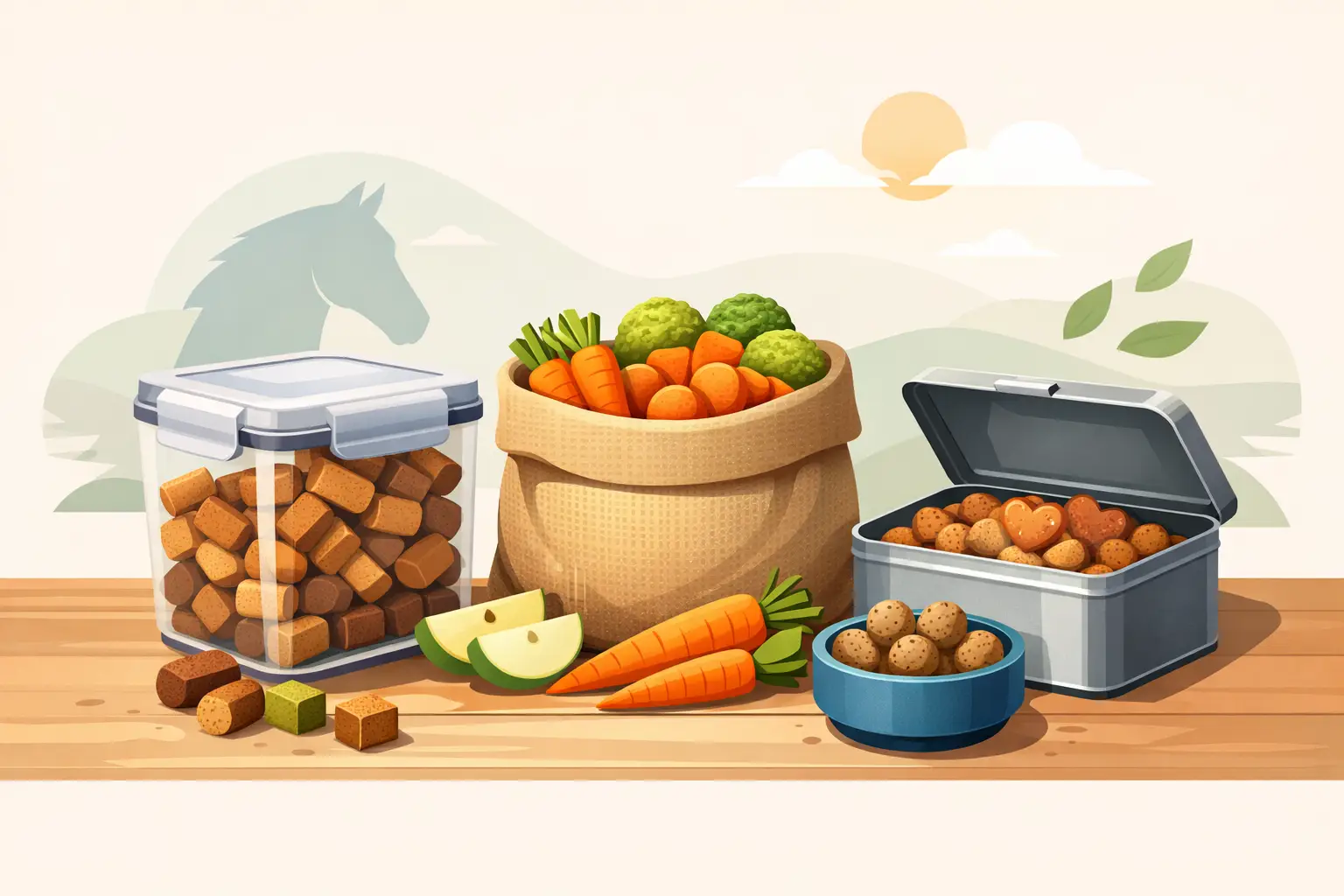
A beautiful treat is at its best when the molasses shell still has its satisfying finish, the centre is soft and fragrant, and your horse knows exactly what is coming when they hear the lid open. Thoughtful horse treat storage protects that little moment of equine indulgence. It also helps you avoid the disappointment of discovering a forgotten packet has gone sticky, stale or unsuitable to feed.
Handcrafted treats deserve a little more care than a scoop of ordinary feed. Especially when they are made in small batches with natural ingredients and without artificial preservatives, where freshness is part of the pleasure. The good news is that storing them well is wonderfully straightforward.
Horse Treat Storage Starts at Delivery
When your parcel arrives, bring it indoors as soon as you can. Treats left in a porch, car or tack room can be exposed to dramatic temperature changes, particularly during a British summer heatwave or a sharp Highland-style frost. Heat can soften coatings and cause treats to stick together, while damp air encourages condensation once they come back inside.
Check the packaging and read any storage guidance first. Every recipe is slightly different, and the information on your pack should always lead the way. If a treat has arrived especially warm after travelling, let it settle at a cool room temperature before transferring it to a container. Opening a warm pack and placing it directly into a cold fridge can create moisture where you do not want it.
It is tempting to put every treat straight into the stable cupboard, ready for rewarding after a ride. That can work in a dry, temperature-stable feed room, but many stable areas are far warmer, damper or more accessible to pests than we realise. A clean cupboard at home is often the better choice for the main supply, with only a small working portion kept at the yard.
Choose a Container That Protects the Treats
The ideal container is clean, fully dry, food-safe and fitted with a properly closing lid. An airtight tin, jar or storage tub is a simple way to protect treats from humidity, dust and curious noses. Keep the original packet inside where practical, as it holds the batch details and best-before information, then place it in your chosen container for an extra layer of care.
Avoid reusing containers that have held strongly scented human foods, dog treats or supplements unless they have been washed thoroughly and dried completely. Horses have an excellent sense of smell, and a luxury apple or mint reward should smell as intended, not faintly of last week's coffee or garlic powder.
There is one useful trade-off to bear in mind. A clear jar makes a handsome stable-room display and helps you see when supplies are running low, but daylight and warmth are not friends of freshness. If you prefer glass, store it in a dark cupboard rather than on a sunny windowsill. An opaque tin or tub is often the most forgiving everyday option.
Keep Them Cool, Dry and Consistent
For most horse treats, a cool, dry place away from direct sunlight is the sweet spot. Think kitchen cupboard rather than saddle room shelf, and never beside a radiator, boiler or sunny window. Consistency matters as much as the exact temperature. Repeated warming and cooling can affect texture, particularly in treats with a molasses outer layer or a soft flavoured centre.
Refrigeration is not automatically better. Unless the pack specifically recommends it, the fridge can introduce condensation when treats are taken in and out, and it may make some treats uncomfortably firm. If hot weather makes a cooler space necessary, keep the packet sealed inside an airtight container and allow the treats to return gently towards room temperature before opening. That reduces moisture settling on the surface.
Freezing is rarely a first choice for everyday rewards. It can be useful only if the maker's storage guidance permits it and you need to keep a larger quantity for longer. Freeze treats in small, clearly labelled portions, then defrost one portion at a time in its sealed pack. Refreezing once thawed is not a sensible gamble.
Portioning Makes Freshness Easier
The loveliest treats have a habit of disappearing quickly, but buying ahead for a busy competition month, a special birthday or a thoughtful gift is perfectly reasonable. The trick is not to expose the entire supply every time you want one reward.
Keep your main packet sealed at home and decant a few days' worth into a smaller treat pot for the lorry, grooming bag or yard locker. This protects the remaining treats from wet hands, rain-soaked coat pockets and the inevitable tumble of loose brushes, hoof picks and polos. It also makes it easier to reward generously without accidentally carrying the whole collection to the yard.
For busy yards, label containers with the horse's name. This is especially helpful where one horse is on a restricted diet, another has allergies, or a treat is being reserved for a particular training purpose. A premium reward should feel personal, not become a source of uncertainty at feed time.
Horse Treat Storage for Medication Moments
Medication-friendly treats need the same cool, dry conditions, with a little extra organisation. Keep them in their original labelled packaging until needed, and store them separately from your everyday reward pot. That way, the treats chosen for a tablet, capsule or worming paste remain clean, easy to identify and ready when the moment arrives.
Always prepare medication with clean, dry hands. If you use a pocket or soft treat to conceal a tablet, make it immediately before offering it rather than making several in advance. This helps preserve the treat's texture and avoids confusion over which treat contains medication. Where your horse is suspicious of new flavours or textures, offering one plain treat first and the medicated one second can make the routine feel more familiar.
Do not leave medication-filled treats unattended in a feed bucket or on a stable door. Aside from the risk of the wrong horse finding them, dampness and dirt can quickly spoil a carefully prepared reward. If your horse refuses a medicated treat, remove it and follow your vet's or prescribing professional's advice before trying another approach.
Take Care When Travelling to Shows
A treat tin in the lorry is a small luxury after a good test, a patient loading session or a long day ringside. Yet vehicles can become surprisingly hot, even on a mild day. Pack a small quantity in an insulated lunch bag, kept out of direct sun and away from heat sources. A cool pack may help in warm conditions, but separate it from the treats with a cloth so they are not sitting against intense cold.
At the show, keep the lid closed between rewards and do not leave treats on a tack-room table where flies, rain or well-meaning neighbours may reach them. A dedicated pouch in your grooming kit keeps everything tidy and means your horse's favourite reward is there when it counts.
When to Let a Treat Go
No one enjoys wasting something made for the horse they love, but freshness and safety come first. Discard treats that show visible mould, unusual discolouration, an off smell, signs of insect activity, or a texture that is markedly wetter or more sticky than when opened. If a packet has been soaked, left in excessive heat or contaminated with stable debris, it is kinder to replace it.
A little natural variation in a handcrafted product is not necessarily a problem. Small-batch treats can look less uniform than factory-made alternatives, and that is part of their character. What matters is a clear change from the condition in which they arrived, alongside the pack guidance and best-before date.
Good storage is a quiet part of good horse care. Keep each treat cool, clean and protected, and every reward - whether it follows a brilliant schooling session or simply says hello over the stable door - can feel as special as it was made to be.