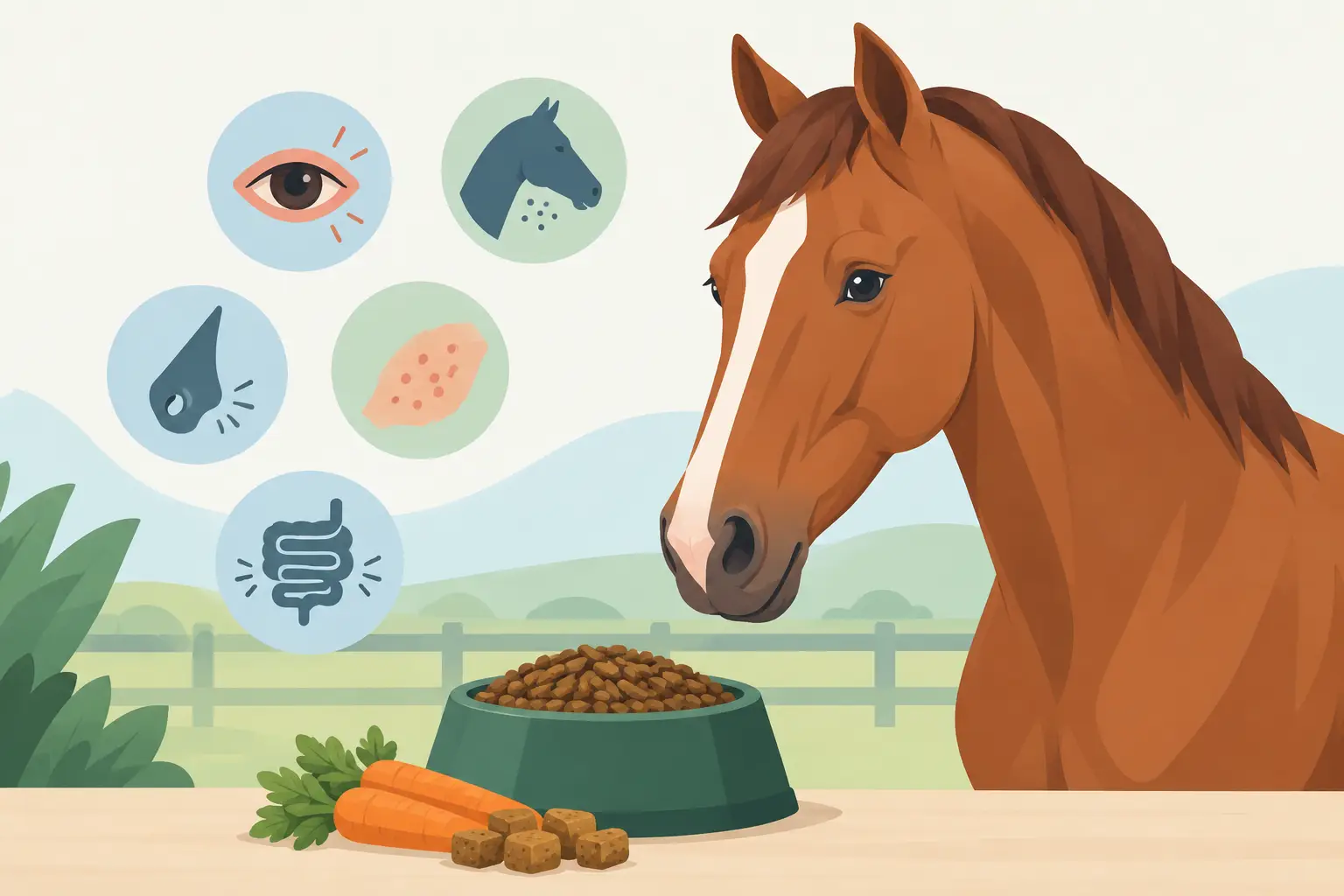
A horse who suddenly turns away from a once-loved reward, develops itchy skin or comes up in raised lumps after treat time can leave any owner feeling uneasy. Horse treat allergies are not always straightforward, and the treat itself may not be the only explanation. Still, when your horse is uncomfortable, every ingredient matters.
For the horse you love, treats should feel like a small moment of joy: a reward after a good schooling session, a welcome distraction on the lorry, or a reassuring part of medication time. If sensitivity is suspected, the kindest approach is to pause, investigate carefully and bring treats back only when you feel confident in what is in them.
What do horse treat allergies look like?
A genuine food allergy involves the immune system reacting to a substance the horse has eaten. They are considered less common than owners may assume, but reactions to feeds, supplements and treats do happen. More often, a horse may have an intolerance or sensitivity, where a particular ingredient does not suit them without triggering a classic immune response.
The difference matters to a vet, but the practical starting point for an owner is much the same: look for a repeatable pattern. Did signs appear after introducing a new bag of treats? Do they settle when it is removed? Does the same thing happen again after accidental reintroduction? One episode alone cannot prove the cause, especially when grass, bedding, fly bites, shampoo, forage and seasonal changes are all in the picture.
Signs worth taking seriously include hives or raised wheals, persistent rubbing, itchiness, swelling around the face or muzzle, loose droppings, changes in appetite, or unusual restlessness. Some horses may show skin signs rather than digestive ones. Others may simply seem uncomfortable.
Difficulty breathing, marked facial swelling, weakness or signs of colic need urgent veterinary advice. Do not offer another treat to “test” the reaction. Keep the packaging, take clear photographs of any skin changes and note exactly when your horse ate the product and when symptoms began. Those small details can be genuinely useful to your vet.
Common triggers behind horse treat allergies
Treats can contain more ingredients than their small size suggests. Cereals, herbs, fruit, vegetables, flavourings, binders, oils and colourings can all be relevant, depending on the recipe and the individual horse. A horse may react to a specific ingredient, but it is also possible that a new treat arrived at the same time as another change in routine.
Artificial colours, flavours and preservatives are understandable concerns for owners seeking a simpler approach, yet “natural” is not a guarantee that a treat will suit every horse. Apples, mint, herbs and molasses are familiar, tempting ingredients, but any food can be unsuitable for an individual animal. Ingredient integrity is valuable because it lets you make an informed choice, not because it promises a universal answer.
It is also wise to separate allergy concerns from dietary restrictions. A horse with laminitis history, insulin dysregulation or another metabolic condition may need treats with particular nutritional consideration, even if they have never had an allergic reaction. Likewise, a horse that becomes fizzy after a certain reward may not be allergic to it. The best treat is one that fits the whole horse, their ration and their veterinary plan.
How to investigate a suspected reaction
If you suspect a treat, stop feeding it and return to your horse’s usual, well-tolerated forage and feed routine. Avoid introducing several replacement treats at once. A busy week of new supplements, grazing changes and novel snacks makes it almost impossible to identify what has caused a problem.
Speak to your vet before attempting a strict elimination diet, particularly if signs are persistent, severe or recurring. They may advise a controlled period without suspected ingredients, followed by a carefully planned reintroduction. This is far more useful than swapping randomly between different flavours and hoping for the best.
Keep a simple diary during this period. Record treats, bucket feed, supplements, turnout, bedding, medication and symptoms. Include quantities, not just product names. A tiny nibble may be less informative than a full portion, and a horse given treats by several well-meaning people at the yard may be eating more variety than you realise.
If your horse receives medication hidden in a treat, tell your vet exactly what is used. This is especially relevant when a tablet, paste or capsule must be given consistently. The priority is always the medication and your horse’s welfare, but the carrier should be appropriate for their known sensitivities and wider diet.
Choosing treats for a sensitive horse
Once your horse is settled and you have veterinary guidance, choose with a calm, label-first mindset. A clear, concise ingredient list is easier to assess than vague descriptions. Look for a maker that is open about what goes into each recipe, including seasonal varieties, and avoid relying on front-of-pack claims alone.
For a horse with a confirmed trigger, check every flavour rather than assuming the whole range is suitable. A change in filling, coating or added herb can make a real difference. If a recipe changes, treat it as a new product until you have checked the label again.
Introduce any new reward gradually and in a very small amount, preferably when you can observe your horse afterwards. Do not trial a new treat the evening before a show, a long journey, a clip or a vet visit. Save first tastes for an ordinary day at home, when you have time to notice anything unusual.
Portion size matters too. Even a beautifully handcrafted equine indulgence is a treat, not a replacement for balanced forage and feed. Small, intentional rewards often make more sense than handfuls given without thought. That is especially true for horses on carefully managed diets.
At Highland Horse Sweets, the focus on fresh, made-to-order small batches and no artificial colours, flavours or preservatives reflects the care many owners want to bring to reward time. However, every horse is individual. Owners managing a diagnosed allergy should always read the full ingredients for the exact flavour and seek veterinary advice where needed.
Do not forget the practical details
Cross-contact can matter for particularly sensitive horses. Store treats in their original labelled packaging, keep different products separate, and make sure everyone handling your horse knows which rewards are off limits. A helpful notice on the feed bin or stable door can prevent an accidental “just one”.
The same care applies at shows, clinics and busy yard days. Horses are often offered snacks by kind friends, spectators or professionals who do not know their dietary history. A polite “please do not feed” is not fussy. It is responsible horse care.
When a treat may not be the culprit
Skin irritation is frequently blamed on feed because it is something we can see and control. Yet fly bites, sweet itch, contact irritation, parasites, new rugs, bedding dust and environmental allergens can all create similar signs. Hives may also appear without a clear cause.
That does not mean you should dismiss a suspected treat. It means the answer deserves a proper investigation rather than a quick assumption. If symptoms continue after the treat is removed, or return repeatedly, your vet can help look beyond the feed room and decide whether further testing or management changes are appropriate.
A thoughtful treat routine is not about making reward time joyless. It is about knowing what you are offering, keeping portions sensible and noticing the small changes your horse cannot explain for themselves. With a little patience, you can protect their comfort while preserving those lovely, well-earned moments of equine indulgence.