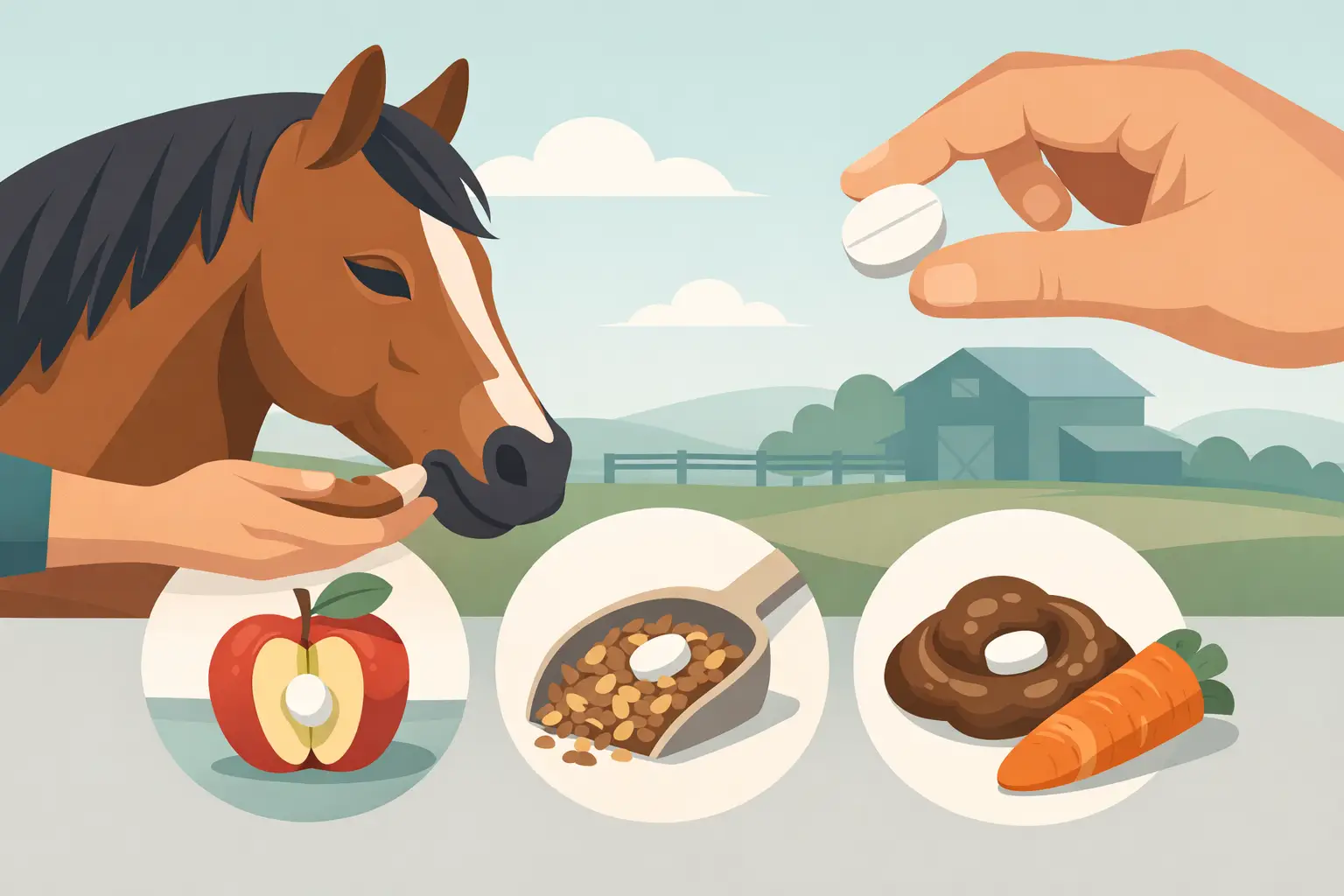
A horse that happily takes a treat can become a remarkably suspicious detective the moment a tablet appears. This horse tablet hiding example is designed for the real moments between feeds, before turnout, or on a busy yard - when medication needs to be given safely, kindly and without turning a small task into a daily stand-off.
The goal is not simply to disguise a tablet. It is to create a consistent, rewarding routine that helps your horse feel relaxed about the process. A soft, mouldable medication pocket with a tempting centre can make a practical difference, particularly for horses who have learned to pick around powders, spit out tablets or refuse anything that smells even faintly unfamiliar.
A horse tablet hiding example that feels like a treat
Imagine you need to give your mare a prescribed tablet. Rather than dropping it into her full feed and hoping she eats every crumb, begin with a tiny pre-dose treat she already knows and enjoys. Follow it with the medication pocket, then offer a final plain treat straight away.
The sequence matters. The first treat says, “this is normal”. The tablet-containing treat arrives without fanfare. The final treat gives her a pleasant reason to swallow promptly and look forward to the next part of the routine. For many horses, this three-treat approach is far less noticeable than presenting one unusually large or overly handled morsel.
Mint Medi-Pockets from Highland Horse Sweets are made for this job: a pliable outer layer can be gently shaped around tablets or capsules, while the minty centre keeps the experience special for the horse you love. They are not a substitute for veterinary guidance, but they can bring a little more ease to the everyday care that horses and owners must navigate together.
Start with the medicine, not the hiding place
Before choosing any tablet-hiding method, read the label and follow the instructions from your vet or pharmacist. Some medicines must be given on an empty stomach, some should not be crushed, and some may have specific instructions about feeding, handling or timing. A tablet that is safe to conceal whole may be unsuitable to split, grind or mix into a larger meal.
If your horse takes more than one medication, ask whether they can be given together. It may be tempting to hide everything in one generous mouthful, but that can create problems if your horse detects a bitter tablet and rejects the lot. Separating medications can also make it easier to see that each dose has actually been taken.
The same care applies to supplements and herbal ingredients. Natural does not automatically mean compatible with every prescription. When in doubt, ask the professional who prescribed the medicine before changing how it is administered.
Check the tablet will fit comfortably
Choose a pocket that fully encloses the tablet without becoming oversized. If the treat is too large, some horses will chew it more thoroughly, increasing the chance of finding what is inside. If it is too small or poorly sealed, the tablet may fall out before it reaches the back of the mouth.
With clean, dry hands, press the tablet into the centre and gently pinch the outer layer closed. Roll it lightly between your fingers to smooth the seam, rather than compressing it into a hard lump. You want a neat, soft bite that looks and feels like the treats your horse expects.
For a capsule, work slowly and avoid squeezing so firmly that it cracks. For a larger tablet, only divide it if the medicine instructions specifically allow this. A carefully hidden whole tablet is generally simpler than trying to disguise a bitter broken edge.
Build confidence before medication day
The most successful tablet routine often starts when there is no tablet involved. Offer a plain medication pocket occasionally as an ordinary reward after grooming, groundwork or bringing your horse in from the field. This creates a positive association with the smell, texture and shape before it has a practical purpose.
A horse who is new to medication pockets may benefit from a few quiet practice sessions. Offer one plain pocket, then another, before giving a final plain treat. Keep your body language casual. Horses are exceptionally good at noticing when we suddenly become careful, tense or overly persuasive.
This is especially useful for clever horses that have previously had unpleasant medicine hidden in carrots, apples or feed. They may not distrust the flavour itself. They may distrust the ritual around it. Rebuilding trust takes patience, but a familiar reward pattern can soften that suspicion over time.
The three-treat method in practice
When it is time to medicate, stand in your usual safe position and have everything ready before you approach. Do not rustle packets or prepare the tablet in front of a horse who is alert to every clue. Your routine should feel unhurried, even if the yard is busy.
Offer a plain treat first. Once it has been swallowed, offer the prepared pocket. Let your horse take it from an open palm if that is their normal manner, or use the approach that is safest and most familiar for both of you. Follow immediately with another plain treat.
Watch closely. A horse may chew, swallow, drop the treat, move it into the cheek or attempt to spit out the tablet after the outer layer has gone. Stay nearby long enough to be confident the dose has been swallowed. If it is rejected, do not repeatedly present the exact same suspicious offering. Remove it calmly, check whether the tablet is intact and consider a different approved method after speaking to your vet if needed.
Why a full bucket is not always the answer
Mixing medication into a full feed can work for some easy-going horses, particularly where the medicine is approved for use that way. Yet it carries an obvious risk: a horse may leave half the feed, scatter it, share access with a companion or decide the entire bucket now tastes wrong.
A small, separate medicated treat lets you confirm the dose has been taken before feed is offered. It also protects the ordinary pleasure of mealtimes. For horses with a sensitive appetite, that distinction can be valuable.
There are exceptions. Some medicines are specifically intended to be mixed into a damp feed or given with a particular type of food. In that case, follow those instructions rather than forcing a tablet-pocket solution. The best method is the one that respects both the prescription and the individual horse.
When your horse is too clever for the first plan
Some horses detect a tablet instantly, especially if they have experienced bitter medication before. If that happens, avoid making every favourite treat a potential trap. Keep a separate treat style for medicine days and preserve other rewards for uncomplicated enjoyment.
You can also vary the timing within an established sequence. One day, offer two plain treats before the medicated one; another day, use a plain-medicated-plain pattern. The aim is not to outsmart your horse through tricks, but to prevent one exact cue becoming a warning signal.
If a horse repeatedly refuses prescribed medication, becomes distressed, or risks biting or barging during dosing, stop and seek veterinary advice. There may be a liquid version, a different formulation or a technique better suited to the medicine. Safety for horse and handler comes before getting one dose administered at all costs.
Keep the experience calm, clean and consistent
Store medication separately from treats, and prepare each dose fresh. This helps prevent mistakes and keeps the pocket at its best texture for shaping. Wash your hands after handling medicines, particularly before touching other treats, rugs or tack.
It also helps to keep a simple record, especially at a busy yard. Note the date, time, medication and whether the full dose was observed to be swallowed. This is useful for short courses, shared care arrangements and any situation where more than one person may be feeding or handling the horse.
A medication routine will never be the most glamorous part of horse ownership. But with a little preparation, the right guidance and a treat your horse genuinely values, it can become one quiet moment of care rather than a contest of wills.