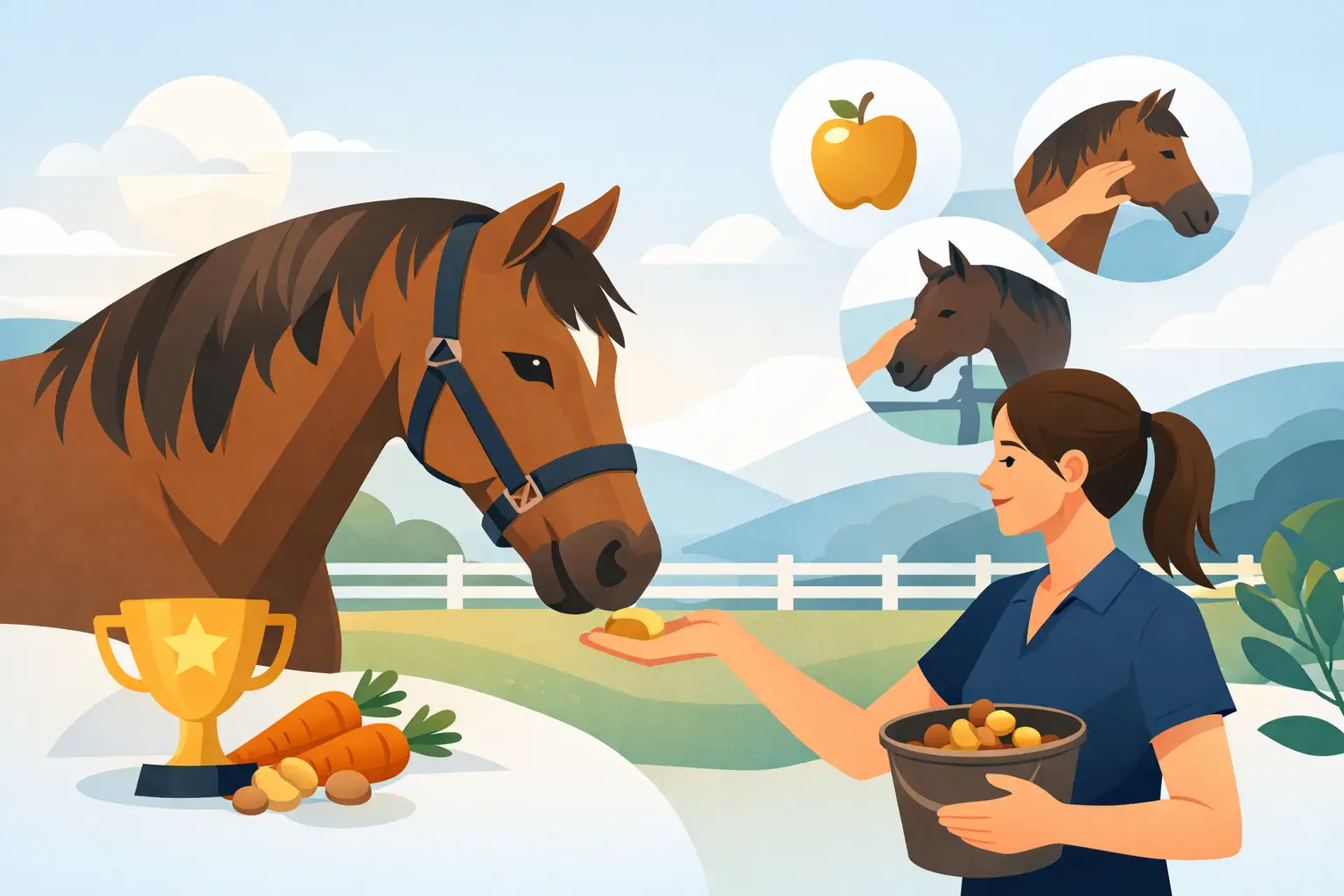
A reward is never just a reward to a horse. It is the soft nicker when you arrive at the stable, the patient stand at the mounting block, the brave step into the lorry, or the quiet acceptance of a tablet that would otherwise become a lengthy negotiation. The best horse rewards make those small moments feel clear, kind and worth repeating - for the horse you love and the person caring for them.
For many owners, treats begin as a simple gesture of affection. Used thoughtfully, though, they can become one of the most useful tools in everyday horse care. They help us reinforce calm behaviour, build confidence, create positive associations and make routine jobs less of a battle. The difference lies in choosing a reward your horse genuinely values, then offering it with good timing and a little intention.
Why horse rewards matter beyond the stable door
Horses learn from consequences. When a behaviour is followed by something pleasant, they are more likely to offer that behaviour again. This is not about turning every interaction into a transaction. It is about communicating clearly, especially when asking a horse to do something unfamiliar, inconvenient or mildly worrying.
A well-timed treat can support the moments that often shape a horse’s confidence: standing for the farrier, loading quietly, accepting sprays, staying relaxed for the vet, or taking a first careful step over a pole. It can also make ordinary handling more enjoyable. A horse who is rewarded for standing politely while being groomed, for example, learns that good manners bring a pleasant outcome.
There is an emotional side too. Horses thrive on consistent, calm care. A small, delicious reward offered after a productive session can become part of a reassuring ritual between horse and owner. It says, in the language horses understand best, that they have done well.
Choose a reward worth working for
Not all treats hold the same value for every horse. Some will do almost anything for a plain fibre-based nibble; others reserve their enthusiasm for something more fragrant, softer or sweeter. The most effective horse rewards are the ones your own horse finds genuinely special, without compromising their dietary needs.
For everyday use, a small, simple treat may be ideal. For a more difficult job - stepping onto a lorry for the first time, coping with clippers, or learning to stand peacefully during treatment - choose something with greater appeal. This is often called a higher-value reward, and it can make a meaningful difference when the task asks more of your horse.
Texture matters as much as flavour. A treat that is easy to chew and quick to eat keeps training moving. One that can be broken into smaller portions gives you more opportunities to reward without overfeeding. And for many horses, scent is part of the excitement. A tempting aroma can catch their attention before the reward even reaches their lips.
At Highland Horse Sweets, our handcrafted truffles bring a little equine indulgence to those moments: a molasses shell with a flavourful centre, made in small batches with no artificial colours, flavours or preservatives. They are designed to feel more special than an everyday pellet - a reward with real occasion behind it.
Match the treat to the moment
A reward needs to suit both the horse and the setting. A relaxed pony at home may be happy with a modest treat after a tidy grooming session. A competition horse waiting quietly at a busy showground might need something more appealing, particularly if the environment is full of distractions.
Consider practicalities, too. In cold weather, you may want treats that can be handled easily with gloves on. At a show, something tidy and pocket-friendly is welcome. During medication time, the ideal reward is one that can discreetly hold a tablet or capsule, rather than leaving you to crush, mix and hope for the best.
Timing is what gives rewards their meaning
A wonderful treat offered at the wrong time can send a muddled message. To reinforce a behaviour, offer the reward immediately after it happens - ideally within a second or two. If your horse stands still while you adjust the girth, reward the stillness before they begin to fidget. If they take one calm step towards the ramp, reward that step before asking for another.
This is especially helpful when teaching new skills. Break the task into small, achievable pieces and reward progress rather than waiting for perfection. A horse learning to load does not need to march straight into the lorry on the first attempt. Looking at the ramp, approaching it, placing a hoof on it and standing calmly beside it can all be worthy of praise.
Your body language matters alongside the treat. Keep your voice low, movements unhurried and expectations fair. If you become tense or impatient, your horse may focus more on your mood than the reward in your hand. A quiet “good” paired consistently with a treat can become rewarding in its own right over time.
Reward calmness, not pushiness
Treats are powerful, which means manners matter. A horse who learns to mug pockets, barge into space or nip for a reward has not become greedy; they have received an unclear lesson. The answer is not to abandon rewards, but to make the rules kinder and more consistent.
Ask for a polite pause before giving the treat. That could mean the horse keeps their head straight, waits with all four feet still, or takes a step back when asked. Feed from a flat hand where appropriate, keep fingers safely out of the way, and avoid rewarding a horse while they are actively pushing into your space.
Some owners prefer to place treats in a feed bowl, bucket or manger rather than hand-feeding. This can work particularly well for horses that become overexcited around food, as well as for children or less confident handlers. There is no single correct method. The best approach is the one that keeps both horse and handler safe while preserving the positive association.
Keep portions small and purposeful
Luxury does not need to mean large quantities. In fact, small rewards often work better because you can use them more frequently and thoughtfully. A prized treat can be divided into little pieces for training, making one special morsel go further while keeping your horse’s overall ration in balance.
Every horse’s diet deserves individual consideration. Good doers, horses with metabolic concerns, those prone to laminitis, and horses on carefully managed feeding plans may need a particularly cautious approach. Read ingredients, account for treats within the wider diet, and speak to your vet or qualified equine nutritionist if you are unsure what is suitable.
A reward should complement excellent forage, appropriate feed and attentive management - never disguise a problem. If a horse repeatedly refuses medication, resists handling or becomes distressed during a routine task, take a step back and consider why. Pain, fear, poor fit, past experience or an underlying health issue may need addressing before treats can help.
Make routine care easier to say yes to
The most satisfying uses for horse rewards are often the unglamorous ones. Medication is a perfect example. Tablets, capsules and worming pastes can turn even the sweetest horse suspicious, especially if they have learned to detect a hidden dose in their feed. A purpose-made medication treat can give owners a more reliable, less stressful option.
The key is to build trust before you need it. Offer the medication-friendly treat empty on a few separate occasions first, so it becomes familiar and desirable. When it is time to add the tablet or paste, your horse is far more likely to accept it willingly. Follow it with a second plain treat if needed, so the final taste remains a positive one.
The same principle applies to clipping, bathing, fly spray and injections. Pairing a small, high-value reward with calm cooperation does not replace patient training, but it can soften the edges of a difficult day. Over repeated sessions, the horse begins to anticipate something pleasant alongside the task.
Save the special treats for meaningful moments
There is joy in giving your horse a treat simply because they are themselves. A quiet evening visit, a birthday, a successful first outing or the end of a long rehabilitation programme all deserve a little ceremony. Fresh, handcrafted treats bring warmth to these moments, particularly when they are chosen with the same care you bring to the rest of your horse’s routine.
Still, the finest rewards retain their magic when they are not handed out without thought. Keep a few for important training breakthroughs, unfamiliar situations and practical jobs that need a little extra encouragement. Let your horse discover that calm courage, good manners and patient cooperation are always noticed.
The reward may be small, but the message is lasting: you are paying attention, you are asking fairly, and you are pleased with them. For a horse, that can make all the difference at the end of the lead rope.