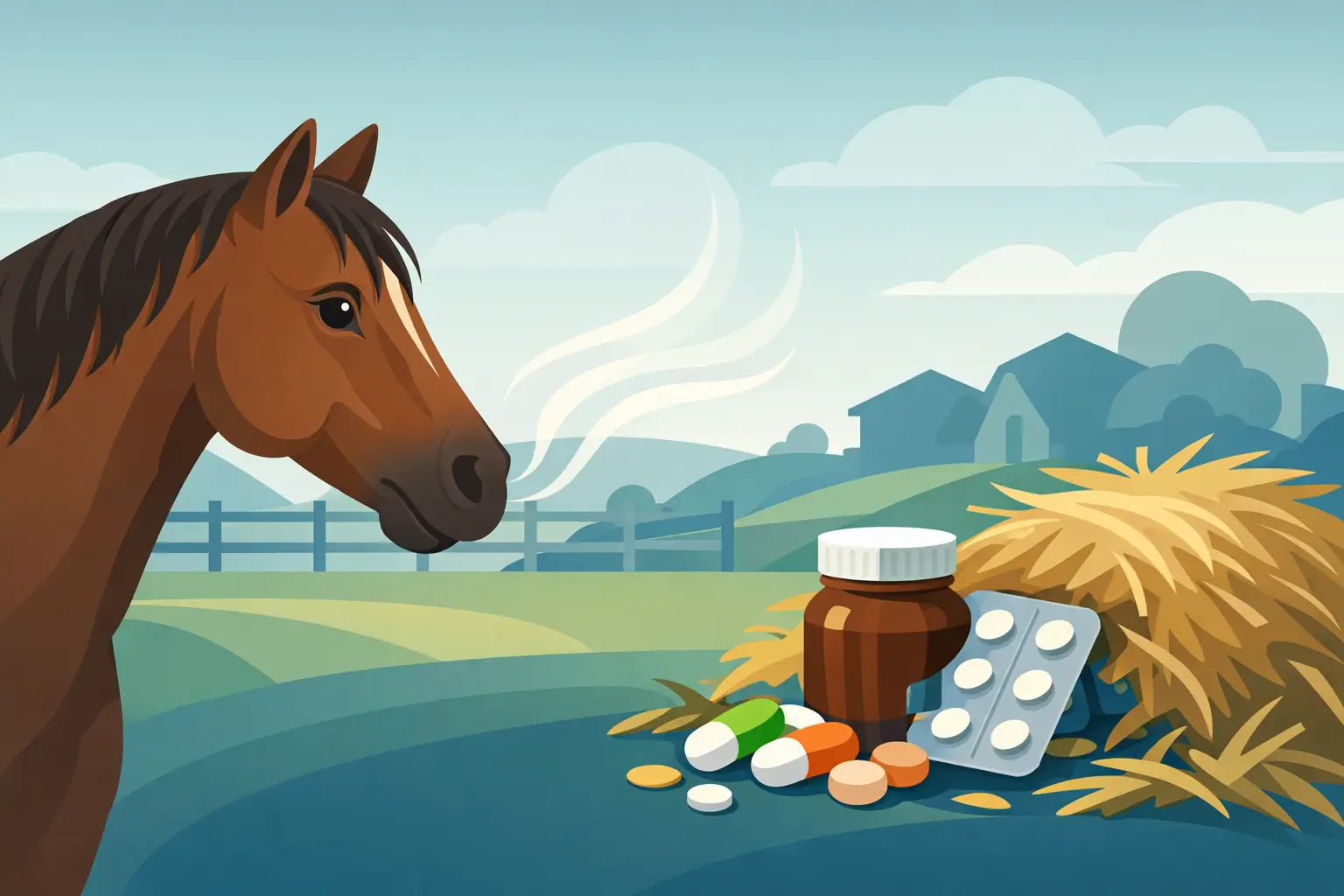
Anyone who has ever watched a horse delicately eat every last crumb of a treat while leaving one suspicious tablet at the bottom of the bucket has asked the same question: can horses smell hidden medication? The short answer is yes, many can. Not always, not every time, and not with every medicine, but horses are far more discerning than they are often given credit for.
That can make medicine time surprisingly frustrating. One day your horse takes a powdered supplement without a fuss, and the next he rejects a carefully disguised tablet as if you have personally offended him. It is not stubbornness for the sake of it. More often, it is a mix of smell, taste, texture, memory and trust.
Can horses smell hidden medication, or do they taste it?
Usually, it is both. Horses rely heavily on smell when deciding whether something is safe and worth eating. Before the first bite, many will sniff feed, treats and pockets of mash with far more care than we notice. If the scent feels unfamiliar, sharp, bitter or simply wrong, they may hesitate straight away.
Once medication is in the mouth, taste and texture take over. A horse may accept the first chew, then promptly spit out the tablet, leave the medicated part behind, or refuse the next offering altogether. That is why some owners feel caught out by products that seem promising at first but fail once the horse realises there is medicine inside.
Some medications have a particularly strong odour. Wormers, crushed tablets and certain powders can carry a bitter, chemical scent that is difficult to mask completely. Others are less obvious and disappear more easily into a well-made treat or damp feed. It depends on the medicine, the quantity, and the horse in front of you.
Why some horses detect medicine instantly
Not all horses are equal when it comes to suspicious eating habits. Some are gloriously greedy and will sample almost anything. Others approach each mouthful like seasoned critics. If your horse is one of the latter, there is usually a reason.
Sensitive noses and selective appetites
Horses are prey animals, and caution around food makes sense. In the wild, avoiding unusual or tainted forage can be protective. Domesticated horses still carry some of that instinct. A horse with a sensitive nose may detect even slight changes in scent, especially if the medication has been crushed or mixed into something warm enough to release more aroma.
Selective eaters also tend to notice texture. A smooth, soft treat feels different from one with a chalky centre or gritty powder. If the outer layer gives way too quickly, the surprise inside is revealed before the horse has committed to swallowing.
Learned experience matters
A horse who has had unpleasant medicine before often becomes far more alert. If he once bit into something bitter hidden in an apple or a handful of chaff, he may become wary of that food in future. This is why a method that worked brilliantly for one week may suddenly stop working after a single bad experience.
That does not mean you have lost your chance. It simply means your horse has made an association, and you need a more thoughtful approach next time.
What makes hidden medication harder to disguise?
The biggest issue is not always flavour. It is strength. A tiny tablet is far easier to conceal than a large crushed dose of something notoriously bitter. Strong-smelling pastes can also be difficult because they cling to the mouth and coat the tongue, making them harder for the horse to ignore.
Moisture can help or hinder. In some feeds, a little dampness keeps powder from separating. In others, it amplifies the smell and leaves the whole bucket carrying the scent of medicine. Warm mash can be comforting and appetising, but warmth can also make odours bloom.
Quantity matters too. If you are asking a horse to eat a full feed to get a tiny dose, that may work well. If you are trying to hide a substantial amount of medication in one bite, the odds become less kind. There is a tipping point where the medicine overpowers the disguise.
How to hide medication more successfully
The best disguise does two jobs at once. It masks smell before the horse takes a bite, and it softens the flavour and texture once it is in the mouth. That is why the structure of the treat matters just as much as the ingredients.
A medication-friendly treat with a soft, workable centre tends to perform better than a hard biscuit or a loose handful of feed. You want something that can fully enclose the tablet, capsule or paste rather than merely sitting beside it. If the horse can smell or feel the medicine too early, the game is usually up.
Taste is still important, of course. Familiar, horse-friendly flavours help encourage acceptance, especially when the outside of the treat smells inviting and natural rather than artificial or overpowering. For many owners, this is where a purpose-made medicating treat earns its keep. It takes a practical problem and turns it into a calmer, more pleasant routine for the horse you love.
Start before the medicine appears
If your horse is suspicious, offer the same style of treat without medication first. Let him recognise it as something enjoyable and safe. Then, when you need to hide a tablet or a small amount of paste, the treat is already familiar.
This simple step can make a notable difference. Horses are far more comfortable with known pleasures than with last-minute improvisation.
Keep your manner matter-of-fact
Horses read us quickly. If you suddenly become theatrical, over-cheerful or oddly secretive, some will clock that something is different before they even sniff the treat. A calm, ordinary approach often works better than fussing.
Offer the medicated treat as you normally would. If your horse likes routine, stick to it. If he expects a reward after work, after grooming or at evening feed, that familiar setting can help.
When feed is not the best option
Some horses will refuse an entire bucket if they detect medication in it. That is not only frustrating but wasteful, and it can leave you unsure how much dose has actually been consumed. In those cases, hiding medicine in a small, individually given treat can be far more reliable.
This is especially true for tablets and capsules. A single-purpose treat lets you see whether the medicine has gone in properly. You are not left searching the bottom of a feed bowl for evidence.
Pastes are slightly different. They can be messier to disguise, and some horses object to the texture straight away. A treat designed to hold paste securely can help reduce that problem, but very strong-tasting products may still need a more direct method if your vet advises it.
It depends on the horse, and that is the point
There is no single perfect trick because horses are individuals. Age, appetite, previous experience, stress levels and even the environment on the day can influence whether a horse accepts hidden medication. A relaxed horse at home may take something happily, while the same horse at a competition yard turns into a detective.
That is why it helps to think less in terms of fooling a horse and more in terms of working with his preferences. If he loves soft minty treats and mistrusts feed changes, that tells you something useful. If she is bold with hand-fed rewards but leaves damp bucket feed, that is useful too.
For owners who want a more polished answer to an everyday problem, a handcrafted treat made specifically to conceal medication can feel like a small luxury with a very practical purpose. At Highland Horse Sweets, that thinking sits at the heart of Mint Medi-Pockets - a softer, more thoughtful way to make tablets, capsules and wormer pastes easier to give without turning the moment into a battle.
If your horse keeps refusing hidden medication
Sometimes the kindest answer is not to keep trying the same disguise. If your horse repeatedly rejects medicated treats or feed, speak to your vet about alternatives. Some medicines come in different forms, and some can be given in a way that is more suitable for sensitive horses.
It is also worth checking whether the medicine can safely be crushed or hidden at all. Not every tablet should be altered, and getting that wrong can affect how it works.
A horse that refuses hidden medication is not being difficult. More often, he is telling you that the scent, taste or memory of it is simply too obvious. Listen to that information. Then choose a better method, a more suitable treat, or a gentler routine.
When medicine time becomes less of a contest, everyone breathes easier - and your horse is far more likely to accept the care he needs with confidence.