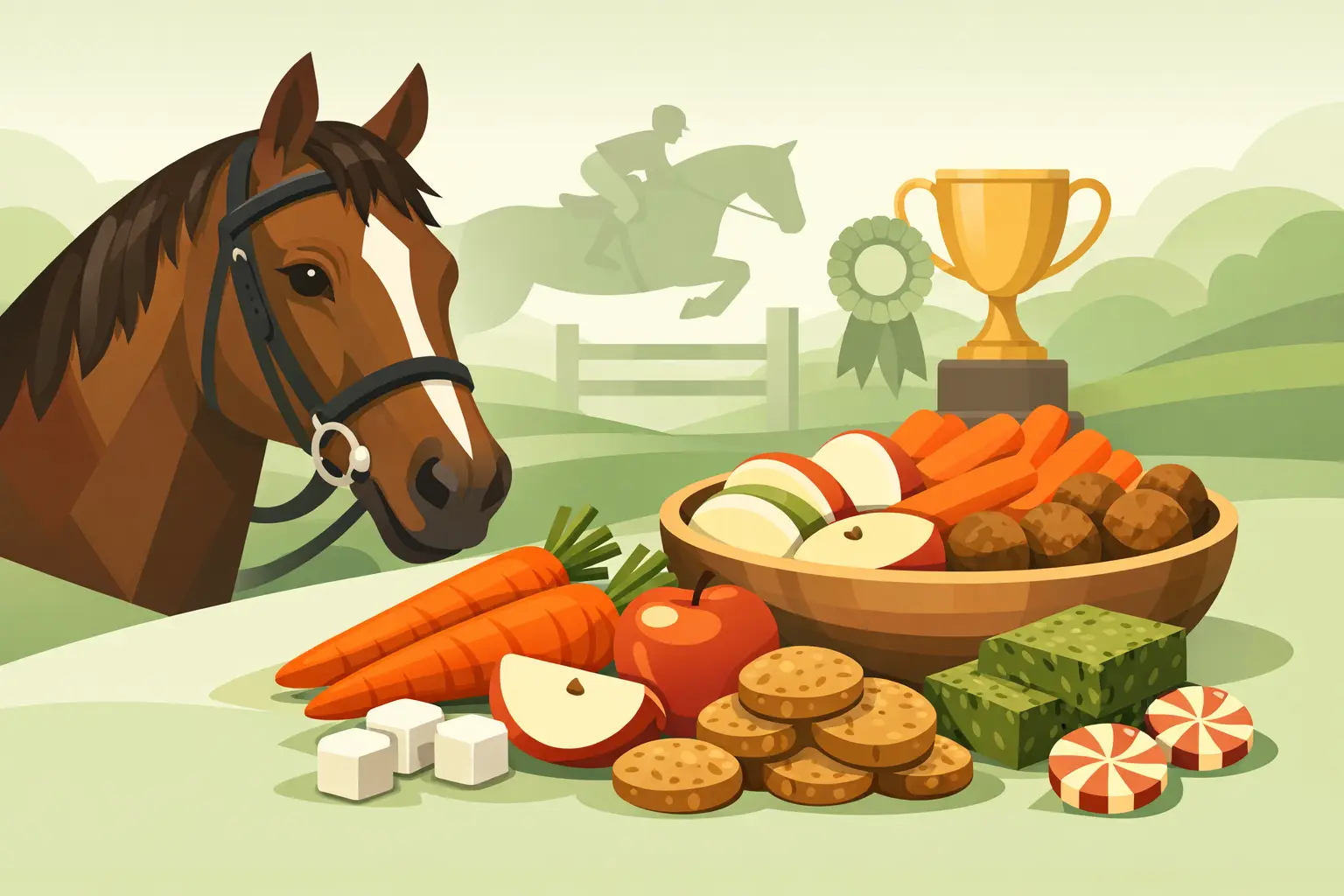
A crinkling treat bag can be surprisingly useful at a show. It may help your horse step forward into the lorry, stand quietly while you adjust a boot, or feel recognised after a brave round. The best treats for competition horses are not simply the sweetest or largest ones. They are fresh, appealing and easy to use, while fitting thoughtfully around a horse’s usual forage-led diet.
For the horse you love, a treat should feel like a little moment of luxury. For the rider with an early alarm, a plaiting kit and a busy warm-up ring ahead, it should also earn its place in the grooming bag.
What competition horses need from a treat
Competition days ask a great deal of horses. There is travelling, waiting, unfamiliar surroundings, concentrated work and the inevitable bustle of other horses and people. A reward can support calm, kind handling and reinforce behaviours you want to see again, from loading politely to standing patiently at the mounting block.
That does not make a treat a performance supplement or a replacement for correct feeding. A horse’s energy, hydration and recovery should come from a diet planned for their workload, with plenty of appropriate forage and advice from a qualified professional where needed. Treats are the finishing touch: a small, positive reward rather than a source of extra fuel.
The right choice depends on your horse. A steady cob who happily eats anything may be delighted with a simple reward after dressage. A selective sport horse may need something more tempting to take an interest after travelling. A good-doer, meanwhile, needs especially measured portions, however much they deserve a celebration.
Best treats for competition horses: qualities to look for
A genuinely tempting aroma and texture
At a busy show, horses can be distracted or less interested in food than usual. A treat with an appealing scent and a satisfying texture is more likely to cut through the commotion than a dry, forgettable pellet. This is particularly helpful when you are creating a positive association with the lorry, wash bay or a new venue.
Handcrafted truffles offer a more special experience here. A molasses shell around a flavoured centre gives a horse something interesting to investigate, while still being small enough for a sensible reward. The ritual matters too: many horses quickly learn that a particular treat signals praise, rest or a job well done.
Ingredients you are happy to feed
Competition owners often read labels carefully, and rightly so. Look for treats made with recognisable ingredients and without unnecessary artificial colours, flavours or preservatives. Natural does not automatically mean suitable in unlimited quantities, but it is a useful starting point for owners who want their reward choice to reflect the same care they give to the rest of their horse’s feed.
If your horse has a known sensitivity, a metabolic condition, dental concerns or is on a veterinary-led feeding plan, check every ingredient and serving suggestion before introducing anything new. When in doubt, ask your vet or equine nutritionist. The most luxurious treat is never worth compromising your horse’s individual needs.
A size that suits the moment
Treat size is easy to overlook. Small rewards work beautifully for frequent, precise praise during groundwork, loading practice or a long day at an event. A more indulgent truffle can be reserved for the end of the class, a difficult lesson tackled well, or that satisfying moment when the lorry ramp closes after a successful day.
Avoid handing out several treats in quick succession just because your horse is being charming. Keep the total amount modest and account for it alongside the rest of the day’s ration. This is particularly sensible for natives, good-doers and horses with restricted grazing.
Easy handling when your hands are full
At a competition, convenience matters. You may be wearing gloves, holding a lead rope or trying to keep a white breeches leg white. Choose treats that are easy to carry in a secure pouch and simple to offer without breaking into crumbs.
Freshness matters as well. Treats made in small batches and stored according to their guidance can retain the aroma and texture that makes them appealing. Do not leave any feed or treats sitting in a hot lorry for hours, and always keep packaging sealed between uses.
When to use treats at a show
The most effective rewards are timely. If your horse loads calmly, offer a small treat once they are safely settled, rather than waving it around while they are half on the ramp. If they stand quietly for the farrier at an event or patiently tolerate a spray, reward after the behaviour you want to reinforce.
After a class, wait until your horse has cooled down and is comfortable before making a fuss. Offer water first, allow them to settle and keep any reward small. A treat is a lovely post-round gesture, but it should never distract from cooling down, checking legs, loosening tack and attending to the basics.
For nervous travellers, treats can support gradual training at home long before show day. Begin with calm, short loading sessions and reward quiet steps forward. The aim is not to bribe a worried horse into doing something frightening, but to build a reliable, positive routine through patient handling.
Treats and medication: a practical competition-day consideration
Few things test a rider’s composure like a horse refusing essential medication on the morning of an outing. If your vet has prescribed tablets, capsules or paste, a purpose-designed medication treat can make administration less stressful for both of you.
Mint Medi-Pockets from Highland Horse Sweets are made to conceal medication within a pliable, tempting treat. They are useful for horses that can pick a tablet out of a feed bowl with astonishing precision. Still, introduce any medication-friendly treat on a quiet day first, ideally with no medicine inside, so the flavour itself becomes familiar and welcome.
Always follow veterinary instructions. Some medicines should not be hidden in feed, mixed with particular ingredients or given close to competition, so check before you rely on any method. A treat can help with delivery, but it cannot replace sound clinical advice.
What to avoid before competing
Do not make show day the first time your horse tries a new flavour, especially if they have a sensitive digestive system. Trial treats at home in very small quantities, then watch for any change in appetite, droppings or demeanour. Familiarity is reassuring for horses and saves unnecessary guesswork when you are away from the yard.
It is also wise to avoid oversized, very hard treats for horses who bolt food, have dental issues or are inclined to get overexcited around feed. Offer treats from a flat hand, keep fingers clear of eager teeth and make sure children understand the same rule.
Finally, check the rules relevant to your discipline if you are competing under an organised body. Treats are usually an ordinary part of horse care, but responsible competitors remain aware of what they feed and why, particularly where supplements or medication are concerned.
A beautifully made treat will not improve a line to a fence or rescue a late test, but it can make the small moments around competition feel calmer, kinder and more rewarding. Choose one your horse genuinely enjoys, feed it with care, and let it mark the effort you are both so proud of.