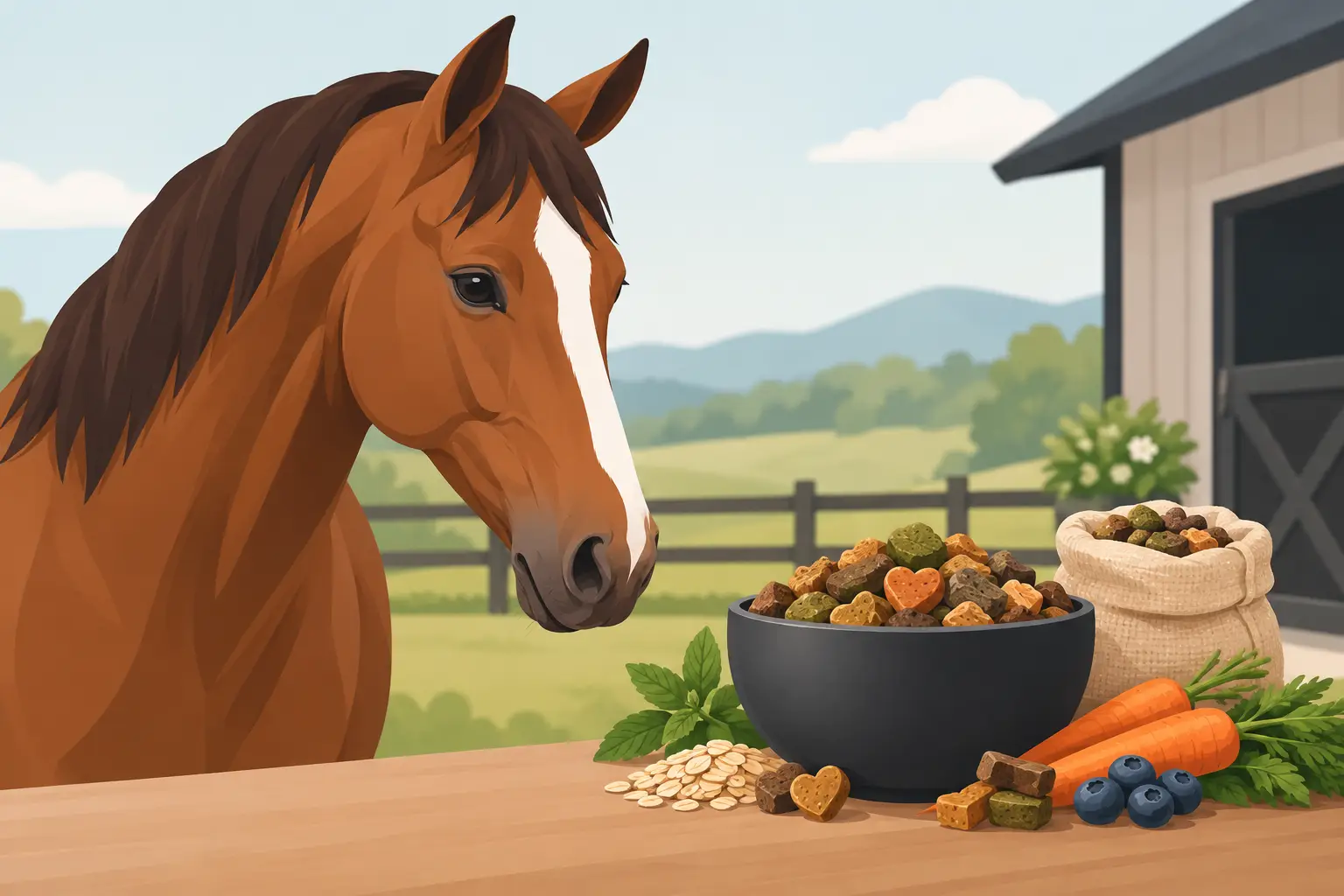
The crinkle of a treat packet can make even the most businesslike horse soften at once. But when a premium box costs more than a standard bag of pellets, it is fair to ask: are luxury horse treats worth it? For many owners, the answer lies not in spoiling a horse for the sake of it, but in choosing a reward that is fresh, thoughtfully made and genuinely useful in daily care.
A luxury treat should offer more than a pretty package. It should feel special to give, be appealing enough that your horse truly values it, and earn its place in the feed room through quality ingredients, careful production or a practical purpose. The best ones turn small moments - a calm stand at the mounting block, a brave effort in the school, a tablet taken without fuss - into something easier and more enjoyable for both of you.
What makes a horse treat luxurious?
Luxury in the equestrian world is not simply about a higher price tag. It is about intention. Mass-produced treats are often designed to be uniform, shelf-stable and inexpensive at scale. There is nothing inherently wrong with that, but a handcrafted alternative can offer a different experience: small-batch production, more considered flavours, natural ingredients and a fresher feel.
For the horse owner, there is a sensory difference too. A treat with a tempting molasses shell and a flavoured centre feels like an occasion rather than an afterthought. It is a small indulgence for the horse who meets you at the gate, tries hard in lessons and politely tolerates life’s less glamorous moments.
That does not mean every premium treat is automatically better. Ingredient quality, suitability for your individual horse and portion size matter far more than the word “luxury” on a label. A truly premium product is transparent about what it contains and made with care rather than relying on artificial colours, artificial flavours or a clever name alone.
Are luxury horse treats worth it in everyday care?
They can be, particularly when you use treats with purpose rather than by the handful. A high-value reward has a different role from a casual nibble. If your horse knows it is coming after standing quietly for the farrier, loading calmly, stretching correctly in-hand or trying a difficult new exercise, it can help reinforce the behaviour you want to see again.
This is where quality can matter more than quantity. A horse does not need a pocket full of treats to feel appreciated. One memorable reward, given at the right moment, often has greater value than several ordinary ones offered without thought. It also encourages us to notice the good moments in a horse’s day, which is never a bad habit.
Premium treats are especially useful for horses who are selective. Some horses will happily eat almost anything; others regard a new snack with deep suspicion, then leave it in the bedding. When a reward is genuinely palatable, it becomes a reliable tool for training, catching, travelling and reassurance in unfamiliar settings.
There is an emotional value as well. Horse ownership is full of practical jobs: mucking out, checking legs, filling haynets and watching the weather. Bringing a small moment of equine indulgence into that routine can make care feel more personal. That feeling matters, provided it sits alongside sensible feeding.
The occasions where a premium treat earns its keep
A luxury treat often makes most sense when the stakes are slightly higher than a quick hello over the stable door. Think of a nervous loader who needs a positive association with the lorry, a horse learning to stand for clipping, or a youngster discovering that a veterinary check does not have to be alarming.
It can also be a lovely choice for a birthday, a show-day good-luck ritual, a thoughtful present for another horse owner or a subscription that gives you both something to look forward to. These are not essential purchases, of course. They are considered extras for the horse you love.
The practical test: ingredients, feeding and value
Before buying any treat, premium or otherwise, read the ingredients and feeding guidance. “Natural” is a welcome quality signal, but it does not mean unlimited. Molasses and other naturally appealing ingredients still contribute sugar and calories, so treats must be accounted for within the horse’s wider diet.
For a healthy horse in appropriate work, a few carefully chosen rewards may fit comfortably into the day. For a horse with laminitis concerns, equine metabolic syndrome, insulin dysregulation, obesity or a diet prescribed by a vet or equine nutritionist, the decision needs more care. Ask your veterinary surgeon or nutritionist whether a particular treat and portion are suitable before introducing it.
Value is not always measured by the cost per treat. Ask instead whether the product reduces waste, gets used consistently and solves a real problem. A less expensive bag is poor value if your horse refuses it, while a more indulgent treat can be worthwhile if one small piece is enough to reward a difficult task or conceal a necessary tablet.
Freshness matters here too. Made-to-order or small-batch treats may carry a shorter best-before window than heavily preserved alternatives. That is part of the trade-off. Buy an amount you can use well, store it as directed and enjoy it at its best rather than treating it as something to leave forgotten at the back of the tack room.
When medication is the real reason to choose better treats
Giving medication can test even the most patient partnership. A horse can detect a crushed tablet with remarkable precision, and once they distrust a feed, it can be difficult to win that confidence back. A medication-friendly treat may be worth its premium because it separates the medicine from the main bucket and gives the horse a more appealing delivery method.
The goal is not to disguise medication carelessly. Follow the instructions from your vet, check that the medicine can be given with feed or a treat, and always watch to make sure the full dose has been eaten. If a horse is on a restricted diet or has a condition affected by sugar intake, ask for specific advice first.
A well-designed pocket that holds tablets, capsules or prescribed paste can make a stressful daily task calmer. For some owners, that convenience alone is enough to justify spending more. Highland Horse Sweets’ Mint Medi-Pockets are built around precisely this everyday reality: making an awkward moment feel more manageable, without losing the sense that your horse is receiving something special.
A better question than “cheap or expensive”
Rather than treating luxury treats as an all-or-nothing purchase, consider the role they will play. Everyday rewards might be kept simple, while a premium truffle is reserved for training breakthroughs, show bags, medication moments and occasions when you want to make a fuss. That balance keeps costs sensible and preserves the treat’s appeal.
It is also worth being honest about your own horse. A greedy cob may be delighted with a plain fibre-based reward and have no need for anything grander. A fussy older horse, a sensitive traveller or a horse requiring regular medication may benefit far more from a high-value, carefully chosen option. There is no prize for buying the most expensive treat, only for choosing one that suits the horse in front of you.
The small luxury that should still be sensible
Luxury horse treats are worth it when they bring something meaningful to the relationship: confidence in the ingredients, a reward your horse genuinely relishes, help with a practical care challenge or simply a beautifully made moment of affection. They are not a replacement for a balanced diet, patient training or veterinary advice, and they should never be used without regard for an individual horse’s dietary needs.
Choose them as you would any part of good horse care: with warmth, common sense and a clear understanding of what makes your horse happiest. The loveliest treat is not necessarily the fanciest one. It is the one that says “well done” at exactly the moment your horse needs to hear it.