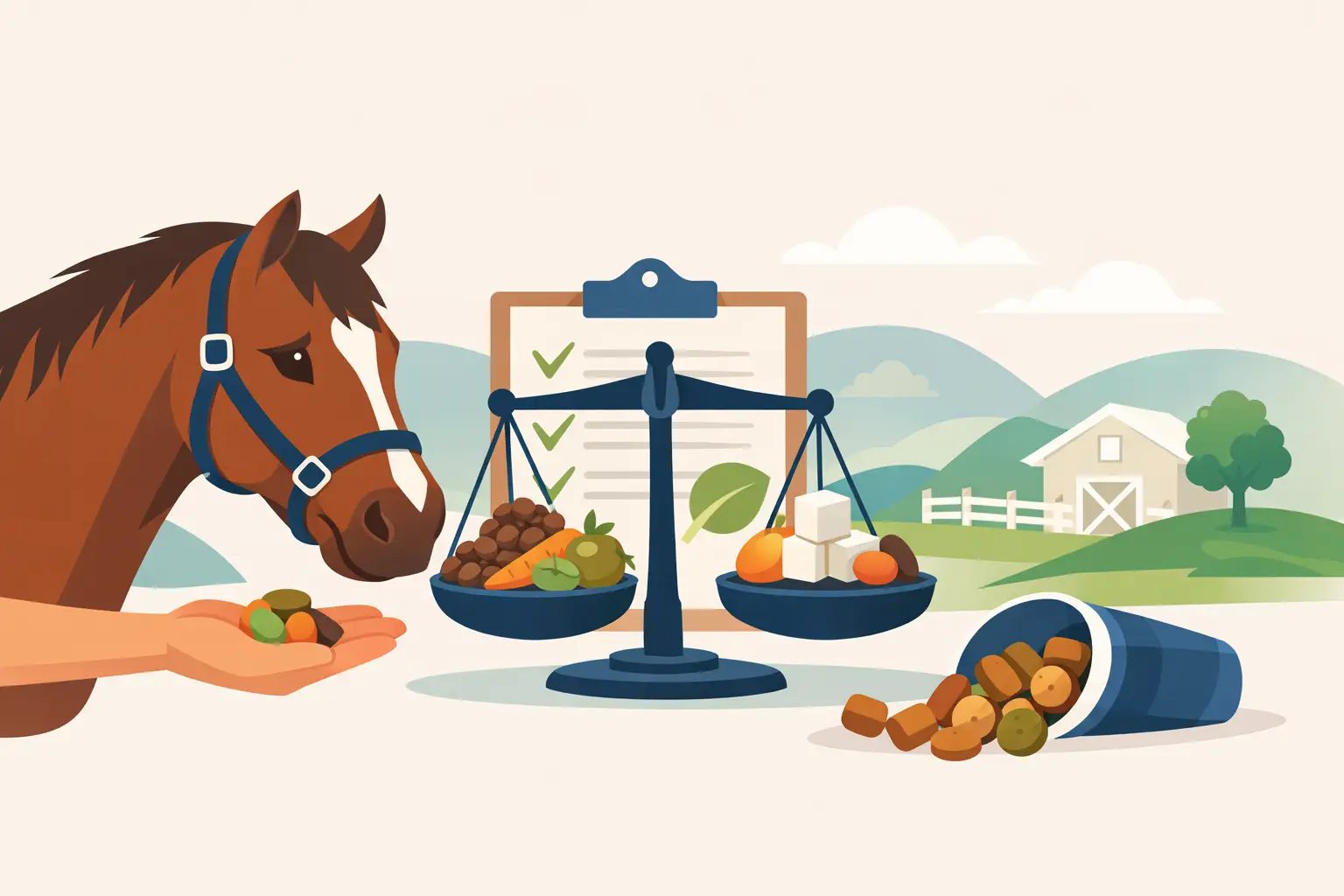
The crinkle of a treat packet, a velvet muzzle at your pocket and those expectant ears can make a small daily ritual feel like one of the loveliest parts of horse ownership. But are horse treats safe daily? For many healthy horses, a modest, thoughtfully chosen treat can happily have a place in the routine. The key is to see it as a small extra, not a significant part of the feed bowl.
A beautiful reward should bring pleasure without quietly unbalancing the diet you work so hard to get right. That means considering the horse in front of you: their weight, workload, grazing, forage, medical history and the ingredients in the treat itself. There is no single number that suits every horse, but there is a sensible way to make daily treating feel both special and responsible.
Are Horse Treats Safe Daily for Every Horse?
Not automatically. A fit horse in regular work with no known dietary concerns will usually tolerate a few small treats as part of a balanced feeding plan. A good-doer living on rich grass, however, has a very different calorie allowance. So does a horse prone to laminitis, one with equine metabolic syndrome, insulin dysregulation, PPID, or a horse following veterinary dietary advice.
For these horses, sugar and starch matter more closely, and even a treat that seems tiny can be the wrong fit. Speak to your vet or qualified equine nutritionist before adding any sweet treat to the daily routine. This is particularly wise after a laminitis episode, during a change in condition, or when a horse’s medication and diet are being carefully managed.
Daily treats are also not ideal if they are replacing a proper reward system. If your horse needs handful after handful to load, stand still, catch or tolerate routine handling, it can be worth reviewing the training plan as well as the treat quantity. Food is a wonderful reinforcer, but clarity, consistency and calm handling matter just as much.
Think Small, Not Strict
A daily treat need not become an all-or-nothing decision. The most useful approach is to set a small allowance and keep it genuinely small. A single handcrafted truffle, or a few bite-sized pieces shared across a grooming session, can feel wonderfully indulgent to a horse without turning into a second supper.
Count treats alongside everything else your horse receives. This includes apples and carrots, training rewards, feed balancers with flavourings, supplements, the handful offered by a well-meaning friend and anything given at the yard. It is surprisingly easy for little extras to add up over a week.
For a horse maintaining a healthy weight, treats should make up only a very small fraction of the overall ration. The foundation remains appropriate forage, correctly portioned feed where needed, fresh water and a diet tailored to workload and condition. Treats belong on the edges of that plan, where they can add joy without taking over.
Match the moment to the reward
Rather than giving treats simply because it is time to bring in, use them with intention. One can mark a calm halt at the mounting block, a polite wait at the stable door, a positive loading experience or a quiet moment after clipping. This keeps portions modest while making each reward meaningful.
Some owners prefer to save the most indulgent treats for training, show days or special moments, then use a lower-calorie alternative or a scratch at the wither for everyday praise. Others split one treat into tiny pieces. Horses are often far more interested in the timing of the reward than the size of it.
Ingredients Matter as Much as Quantity
Premium treats should still be treated with common sense. Look beyond colourful packaging and choose products with clear ingredients, sensible portion guidance and no unnecessary artificial colours, flavours or preservatives. Freshness matters too, particularly with small-batch products made from recognisable ingredients.
Molasses, fruit, herbs and flavourful centres can make a treat highly tempting, which is exactly why portion control matters. A molasses shell can be a delightful occasional or measured reward for an appropriate horse, but it is not suitable for every dietary profile. Natural does not automatically mean unrestricted.
If you are introducing a new flavour or recipe, start with one small piece and observe your horse. While serious reactions are uncommon, individual sensitivities and digestive upsets can happen. Stop feeding the product and seek professional advice if you notice anything unusual, including changes in droppings, appetite, skin or behaviour.
Texture deserves attention as well. Choose a treat sized for safe chewing, offer it from an open palm or bucket where appropriate, and do not encourage over-eager grabbing. For horses that snatch, place the reward in a feed bowl after the behaviour you want to reinforce. It is a simple change that keeps reward time civilised for everyone.
When a Daily Treat Is Not the Right Choice
There are times when the kindest choice is to pause treats altogether. Restricted diets, box rest, sudden weight gain, spring grass, metabolic concerns and recent digestive trouble all call for a more cautious approach. A horse who is overweight may benefit more from a carefully managed forage plan and enrichment that does not add calories.
The same goes for horses on medication. Some medicines must be given on an empty stomach, while others have specific feeding instructions. Never assume a medication-friendly treat is suitable for every prescription without checking the label and your vet’s guidance.
That said, a well-designed pill pocket can make a difficult treatment course much less stressful when it is appropriate to use. The aim is not to disguise medication in a large quantity of feed, but to use the smallest effective amount that your horse will accept. If a tablet can be enclosed in a tiny, palatable portion, you can reduce waste, fuss and the risk of your horse refusing a full feed because they have detected the medicine.
Watch the horse, not just the packet
Your horse’s body condition tells you more than a general feeding rule ever can. Run your hands over the ribs, look at the crest and tailhead, and keep an eye on how the girth and rugs fit. If weight is creeping up, treats are one of the easiest extras to reduce first.
Likewise, a horse in harder work or one struggling to hold condition may have room for a little more energy, but treats are still not the best way to solve a nutritional gap. Adjust the main ration with advice from a nutrition professional rather than relying on snacks.
A Better Daily Treat Routine
A good routine is uncomplicated: decide how many treats your horse can have, keep them somewhere separate from the main feed, and make sure everyone who handles the horse knows the plan. At a busy yard, this avoids the classic problem of a horse receiving rewards from three different people before lunch.
Use treats to support the life you want your horse to lead. Reward quiet manners, brave steps, patient standing and positive care experiences. Keep them small enough that you can offer them without second-guessing every time. For the horse you love, a luxury moment is loveliest when it sits comfortably within excellent everyday care.
Highland Horse Sweets are handcrafted for those moments when an ordinary reward will not do, but indulgence is always best served with judgement. Choose flavours and portions that suit your individual horse, reserve them for meaningful rewards where needed, and let the ritual remain a happy one. The finest treat is not the largest or the most frequent - it is the one given with care, confidence and a clear understanding of what keeps your horse feeling their best.